



| HEADLINE |

|

REHAB Chief Warns Budget Tax Could Trigger Housing Sector Shock
Published : Tuesday, 23 June, 2026 at 12:00 AM
Mizanur Rahman


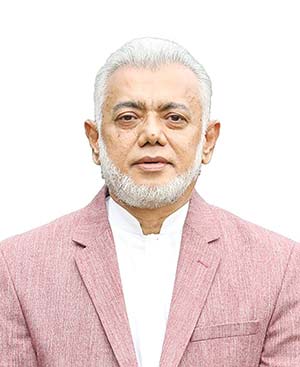 “Do not slaughter the goose that lays the golden eggs.”
With a stark and uncompromising warning, Dr Ali Afzal, President of the Real Estate and Housing Association of Bangladesh (REHAB), launched a scathing attack on the proposed national budget, cautioning that the new tax measure could send shockwaves through the country’s housing sector, tipping it into a deep and destabilising crisis and undermining one of the economy’s most vital engines of growth.
In an exclusive interview with The Daily Observer, Dr Afzal expressed deep concern over the proposed 15 per cent tax on apartments received by landowners under joint development agreements, describing the measure as economically damaging, socially counterproductive and fundamentally inconsistent with established taxation principles.
“The housing sector is one of the largest taxpayers in the country and a major catalyst for economic activity,” he said. “Imposing excessive taxes on both apartment buyers and landowners risks choking investment, slowing construction, destroying jobs and putting affordable housing further beyond the reach of ordinary citizens.”
The REHAB chief argued that the real estate sector is already heavily taxed at virtually every stage of development. Government revenues are collected through land registration fees, taxes on signing money, VAT, withholding taxes, income taxes, utility connection charges, regulatory approvals and duties on construction materials.
“Despite being one of the highest revenue-generating sectors, the industry is being asked to shoulder yet another tax burden,” he said. “This proposal could create a serious shock in the housing market from 1 July if implemented.”
Under the proposed measure in the FY2026-27 budget, landowners would be required to pay a 15 per cent tax on the value of apartments received from developers as part of joint venture agreements. According to Dr Afzal, this would come on top of the existing 15 per cent capital gains tax already imposed on signing money paid to landowners.
“The proposal effectively taxes the same development arrangement twice,” he said. “It imposes a substantial financial burden on landowners before they have earned a single taka from the property.”
Explaining the practical implications, Dr Afzal said landowners typically receive a combination of cash and completed apartments when entering into development agreements with real estate companies.
“When a landowner receives flats, they are not receiving cash income. They are receiving a fixed asset which may or may not generate future income,” he said. “Taxing an unrealised asset before any actual income is generated contradicts the fundamental principles of fair taxation.”

To illustrate the potential impact, he cited a hypothetical project involving 10 kathas of land yielding 24 apartments. If the landowner receives 12 flats valued at Tk 12 crore, the proposed tax could create a liability of around Tk 1.73 crore after adjustments for land acquisition costs.
“In practical terms, the landowner may have to arrange funds equivalent to the value of nearly two apartments simply to pay the tax,” he said. “For many families, that would be financially impossible.”
Dr Afzal noted that a large number of landowners are retirees, middle-income households or heirs who possess valuable land assets but have limited cash reserves.
“Many will be forced to borrow money, sell assets or even dispose of part of their property merely to meet their tax obligations,” he warned.
According to the REHAB President, the repercussions would extend far beyond individual landowners.
Bangladesh’s urban development model has largely been built on partnerships between landowners and developers. Most landowners lack the capital required to construct multi-storey buildings independently, while developers cannot realistically purchase every plot they develop. Joint development agreements have therefore become the backbone of urban expansion.
“If landowners become reluctant to enter into these agreements because of excessive taxation, the number of new housing projects will inevitably decline,” he said.
Such a slowdown could have far-reaching consequences for the wider economy.
The housing sector maintains direct and indirect linkages with around 269 industries and service sectors, including cement, steel, glass, ceramics, aluminium, electrical products, transport, logistics and construction services.
“Every housing project creates a chain of economic activity,” Dr Afzal said. “Engineers, architects, contractors, transport operators, construction workers and suppliers all depend on the continued growth of this sector. A decline in new projects would ripple across the economy and threaten thousands of jobs.”
He further warned that the additional tax burden would ultimately be passed on to consumers.
“Developers facing higher project costs will have little choice but to increase apartment prices,” he said. “The real burden will eventually fall on ordinary homebuyers.”
With apartment prices already under pressure from rising construction costs, expensive land and higher financing expenses, the proposed tax could make home ownership even more unattainable for middle-income families, he added.
Dr Afzal also cautioned that the rental market could come under strain if fewer housing projects are undertaken.

“A reduction in housing supply, particularly in major urban centres, could intensify pressure on rents and further worsen affordability challenges,” he said.
Beyond its immediate economic impact, he warned that the proposal could undermine Bangladesh’s long-term urbanisation strategy.
“If this partnership model becomes unattractive because of excessive taxation, many urban plots may remain undeveloped, urban renewal efforts could slow dramatically and planned urbanisation in cities such as Dhaka may suffer significant setbacks,” he said.
While acknowledging the government's need to mobilise revenue, Dr Afzal urged policymakers to adopt a more balanced approach.
Instead of taxing apartments at the point they are transferred to landowners, he suggested that taxes could be imposed when the property is sold and actual profits are realised.
“That would enable the government to collect revenue without disrupting investment, distorting the housing market or discouraging development,” he said.
In his concluding remarks, the REHAB President appealed to policymakers to reconsider the proposal before the budget receives final approval.
“This is not simply a developers’ issue or a landowners’ issue,” he said. “It is an issue of investment, employment, housing affordability and sustainable urban development. Through dialogue and consultation, a practical solution can be found that protects both government revenue and economic growth.” Warning against sacrificing long-term development for short-term fiscal gains, Dr Afzal said the decisions taken today would shape Bangladesh’s housing landscape for decades.
“The country must be careful not to undermine one of its most productive sectors in pursuit of immediate revenue,” he said. “Once investment confidence is damaged, rebuilding it becomes far more difficult.”

Loading...
Loading...
Also read



Editor : Iqbal Sobhan Chowdhury
Published by the Editor on behalf of the Observer Ltd. from Globe Printers, 24/A, New Eskaton Road, Ramna, Dhaka.
Editorial, News and Commercial Offices : Aziz Bhaban (2nd floor), 93, Motijheel C/A, Dhaka-1000.
Phone: PABX- 41053001-06; Advertisement: 41053012; 01793317829, 01550707291, E-mail: [email protected], [email protected] Online: email: [email protected] 41053014; 01550707297 Advertisement: 01550707296
Published by the Editor on behalf of the Observer Ltd. from Globe Printers, 24/A, New Eskaton Road, Ramna, Dhaka.
Editorial, News and Commercial Offices : Aziz Bhaban (2nd floor), 93, Motijheel C/A, Dhaka-1000.
Phone: PABX- 41053001-06; Advertisement: 41053012; 01793317829, 01550707291, E-mail: [email protected], [email protected] Online: email: [email protected] 41053014; 01550707297 Advertisement: 01550707296


