



| HEADLINE |

|

Why Christopher Nolan's 'The Odyssey' is facing controversy before release
Published : Monday, 29 June, 2026 at 2:18 PM
Observer Online Desk


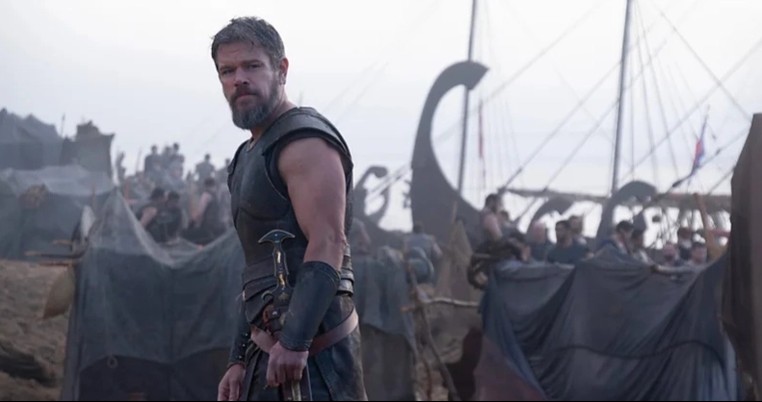
Even before its release, Christopher Nolan's highly anticipated film The Odyssey has become one of the most debated movies of 2026, drawing criticism over its casting choices, dialogue and interpretation of Homer's ancient Greek epic.
The film, featuring Matt Damon, Zendaya, Tom Holland, Lupita Nyong'o and several other stars, is scheduled to hit cinemas on July 17. While many movie lovers are eagerly waiting for Nolan's latest project after the Oscar-winning Oppenheimer, the film has also sparked heated discussions online.
Most of the controversy has focused on the cast.
Some conservative critics questioned Nolan's decision to cast transgender actor Elliot Page and rapper Travis Scott in key roles. Others criticised the selection of Oscar-winning actress Lupita Nyong'o as Helen of Troy, arguing that Homer's original poem described the character as "white-armed."
Right-wing commentator Matt Walsh claimed Nolan made the casting choice to avoid accusations of racism, although he provided no evidence for the claim. Tech billionaire Elon Musk also expressed support for the criticism on social media.
In response, many users accused Walsh and Musk of promoting racial prejudice.
Scholars, however, dismissed much of the debate. Professor Daniel Mendelsohn, whose English translation of The Odyssey was published last year, said the criticism was exaggerated because Helen plays only a small role in the story.
He also suggested that Nyong'o's casting fits the poem's long-standing exploration of beauty, arguing that selecting a beautiful African actress continues an ancient discussion rather than contradicting it.
Nyong'o herself brushed off the criticism, telling Elle magazine that The Odyssey is "a mythological story" and that the cast reflects today's global society.
However, some critics raised a different concern, saying Hollywood once again overlooked Greek actors in a story deeply rooted in Greek culture. Greek-British journalist Chris Cotonou argued that if the film aims to represent the world, it should also include performers with direct cultural ties to the source material.
The debate has not been limited to casting.
After the first trailer was released, some viewers complained that Agamemnon's dark armour looked too similar to Batman's costume, while others argued that Odysseus' ship resembled a Viking vessel instead of one from ancient Greece.
Experts say such criticism overlooks the nature of mythology.
Professor Susan Deacy, author of The Greek Gods and Their Worlds, said Greek myths have always been reinterpreted by different generations, and each era creates its own version of Homer's stories.
Another issue that drew attention was the film's dialogue.
Many viewers were surprised to hear British actors, including Tom Holland, speaking with American accents and using modern expressions.
Some social media users argued that contemporary speech weakened the historical atmosphere of the film.
Deacy said such criticism is based more on cinematic tradition than historical accuracy.
She noted that ancient Greeks did not speak either modern American English or formal British English. According to her, conversational language may actually be closer to the original spirit of Homer's oral storytelling than the formal style often used in historical films.
Film experts believe the controversy reflects today's online culture, where major productions often become part of wider political and cultural debates.
Author Tom Shone, who has written extensively about Nolan's work, said the director's films often allow audiences with different political views to interpret them in different ways.
He added that some conservative viewers may feel disappointed because Nolan's latest film appears more progressive than they expected.
Despite the criticism, many analysts believe the controversy may ultimately help the film by generating even greater public interest.
With its large-scale production, famous cast and fresh interpretation of one of history's greatest literary works, The Odyssey is expected to remain one of the year's biggest cinematic events when it opens in US and UK theatres on July 17.
The film, featuring Matt Damon, Zendaya, Tom Holland, Lupita Nyong'o and several other stars, is scheduled to hit cinemas on July 17. While many movie lovers are eagerly waiting for Nolan's latest project after the Oscar-winning Oppenheimer, the film has also sparked heated discussions online.
Most of the controversy has focused on the cast.
Some conservative critics questioned Nolan's decision to cast transgender actor Elliot Page and rapper Travis Scott in key roles. Others criticised the selection of Oscar-winning actress Lupita Nyong'o as Helen of Troy, arguing that Homer's original poem described the character as "white-armed."
Right-wing commentator Matt Walsh claimed Nolan made the casting choice to avoid accusations of racism, although he provided no evidence for the claim. Tech billionaire Elon Musk also expressed support for the criticism on social media.
In response, many users accused Walsh and Musk of promoting racial prejudice.
Scholars, however, dismissed much of the debate. Professor Daniel Mendelsohn, whose English translation of The Odyssey was published last year, said the criticism was exaggerated because Helen plays only a small role in the story.
He also suggested that Nyong'o's casting fits the poem's long-standing exploration of beauty, arguing that selecting a beautiful African actress continues an ancient discussion rather than contradicting it.
Nyong'o herself brushed off the criticism, telling Elle magazine that The Odyssey is "a mythological story" and that the cast reflects today's global society.
However, some critics raised a different concern, saying Hollywood once again overlooked Greek actors in a story deeply rooted in Greek culture. Greek-British journalist Chris Cotonou argued that if the film aims to represent the world, it should also include performers with direct cultural ties to the source material.
The debate has not been limited to casting.
After the first trailer was released, some viewers complained that Agamemnon's dark armour looked too similar to Batman's costume, while others argued that Odysseus' ship resembled a Viking vessel instead of one from ancient Greece.
Experts say such criticism overlooks the nature of mythology.
Professor Susan Deacy, author of The Greek Gods and Their Worlds, said Greek myths have always been reinterpreted by different generations, and each era creates its own version of Homer's stories.
Another issue that drew attention was the film's dialogue.
Many viewers were surprised to hear British actors, including Tom Holland, speaking with American accents and using modern expressions.
Some social media users argued that contemporary speech weakened the historical atmosphere of the film.
Deacy said such criticism is based more on cinematic tradition than historical accuracy.
She noted that ancient Greeks did not speak either modern American English or formal British English. According to her, conversational language may actually be closer to the original spirit of Homer's oral storytelling than the formal style often used in historical films.
Film experts believe the controversy reflects today's online culture, where major productions often become part of wider political and cultural debates.
Author Tom Shone, who has written extensively about Nolan's work, said the director's films often allow audiences with different political views to interpret them in different ways.
He added that some conservative viewers may feel disappointed because Nolan's latest film appears more progressive than they expected.
Despite the criticism, many analysts believe the controversy may ultimately help the film by generating even greater public interest.
With its large-scale production, famous cast and fresh interpretation of one of history's greatest literary works, The Odyssey is expected to remain one of the year's biggest cinematic events when it opens in US and UK theatres on July 17.

Loading...
Loading...
Also read








Editor : Iqbal Sobhan Chowdhury
Published by the Editor on behalf of the Observer Ltd. from Globe Printers, 24/A, New Eskaton Road, Ramna, Dhaka.
Editorial, News and Commercial Offices : Aziz Bhaban (2nd floor), 93, Motijheel C/A, Dhaka-1000.
Phone: PABX- 41053001-06; Advertisement: 41053012; 01793317829, 01550707291, E-mail: [email protected], [email protected] Online: email: [email protected] 41053014; 01550707297 Advertisement: 01550707296
Published by the Editor on behalf of the Observer Ltd. from Globe Printers, 24/A, New Eskaton Road, Ramna, Dhaka.
Editorial, News and Commercial Offices : Aziz Bhaban (2nd floor), 93, Motijheel C/A, Dhaka-1000.
Phone: PABX- 41053001-06; Advertisement: 41053012; 01793317829, 01550707291, E-mail: [email protected], [email protected] Online: email: [email protected] 41053014; 01550707297 Advertisement: 01550707296


