



| HEADLINE |

|

How advanced tech changing our lives


 A banking system is not sustained by buildings, branches, or balance sheets alone. It is sustained by trust. Every deposit, loan document, statement of account, and customer relationship rests on one fundamental expectation: a bank must be able to explain its own records with clarity and confidence.
Bangladesh’s commercial banking sector is now facing a test deeper than ordinary financial stress. The concern is not limited to defaulted loans or weak provisioning. The larger question is whether banks can defend their decisions, calculations, and customer liabilities through transparent documentation, proper audit trails, and internationally accepted standards of governance.
In responsible banking, accountability is not a favour to the customer. It is an institutional obligation. A bank that holds public money and exercises financial power must operate with stronger discipline than an ordinary business. It must maintain accurate records, transparent calculations, effective internal controls, and fair complaint-resolution mechanisms.
This principle is especially important for business clients. For a small or medium entrepreneur, a disputed bank statement is not a minor inconvenience. It can affect working capital, supplier confidence, credit reputation, and even business survival. An unexplained liability is not merely a number on paper; it may become a source of pressure, uncertainty, and financial damage.
No modern commercial bank should fear a customer’s question if its records are correct. If a statement is accurate, let it be reconciled. If a liability is lawful, let it be explained. If an interest calculation is justified, let it be documented. If an adjustment is proper, let the audit trail speak for itself.
When a bank avoids written accountability, shifts responsibility from one desk to another, and relies on silence instead of evidence, it creates the very doubt that weakens public trust. Verbal assurances cannot replace formal records. Delay cannot replace reconciliation. Institutional power cannot replace documentary truth.
However, when a bank avoids written accountability, shifts responsibility from one desk to another, and relies on silence instead of evidence, it creates the very doubt that weakens public trust. Verbal assurances cannot replace formal records. Delay cannot replace reconciliation. Institutional power cannot replace documentary truth.
The relationship between a bank and a customer must never become one-sided. A bank may have legal departments, recovery teams, senior divisions, and institutional influence. A small entrepreneur may have only his records, correspondence, and demand for fairness. This imbalance is precisely why customer protection must become a central pillar of banking reform.
Internationally accepted banking standards point to a clear discipline. Banks must know their customers, verify information, maintain reliable records, monitor risk, document decisions, and handle complaints through formal procedures. A disputed liability should produce a written breakdown. A statement mismatch should trigger reconciliation. A serious customer complaint should receive a reasoned response.
This is not an extraordinary demand. It is the minimum expectation of responsible commercial banking. If global banks are expected to maintain audit trails, customer due diligence, complaint registration, and transparent communication, Bangladeshi commercial banks cannot be allowed to hide behind delays, vague explanations, or the internal passing of responsibility.
A recurring weakness in customer disputes is the gap between branch-level communication and higher-level accountability. A client may be asked to speak to one official, then another department, and then another division. Yet the central question remains unanswered: who is responsible for explaining the bank’s figures? Without a clear institutional owner, complaint handling becomes a maze rather than a remedy.
This culture must change. Every complaint should be registered. Every disputed statement should be reviewed. Every interest calculation should be traceable. Every liability should be supported by documents. Every recovery step should be consistent with law, fairness, and written evidence.
Forensic review should not be reserved only for major scandals or large corporate borrowers. It should also be available when account records, fund movements, interest calculations, or liabilities are seriously disputed. A proper forensic review protects both sides. It protects customers from arbitrary claims and protects banks from unfounded allegations.
The central bank and relevant regulatory authorities must therefore treat customer-level disputes as part of the wider governance crisis. A banking system cannot be considered healthy if ordinary clients struggle to obtain clear written explanations of their own accounts. Transparency at the customer level is not separate from national banking reform; it is one of its foundations.
The question is no longer whether a customer is powerful enough to challenge a bank. The question is whether the bank is transparent enough to defend its own records. A credible institution should welcome scrutiny, because evidence strengthens confidence. Only weak systems fear documentation.
Bangladesh cannot rebuild banking confidence through silence. It must rebuild confidence through records, reconciliation, and responsibility. Reform will not be judged only by board changes, capital plans, or recovery drives. It will be judged by whether an ordinary customer can receive a fair, clear, and documented answer from his bank.
A bank that serves the economy must not intimidate enterprise. It must support honest business with clarity, fairness, and discipline. No boardroom, branch office, department, or powerful borrower should stand above accountability.
If Bangladesh wants a banking sector worthy of national and international confidence, it must align domestic practice with global standards of governance, transparency, and customer protection. Trust will return only when every figure can be explained, every decision can be reviewed, and every customer can be heard.
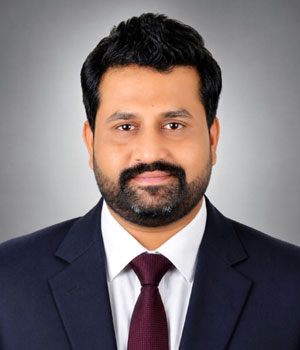
The writer is Managing Director, Ayat Motin Group

Loading...
Loading...
Also read



Editor : Iqbal Sobhan Chowdhury
Published by the Editor on behalf of the Observer Ltd. from Globe Printers, 24/A, New Eskaton Road, Ramna, Dhaka.
Editorial, News and Commercial Offices : Aziz Bhaban (2nd floor), 93, Motijheel C/A, Dhaka-1000.
Phone: PABX- 41053001-06; Advertisement: 41053012; 01793317829, 01550707291, E-mail: [email protected], [email protected] Online: email: [email protected] 41053014; 01550707297 Advertisement: 01550707296
Published by the Editor on behalf of the Observer Ltd. from Globe Printers, 24/A, New Eskaton Road, Ramna, Dhaka.
Editorial, News and Commercial Offices : Aziz Bhaban (2nd floor), 93, Motijheel C/A, Dhaka-1000.
Phone: PABX- 41053001-06; Advertisement: 41053012; 01793317829, 01550707291, E-mail: [email protected], [email protected] Online: email: [email protected] 41053014; 01550707297 Advertisement: 01550707296


