



| HEADLINE |

|

New ecological threat grips Sundarban
Parasitic plants infect 30 per cent of sundari trees
Published : Saturday, 4 July, 2026 at 12:00 AM
Abul Ahsan Titu


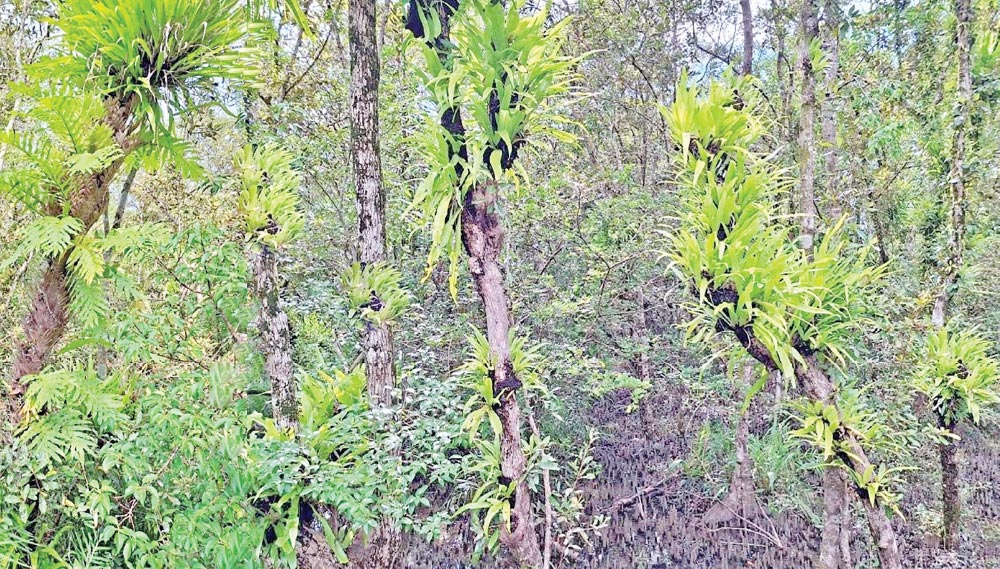 FAKIRHAT, BAGERHAT, July 3: The world’s largest mangrove forest, the Sundarban, is facing a new environmental threat as the dominant sundari tree comes under severe stress from widespread parasitic plant infestation, following earlier damage caused by top-dying disease.
According to Forest Department data, around 25 to 30 per cent of sundari trees in the Sundarban are currently affected by parasitic plants, with many trees already drying up and dying.
Field visits across different areas of the forest show dense growth of parasitic plants on trunks and branches of sundari trees. These parasitic species draw nutrients from host trees, gradually weakening them until the leaves fall and the trees eventually die.
Environmental experts say rising salinity due to climate change, siltation of rivers and canals, and reduced water flow are disrupting the natural ecological balance of the Sundarban. The spread of parasitic plants, combined with the earlier top-dying disease, is intensifying the crisis.
Sources said nearly 16 kilometres of the Bhola River in the Sharankhola and Chandpai ranges of the eastern Sundarban have become silted, severely restricting water flow in canals inside the forest. As a result, tidal water circulation has been disrupted, causing damage to the ecosystem. Affected sundari trees are becoming increasingly vulnerable to parasitic infestation.
Officials said the spread of parasitic plants began to accelerate in these areas around 2020�"21. The infection is more severe in relatively elevated zones where top-dying disease had already weakened trees.
The Forest Department notes that the 243,000-hectare eastern Sundarban is home to 334 plant species and 453 wildlife species, supporting the livelihoods of millions of people engaged in fishing, honey collection, crab harvesting and tourism-related activities. Decline of sundari trees, they warned, could directly impact the coastal economy.
Professor Dr Wasiul Islam of the Forestry and Wood Technology Discipline at Khulna University said increasing salinity and climate change are rapidly altering the forest ecosystem. He warned that continued loss of sundari trees could severely disrupt the entire food chain and ecological balance.
Experts stressed that without coordinated efforts to control parasitic plants, reduce salinity and restore river and canal flow, protecting the Sundarban’s key species will become increasingly difficult.
Eastern Sundarban Forest Division Divisional Forest Officer Md Rezaul Karim Chowdhury said parasitic infestation has emerged as a major threat, affecting 25�"30 percent of sundari trees, and called for further research into the issue.

Loading...
Loading...
Also read



Editor : Iqbal Sobhan Chowdhury
Published by the Editor on behalf of the Observer Ltd. from Globe Printers, 24/A, New Eskaton Road, Ramna, Dhaka.
Editorial, News and Commercial Offices : Aziz Bhaban (2nd floor), 93, Motijheel C/A, Dhaka-1000.
Phone: PABX- 41053001-06; Advertisement: 41053012; 01793317829, 01550707291, E-mail: [email protected], [email protected] Online: email: [email protected] 41053014; 01550707297 Advertisement: 01550707296
Published by the Editor on behalf of the Observer Ltd. from Globe Printers, 24/A, New Eskaton Road, Ramna, Dhaka.
Editorial, News and Commercial Offices : Aziz Bhaban (2nd floor), 93, Motijheel C/A, Dhaka-1000.
Phone: PABX- 41053001-06; Advertisement: 41053012; 01793317829, 01550707291, E-mail: [email protected], [email protected] Online: email: [email protected] 41053014; 01550707297 Advertisement: 01550707296


