



| HEADLINE |

|

BIBM Raises Red Flag as Trade Finance Defaults Surge to 50pc
Published : Thursday, 9 July, 2026 at 12:00 AM
Business Correspondent


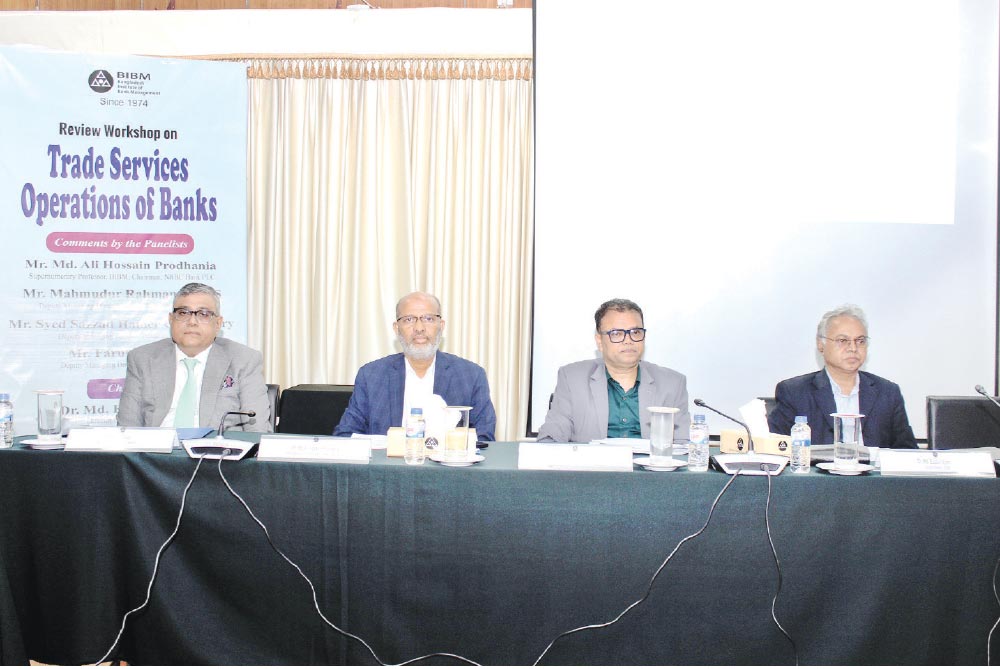 Bangladesh's banking sector is facing a mounting trade finance crisis, with 40 to 50 per cent of loans extended for trade finance now classified as non-performing, while the ratio has surged to more than 80 per cent in some financially distressed banks, according to a new study by the Bangladesh Institute of Bank Management (BIBM).
The findings, unveiled at a BIBM workshop in Dhaka on Wednesday, highlight a sharp deterioration in the quality of trade finance portfolios, raising fresh concerns over banks' asset quality, credit risks and their ability to support the country's import-export activities.
Presenting the keynote paper, Dr Shah Md Ahsan Habib, Professor (Selection Grade) at BIBM, said the alarming rise in trade finance defaults is exerting severe pressure on the banking system because such financing underpins working capital, imports, exports and domestic commerce.
The study found that banks with large trade finance portfolios are recording non-performing loan (NPL) ratios of between 40 and 50 per cent, while lenders already burdened with high overall default loans are experiencing an even deeper crisis, with trade finance NPLs exceeding 80 per cent.
Researchers identified the conversion of non-funded trade facilities into forced loans as one of the principal drivers behind the surge in defaults.
Trade finance has expanded rapidly in recent years to support imports of capital machinery, cotton, industrial raw materials, sugar, fertiliser, fuel and scrap vessels. However, the growth in financing has been accompanied by a sharp rise in bad loans, affecting both import and export financing.
The study also exposed a major structural weakness in export finance. According to the survey, almost all bankers believe the widespread use of back-to-back Letters of Credit (LCs) without legally enforceable sale-purchase agreements has become a significant source of default loans.
Back-to-back LCs are commonly used to import raw materials for export-oriented industries. However, weak contractual arrangements and disputes often delay export proceeds, forcing banks to convert the facilities into forced loans when exporters fail to repay, significantly increasing their credit risk.
Dr Ahsan Habib said strengthening the legal framework governing trade finance and improving the quality of back-to-back LCs would be essential to containing future defaults.
He also called for a comprehensive modernisation of Bangladesh's trade finance system, alongside stronger risk management and closer monitoring of banks' asset quality.
Chairing the workshop, Dr Md Ezazul Islam, Director General of BIBM, stressed the urgent need to modernise the country's legal and digital infrastructure for electronic trade documents to facilitate faster, safer and paperless international trade.
He also underscored the importance of reinforcing Anti-Money Laundering and Combating the Financing of Terrorism (AML/CFT) compliance, strengthening safeguards against Trade-Based Money Laundering (TBML), and improving customer-oriented trade finance services.
Dr Ezazul further advocated expanding access to trade finance for small and medium-sized enterprises (SMEs) through innovative financing products and risk-sharing mechanisms, while calling for better product-level data, stronger asset quality monitoring and more robust risk management practices.
The study urged closer coordination among Bangladesh Bank, commercial banks, customs authorities and other stakeholders to build a more resilient, transparent and efficient trade finance ecosystem capable of supporting the country's expanding international trade.
The research was jointly conducted by BIBM, the Foreign Exchange Policy Department of Bangladesh Bank and Mutual Trust Bank PLC. Senior executives from NRBC Bank, Islami Bank Bangladesh PLC, Prime Bank and City Bank also participated in the workshop.
Loading...
Loading...
Also read



Editor : Iqbal Sobhan Chowdhury
Published by the Editor on behalf of the Observer Ltd. from Globe Printers, 24/A, New Eskaton Road, Ramna, Dhaka.
Editorial, News and Commercial Offices : Aziz Bhaban (2nd floor), 93, Motijheel C/A, Dhaka-1000.
Phone: PABX- 41053001-06; Advertisement: 41053012; 01793317829, 01550707291, E-mail: [email protected], [email protected] Online: email: [email protected] 41053014; 01550707297 Advertisement: 01550707296
Published by the Editor on behalf of the Observer Ltd. from Globe Printers, 24/A, New Eskaton Road, Ramna, Dhaka.
Editorial, News and Commercial Offices : Aziz Bhaban (2nd floor), 93, Motijheel C/A, Dhaka-1000.
Phone: PABX- 41053001-06; Advertisement: 41053012; 01793317829, 01550707291, E-mail: [email protected], [email protected] Online: email: [email protected] 41053014; 01550707297 Advertisement: 01550707296


