



| HEADLINE |

|

Shared Rivers, Shared Rights: Bangladesh Deserves Its Due
Published : Saturday, 25 July, 2026 at 12:00 AM
Sultan Mahmud Sarker


 As the waters of the Padma recede each dry season, millions of Bangladeshis are reminded that a river is far more than a body of flowing water�"it is the foundation of livelihoods, agriculture, ecosystems and national survival. For a downstream, river-dependent country like Bangladesh, upstream water diversion is not merely an economic concern but an existential challenge. Against this backdrop, the 1996 Ganges Water Treaty, signed for 30 years, is approaching expiry. Its renewal offers Bangladesh a historic opportunity not simply to extend an agreement but to correct longstanding shortcomings and firmly establish its legitimate right to an equitable share of shared rivers.
When the treaty was signed, Bangladesh hoped it would ease decades of hardship caused by the Farakka Barrage. However, 30 years later, the central question remains whether it has delivered justice. During the crucial dry months of March and April, when demand peaks, water flow reaching Bangladesh has often fallen well below expectations. The gap between allocations on paper and actual water received has repeatedly exposed weaknesses in the existing framework.
Future negotiations therefore cannot simply reproduce the old formula. A renewed agreement must prioritise scientifically verified river-flow measurements, transparent sharing of hydrological data and mechanisms that guarantee genuine fairness rather than theoretical allocations. Simply referring to “equitable sharing” is insufficient if implementation remains ambiguous. Measurement methods, monitoring procedures and calculations of ten-day average flows must be transparent and independently verifiable. Bangladesh has long argued that recorded flow at Farakka often exceeds the volume ultimately reaching its territory due to upstream withdrawals. Such loopholes must be eliminated.
Negotiations should also move beyond the Ganges alone. Bangladesh shares more than 50 rivers with India, including the Teesta, Dharla, Dudhkumar and Feni. Renewing only the Ganges agreement while leaving the Teesta dispute unresolved would address only part of Bangladesh’s broader water-security challenge. Both countries should instead adopt an integrated basin-wide approach based on internationally recognised principles of equitable and reasonable utilisation and the obligation to avoid causing significant harm to downstream states.
Strong agreements can emerge only from relationships founded on mutual respect. Bangladesh and India undoubtedly share deep historical, cultural and political ties. However, friendship cannot require one country to make continuous concessions while the other consistently enjoys the benefits. India has its own developmental priorities and water requirements, but Bangladesh’s agriculture, fisheries, ecosystems and the livelihoods of millions deserve equal consideration. Around the world, many smaller states have maintained cordial relations with larger neighbours while firmly protecting their national interests. Bangladesh should pursue the same approach.
Looking back over recent decades, Bangladesh’s river diplomacy has often displayed unnecessary hesitation in asserting its rightful claims. Political promises on both the Ganges and Teesta have repeatedly failed to translate into meaningful implementation, partly due to concerns about broader bilateral relations. Yet history shows that countries which consistently fail to defend their legitimate interests often receive less respect in international negotiations. Diplomacy should never be confused with submission. Effective diplomacy requires protecting national interests through scientific evidence, established international legal principles and, where necessary, appropriate international forums. Flexibility is essential, but it must never become surrender.
National confidence is equally important. The government, academics, civil society, media and citizens should build broad consensus on Bangladesh’s river rights. International negotiations become far more effective when supported by a united domestic position.
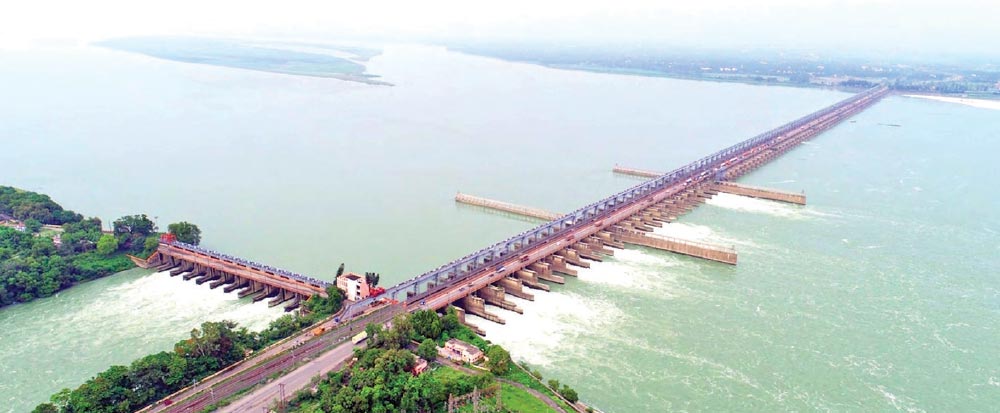 The historical roots of the dispute further strengthen Bangladesh’s case. Concerns over the Farakka Barrage date back more than a century, initially linked to improving navigability at Kolkata Port. During the Pakistan period, experts warned that the barrage would significantly reduce downstream flow. After Bangladesh’s independence, hopes remained for a fair solution, but the consequences intensified following the barrage’s trial operation in 1975. Reduced dry-season flow has since caused widespread environmental and economic damage. Agricultural production has suffered, groundwater levels have fallen, irrigation costs have increased, saline intrusion has expanded into coastal regions and the Sundarbans has experienced growing ecological stress. Beyond these statistics lie the human consequences: farmers struggle to irrigate crops, fishermen lose their livelihoods and boatmen face unemployment as rivers become unnavigable during the dry season.
Although the 1996 treaty represented an important diplomatic achievement, it has not fully resolved these challenges. During years of exceptionally low dry-season flow, proportional sharing alone cannot ensure justice because the total available volume is insufficient.
Bangladesh should therefore seek legally guaranteed minimum water volumes reaching its border during critical periods rather than relying solely on percentage-based allocations. International law strongly supports this position. The 1997 UN Convention on the Law of the Non-Navigational Uses of International Watercourses recognises every basin state’s right to equitable and reasonable utilisation while prohibiting significant harm to other riparian states. Bangladesh’s demands are therefore fully consistent with accepted international legal principles.
Accordingly, a renewed treaty should guarantee minimum dry-season flow, establish independent joint monitoring supported by technical experts, ensure transparent data sharing and include periodic review mechanisms capable of adapting to climate change and changing Himalayan hydrological conditions. Similar principles should guide negotiations over the Teesta and all other shared rivers.
Ultimately, river water is not an act of generosity bestowed by one country upon another. It is a natural, legal and moral right belonging equally to every riparian nation. Every citizen of Bangladesh has the right to sufficient irrigation water, healthy rivers and a living Sundarbans. The renewal of the Ganges Water Treaty is therefore far more than a routine diplomatic exercise. It is a historic opportunity to replace past weaknesses with a strategy grounded in scientific evidence, international law, national unity and diplomatic confidence. This is not merely the responsibility of any government but a national cause requiring principled diplomacy and unwavering commitment. The time has come for Bangladesh to claim its fair share of shared rivers with confidence, dignity and determination.
The writer is an MPhil researcher at the University of Rajshahi and teaches at Gazipur Cantonment Public School and College
Loading...
Loading...
Also read



Editor : Iqbal Sobhan Chowdhury
Published by the Editor on behalf of the Observer Ltd. from Globe Printers, 24/A, New Eskaton Road, Ramna, Dhaka.
Editorial, News and Commercial Offices : Aziz Bhaban (2nd floor), 93, Motijheel C/A, Dhaka-1000.
Phone: PABX- 41053001-06; Advertisement: 41053012; 01793317829, 01550707291, E-mail: [email protected], [email protected] Online: email: [email protected] 41053014; 01550707297 Advertisement: 01550707296
Published by the Editor on behalf of the Observer Ltd. from Globe Printers, 24/A, New Eskaton Road, Ramna, Dhaka.
Editorial, News and Commercial Offices : Aziz Bhaban (2nd floor), 93, Motijheel C/A, Dhaka-1000.
Phone: PABX- 41053001-06; Advertisement: 41053012; 01793317829, 01550707291, E-mail: [email protected], [email protected] Online: email: [email protected] 41053014; 01550707297 Advertisement: 01550707296


