



| HEADLINE |

|
Significance of Integrated Life Skills and Moral Education
Published : Monday, 17 August, 2026 at 12:00 AM
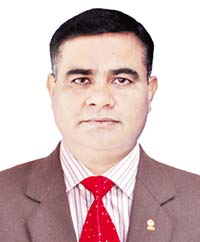
Md Noor-E-Alam Siddiki


 Education is power. Education is wealth and prosperity. A science-based, timely, and life-oriented education system provides the power to develop the individual's talent. The collective power of individuals is the main asset of a nation, through which the state becomes stronger, sustainable, and developed. It is judicious to set the goals and objectives of education to create a knowledge-based society, that is, a state. Failing that, people will be a burden, even if they are educated based on textbooks. A population rich in moral qualities and advanced in life skills is a priceless asset of the state. Various studies, especially those conducted by WHO, show that people with the ten life skills in personal and professional life demonstrate prudence at national and international levels. Therefore, it can be said that if people with moral qualities possess advanced life skills, society or the state will never lag.
With the aim of creating quality citizens, it is desirable that our education system enable students to acquire the necessary life skills during their education. Furthermore, it is essential to emphasize moral education in the national curriculum and syllabus to build a well-educated nation. There is no alternative to a well-educated population that is committed to the welfare of society and the state. In this context, the Greek philosopher and father of political science, Aristotle, said, “A well-educated citizen is the best asset of a state.” The inclusion of ethics and life skills in the national curriculum and syllabus, and their regular practice by students, are prerequisites for producing effective human resources. The main purpose of this article is to shed light on how citizens with advanced life skills and moral qualities can contribute to the state structure. First, the specific aspects of life skills are briefly discussed:
Self-awareness: Self-awareness is one of the skills of human life that can always guide one in the right direction. It plays a significant role in keeping the individual's life risk-free and leading a healthy life. To institutionalize self-awareness, it is essential to include this issue in the national curriculum so that students can keep themselves safe by avoiding provocations or temptations. Due to a lack of self-awareness, many youths go astray and get involved in undesirable activities, as a result of which they become the sources of suffering for their families and society. From a contrasting point of view, a self-aware person is always involved in constructive activities with the intention of establishing their life in terms of reality; refrains from destructive activities and inspires others to refrain.
The inclusion of ethics and life skills in the national curriculum and syllabus, and their regular practice by students, are prerequisites for producing effective human resources.
Critical thinking: Critical thinking is the process of making well-founded decisions through analysis and judgment, rather than relying on blind faith in any person or group. Strengthening critical thinking skills requires incorporating subjects such as Logic, Philosophy, and psychology at every educational level. Individuals who think critically and are free from superstitions make vital contributions to creating a progressive society and robust state structure.
Creative thinking: Creative thinking teaches us to think in new ways about traditional ones in complex situations, and helps us apply alternative paths to solve them. If one cannot develop this skill in student life, it is almost impossible to achieve it in professional life. Although creative methods are already introduced in the national education curriculum, they need to be reviewed and modified in a timely manner, so that they can reflect in the professional lives of the students. Without a creative community, it is difficult to improve the quantitative and qualitative standards of work to achieve the desired pace of people's activities.
Decision-making skill: Decision-making is essential in all spheres of life, from personal to professional life. This skill is one of the most effective tools to become a real leader. The right decision at the right time is the key to progress. A wise saying is, 'A stitch in time saves nine'. With the ability to make decisions without getting upset in difficulties, one can successfully implement any assigned task. Decision-making processes are rational approaches, intuitive approaches, bounded rational approaches, behavioral approaches, team approaches, etc., and should be included at all levels of institutional education. The opportunity to practice these approaches in student life, it will be possible to develop human resources with leadership qualities at the national level.
Communication skill: Communication skills are considered 'soft skills'. It is a quality of how people present themselves and their needs systematically using technologies. It plays a significant role in strengthening one's position in strategic or diplomatic matters while discussing, negotiating, and settling on all issues at everywhere. It is possible to bring any situation under one's control through the right choice of words and presentation, regardless of place, time, and circumstances. In a word, this skill makes people confident. Special emphasis is needed so that people can acquire this skill at all phases of the education system. Worth mentioning that many talented students, despite achieving excellent results, fail to present themselves in the right position due to a lack of communication skills, become depressed, and cannot contribute properly in the professional arena.
Interpersonal relationship: Establishing constructive relationships with others, maintaining effective communication, sustaining the foundation of relationships with a positive, compassionate, and empathetic mindset in all areas, avoiding the idea of conflict and division in solving any problem, and continuing helpful discussions until the problem is resolved, etc., can be recognized as interpersonal relationship skills. Creating a population with that skill will reduce undesirable events in society and increase bonds of mutual friendship and harmony among citizens. Inclusion of the issue in detail within the institutional teaching-learning process to introduce these qualities into the larger society is of great importance.
Problem-solving capacity: In real life, people face many problems. Without institutional knowledge, it is almost impossible to take timely and effective steps to solve them. Worth mentioning that, due to ignorance, most of the time, people work based on symptoms of the problem without searching for the root cause, and do not verify and sort the information and data to solve it. Generally, people cannot follow scientific methods of problem-solving; they do the previous task later and the next task earlier, without searching for alternative solutions, and they always try conventionally and do not show even effective ways to implement the solution. Again, problems that require group intelligence and consultation to solve, but people try alone; as a result, they do not come to an effective solution. There should be some opportunities to practice for acquiring these skills at various levels of education, so that skilled people can later provide social solutions to most problems and reduce the need for state intervention.
Empathy and Compassion: While empathy and compassion seem synonymous, there is actually a difference between the two. Empathy is the temporary feeling of sorrow for someone else's suffering, from a distance. On the contrary, compassion is the evaluation of another person’s situation and sharing it in one's heart to solve. When these two qualities exist among people, social bonds are strengthened, difficult problems are solved more easily, whether in danger or adversity, in happiness or sorrow, and citizens are united in society. If there is an opportunity to acquire this skill institutionally, there will be increasing harmony among people. The national curriculum needs to be redesigned so that students can grow with empathy and compassion.
Coping with stress: Stress management skills are essential for remaining calm and effective in adversity, continuing to function normally despite mental and physical stress. There is a great need to include stress management techniques or methods in the curriculum at all levels of formal education. Without adequate practice in the skills to manage or cope with stress individually and in groups, it becomes somewhat difficult to build a physically and mentally strong population.
Coping with emotion: Emotion is a complex mix of human psychological and physical reactions that control a person's behavior. People who are skilled at controlling emotions can channel them into positive or constructive actions. Those who are weak in this regard are often driven by emotion and make wrong decisions in a crisis. However, the ability to reconcile reality and emotion is the skill of controlling emotions, which helps people guide them in the right direction. It is noteworthy that people who know effective methods to control emotions are always interested in doing beneficial things, while uncontrolled or excessively emotional people do not hesitate to make seriously harmful decisions due to indecision. The need to emphasize this issue in the education system is immense.
Coordination of moral education and life skills: If a society with life skills is endowed with moral character, then its benefits are available at the national level. People can use life skills in both positive and negative ways, as per their needs. A society with moral character generally does not do any work that harms society and the state. The importance of coordination between morality and life skills is immense, so this issue must be addressed at every level of the national curriculum. If a civil society with advanced life skills is self-respecting, conscientious, honest, just, patient, work-oriented, hardworking, responsible and dutiful, respectful of the rights of others particularly children; women and senior citizens, humble, religious, free from prejudice, generous, patriotic, thrifty, pro-democracy, compassionate and empathetic, and confident, then the society and the state will be developed and prosperous.
Childhood and adolescence are the best times to acquire moral education. What people learn during this time is usually permanent. Although learning begins in the family in childhood, it takes an institutional form during student life. From then on, students learn and practice the subjects included in the curriculum and syllabus with great importance. It is true, however unpopular, that a section of educated people in our country has failed to combine life skills with ethics and morality. Among them, dishonesty, excessive greed, lack of self-respect and values, moral degradation, and the negative tendency of following religious precepts have increased alarmingly, resulting in increased injustice, lawlessness, and corruption in society. Here, in the context of moral education, the principle of the Greek philosopher Socrates is relevant: ‘The tree of knowledge without character bears only poisonous fruit’. Our society, too, has reached an unbearable level of chaos, adultery, irregularities, oppression, degradation of values, and above all, corruption, due to the lack of moral education. If a population educated in moral education can develop life skills, that nation can reasonably take its place in the world as a developed, modern, sustainable, and corruption-free nation. In short, the key to building a benevolent society is to properly balance moral education and life skills-based education in the education system.
The writer is a Commander of Bangladesh Navy
Loading...
Loading...
Also read



Editor : Iqbal Sobhan Chowdhury
Published by the Editor on behalf of the Observer Ltd. from Globe Printers, 24/A, New Eskaton Road, Ramna, Dhaka.
Editorial, News and Commercial Offices : Aziz Bhaban (2nd floor), 93, Motijheel C/A, Dhaka-1000.
Phone: PABX- 41053001-06; Advertisement: 41053012; 01793317829, 01550707291, E-mail: [email protected], [email protected] Online: email: [email protected] 41053014; 01550707297 Advertisement: 01550707296
Published by the Editor on behalf of the Observer Ltd. from Globe Printers, 24/A, New Eskaton Road, Ramna, Dhaka.
Editorial, News and Commercial Offices : Aziz Bhaban (2nd floor), 93, Motijheel C/A, Dhaka-1000.
Phone: PABX- 41053001-06; Advertisement: 41053012; 01793317829, 01550707291, E-mail: [email protected], [email protected] Online: email: [email protected] 41053014; 01550707297 Advertisement: 01550707296


