



| HEADLINE |

|

Gas crisis forces factory shutdowns across country



AI photo
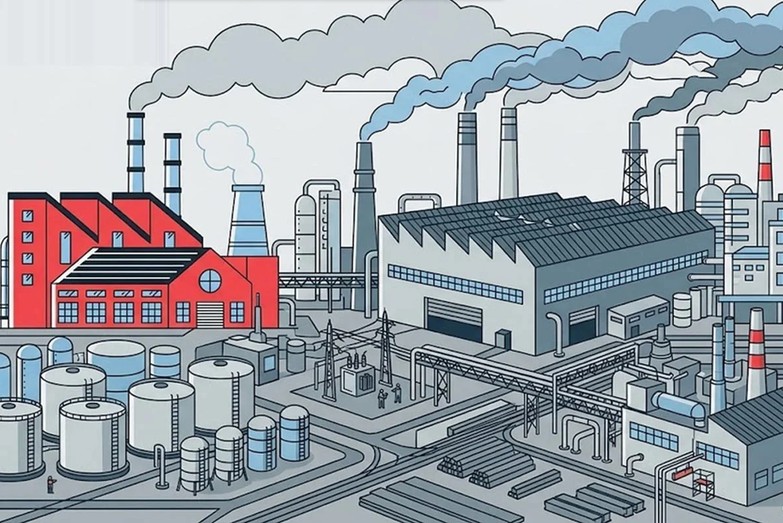
Bangladesh is facing one of its most severe natural gas shortages in recent years, with industry leaders warning that more than 40 per cent of the country's factories have either suspended operations or significantly reduced production due to an acute supply crisis.
The shortage has hit the manufacturing sector particularly hard, including the country's vital ready-made garments (RMG), textile, steel, ceramic, paper, and packaging industries, raising concerns over delayed export shipments, rising production costs, and weakening economic growth.
Industrialists said the gas crisis has persisted for years but has become dramatically worse over the past week, making it impossible for many factories to operate even at half of their installed capacity.
Business leaders warn that unless gas supplies are restored quickly, Bangladesh could suffer a major decline in export earnings while thousands of workers face uncertainty.
LNG Terminal Failure Worsens Supply Crisis
The immediate cause of the latest disruption is a technical malfunction at a Floating Storage and Regasification Unit (FSRU) LNG terminal in Maheshkhali, which has reduced gas supply to the national grid by approximately 450 million cubic feet per day (MMcfd).
As a result, residential consumers, industries, commercial users, CNG stations and power plants across the country have experienced a sharp decline in gas pressure.
According to Petrobangla, Bangladesh currently requires nearly 4,000 MMcfd of natural gas but is supplying only around 2,200 MMcfd, leaving a daily deficit of roughly 1,800 MMcfd.
Normally, imported LNG contributes 950-1,000 MMcfd, but the damaged terminal has reduced that figure to around 500 MMcfd, significantly worsening the nationwide shortage.
Industry Leaders Sound the Alarm
Bangladesh Textile Mills Association (BTMA) President Showkat Aziz Russell said the situation shows little sign of improving soon.
He said government policies have consistently prioritised gas supply for fertilizer production, residential users and electricity generation, leaving industries struggling for fuel.
Russell revealed that about 90 per cent of his own industrial group's factories have already shut down, including textile, paper, board and pallet manufacturing units.
He estimated that more than 40 per cent of industries nationwide are now experiencing severe production disruptions due to insufficient gas.
Major Industrial Zones Hit Hard
The crisis has severely affected Bangladesh's main industrial belts.
In Gazipur, Savar, and Narsingdi, factory owners report production declines of 50 per cent to 60 per cent because gas pressure has fallen far below operational requirements.
Several textile mills have completely halted dyeing, knitting, finishing and digital printing operations.
Manufacturers in Ashulia say gas pressure has dropped from the normal 15 PSI to just 2-3 PSI, making it impossible to run boilers, generators and production equipment efficiently.
CNG filling stations have also been affected, forcing motorists to wait for hours while receiving only limited fuel.
Steel and Ceramic Industries Under Pressure
Bangladesh Steel Manufacturers Association founding president Sheikh Masadul Alam Masud said gas-dependent steel mills have virtually stopped production over the past several days because gas pressure has almost disappeared.
Ceramic Manufacturers and Exporters Association (BCMEA) President Moinul Islam said industrial zones in Gazipur and Manikganj are facing the most severe disruptions, although gas shortages vary across different regions.
He warned that continued supply interruptions would further damage investment, exports and industrial growth.
Experts Warn of Structural Weakness
Energy expert Professor M. Tamim said the current crisis highlights Bangladesh's lack of reserve capacity in its gas infrastructure.
He noted that authorities were already aware that the shutdown of a single LNG terminal could trigger a nationwide supply crisis because there is no adequate backup system.
Tamim added that Bangladesh remains vulnerable not only to LNG terminal failures but also to disruptions at major domestic gas fields, which could instantly remove hundreds of millions of cubic feet of gas from the system.
Government Plans More Gas Exploration
Officials from the Energy and Mineral Resources Division acknowledged that while the LNG terminal malfunction triggered the immediate crisis, Bangladesh's growing dependence on imported LNG has made the situation more complex.
The government plans to reduce import dependence by drilling 100 new gas wells over the coming years. Projects have already been approved for new exploration in Begumganj, Noakhali, and Sunamganj.
Growing Threat to the Economy
Business leaders warn that prolonged gas shortages could severely damage Bangladesh's export competitiveness, disrupt supply chains, increase manufacturing costs and threaten employment across thousands of factories.
With export-oriented industries operating well below capacity, economists fear the crisis could significantly slow the country's economic growth unless gas supplies are restored quickly.
The shortage has hit the manufacturing sector particularly hard, including the country's vital ready-made garments (RMG), textile, steel, ceramic, paper, and packaging industries, raising concerns over delayed export shipments, rising production costs, and weakening economic growth.
Industrialists said the gas crisis has persisted for years but has become dramatically worse over the past week, making it impossible for many factories to operate even at half of their installed capacity.
Business leaders warn that unless gas supplies are restored quickly, Bangladesh could suffer a major decline in export earnings while thousands of workers face uncertainty.
LNG Terminal Failure Worsens Supply Crisis
The immediate cause of the latest disruption is a technical malfunction at a Floating Storage and Regasification Unit (FSRU) LNG terminal in Maheshkhali, which has reduced gas supply to the national grid by approximately 450 million cubic feet per day (MMcfd).
As a result, residential consumers, industries, commercial users, CNG stations and power plants across the country have experienced a sharp decline in gas pressure.
According to Petrobangla, Bangladesh currently requires nearly 4,000 MMcfd of natural gas but is supplying only around 2,200 MMcfd, leaving a daily deficit of roughly 1,800 MMcfd.
Normally, imported LNG contributes 950-1,000 MMcfd, but the damaged terminal has reduced that figure to around 500 MMcfd, significantly worsening the nationwide shortage.
Industry Leaders Sound the Alarm
Bangladesh Textile Mills Association (BTMA) President Showkat Aziz Russell said the situation shows little sign of improving soon.
He said government policies have consistently prioritised gas supply for fertilizer production, residential users and electricity generation, leaving industries struggling for fuel.
Russell revealed that about 90 per cent of his own industrial group's factories have already shut down, including textile, paper, board and pallet manufacturing units.
He estimated that more than 40 per cent of industries nationwide are now experiencing severe production disruptions due to insufficient gas.
Major Industrial Zones Hit Hard
The crisis has severely affected Bangladesh's main industrial belts.
In Gazipur, Savar, and Narsingdi, factory owners report production declines of 50 per cent to 60 per cent because gas pressure has fallen far below operational requirements.
Several textile mills have completely halted dyeing, knitting, finishing and digital printing operations.
Manufacturers in Ashulia say gas pressure has dropped from the normal 15 PSI to just 2-3 PSI, making it impossible to run boilers, generators and production equipment efficiently.
CNG filling stations have also been affected, forcing motorists to wait for hours while receiving only limited fuel.
Steel and Ceramic Industries Under Pressure
Bangladesh Steel Manufacturers Association founding president Sheikh Masadul Alam Masud said gas-dependent steel mills have virtually stopped production over the past several days because gas pressure has almost disappeared.
Ceramic Manufacturers and Exporters Association (BCMEA) President Moinul Islam said industrial zones in Gazipur and Manikganj are facing the most severe disruptions, although gas shortages vary across different regions.
He warned that continued supply interruptions would further damage investment, exports and industrial growth.
Experts Warn of Structural Weakness
Energy expert Professor M. Tamim said the current crisis highlights Bangladesh's lack of reserve capacity in its gas infrastructure.
He noted that authorities were already aware that the shutdown of a single LNG terminal could trigger a nationwide supply crisis because there is no adequate backup system.
Tamim added that Bangladesh remains vulnerable not only to LNG terminal failures but also to disruptions at major domestic gas fields, which could instantly remove hundreds of millions of cubic feet of gas from the system.
Government Plans More Gas Exploration
Officials from the Energy and Mineral Resources Division acknowledged that while the LNG terminal malfunction triggered the immediate crisis, Bangladesh's growing dependence on imported LNG has made the situation more complex.
The government plans to reduce import dependence by drilling 100 new gas wells over the coming years. Projects have already been approved for new exploration in Begumganj, Noakhali, and Sunamganj.
Growing Threat to the Economy
Business leaders warn that prolonged gas shortages could severely damage Bangladesh's export competitiveness, disrupt supply chains, increase manufacturing costs and threaten employment across thousands of factories.
With export-oriented industries operating well below capacity, economists fear the crisis could significantly slow the country's economic growth unless gas supplies are restored quickly.

Loading...
Loading...
Also read








Editor : Iqbal Sobhan Chowdhury
Published by the Editor on behalf of the Observer Ltd. from Globe Printers, 24/A, New Eskaton Road, Ramna, Dhaka.
Editorial, News and Commercial Offices : Aziz Bhaban (2nd floor), 93, Motijheel C/A, Dhaka-1000.
Phone: PABX- 41053001-06; Advertisement: 41053012; 01793317829, 01550707291, E-mail: [email protected], [email protected] Online: email: [email protected] 41053014; 01550707297 Advertisement: 01550707296
Published by the Editor on behalf of the Observer Ltd. from Globe Printers, 24/A, New Eskaton Road, Ramna, Dhaka.
Editorial, News and Commercial Offices : Aziz Bhaban (2nd floor), 93, Motijheel C/A, Dhaka-1000.
Phone: PABX- 41053001-06; Advertisement: 41053012; 01793317829, 01550707291, E-mail: [email protected], [email protected] Online: email: [email protected] 41053014; 01550707297 Advertisement: 01550707296


