



| HEADLINE |

|
Climate change takes growing toll on women's health in coastal districts
Published : Friday, 31 July, 2026 at 12:00 AM
Our Correspondent


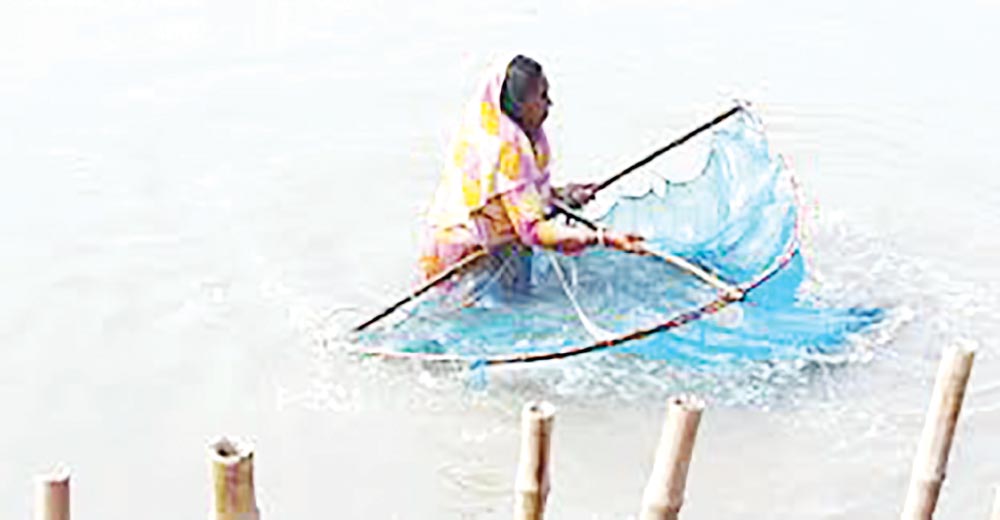 PAIKGACHA, KHULNA, July 30: Climate change is taking an increasing toll on women's health in Bangladesh's coastal districts, with rising salinity, acute shortages of safe drinking water and limited access to healthcare facilities, exposing thousands of women in Khulna and Satkhira to serious health risks.
Health experts say prolonged exposure to saline water is contributing to a growing incidence of reproductive health complications, including uterine infections, irregular menstruation, leucorrhoea, hypertension during pregnancy, miscarriages and premature births.
Women in the coastal belt often spend hours each day collecting water and performing household chores with saline water. Many also work in shrimp farming, remaining in brackish water for long periods, increasing their exposure to health hazards.
"Climate change has affected people in the coastal areas of Khulna and Satkhira more than most other parts of the country," said Khulna Civil Surgeon Dr Mahfuza Khatun.
"The shortage of safe drinking water and prolonged use of saline water have left many women suffering from various health problems. We have also received complaints that some local clinics are performing unnecessary hysterectomies on women with uterine complications. Stronger monitoring is needed," she said.
Residents say the situation has worsened over the past decades as rising sea levels, cyclones and saline intrusion have contaminated rivers and groundwater.
Fatema Begum of Goraikhali Village in Paikgachha said using saline water had damaged women's skin and hair and was linked to miscarriages and other health complications.
Women and children involved in collecting shrimp fry often remain in saline water for seven to eight hours a day, increasing the risk of reproductive health problems and skin diseases, she said.
According to the Bangladesh Sample Vital Statistics 2023 published by the Bangladesh Bureau of Statistics, 13.96 per cent of households in Khulna Division spend more than 30 minutes collecting drinking water from outside their homes. The report also shows that Khulna has the country's highest neonatal mortality rate, at 21.79 deaths per 1,000 live births.
Research cited by health experts indicates that women living in saline-prone coastal villages suffer disproportionately from uterine diseases, with many undergoing hysterectomies at relatively young ages.
A study conducted among pregnant women in Dacope Upazila found that excessive salt intake from drinking water increased the risks of hypertension, eclampsia, miscarriage and premature childbirth.
The World Bank, in its report An Unsustainable Life: The Impact of Heat on Health and the Economy of Bangladesh, found that women living in coastal areas where temperatures range between 28 and 32 degrees Celsius face a 25 per cent higher risk of miscarriage, citing previous research.
Loading...
Loading...
Also read



Editor : Iqbal Sobhan Chowdhury
Published by the Editor on behalf of the Observer Ltd. from Globe Printers, 24/A, New Eskaton Road, Ramna, Dhaka.
Editorial, News and Commercial Offices : Aziz Bhaban (2nd floor), 93, Motijheel C/A, Dhaka-1000.
Phone: PABX- 41053001-06; Advertisement: 41053012; 01793317829, 01550707291, E-mail: [email protected], [email protected] Online: email: [email protected] 41053014; 01550707297 Advertisement: 01550707296
Published by the Editor on behalf of the Observer Ltd. from Globe Printers, 24/A, New Eskaton Road, Ramna, Dhaka.
Editorial, News and Commercial Offices : Aziz Bhaban (2nd floor), 93, Motijheel C/A, Dhaka-1000.
Phone: PABX- 41053001-06; Advertisement: 41053012; 01793317829, 01550707291, E-mail: [email protected], [email protected] Online: email: [email protected] 41053014; 01550707297 Advertisement: 01550707296


