



| HEADLINE |

|
Millions Trapped in Poverty as Wealth Divide Deepens in Bangladesh
Published : Saturday, 1 August, 2026 at 12:00 AM


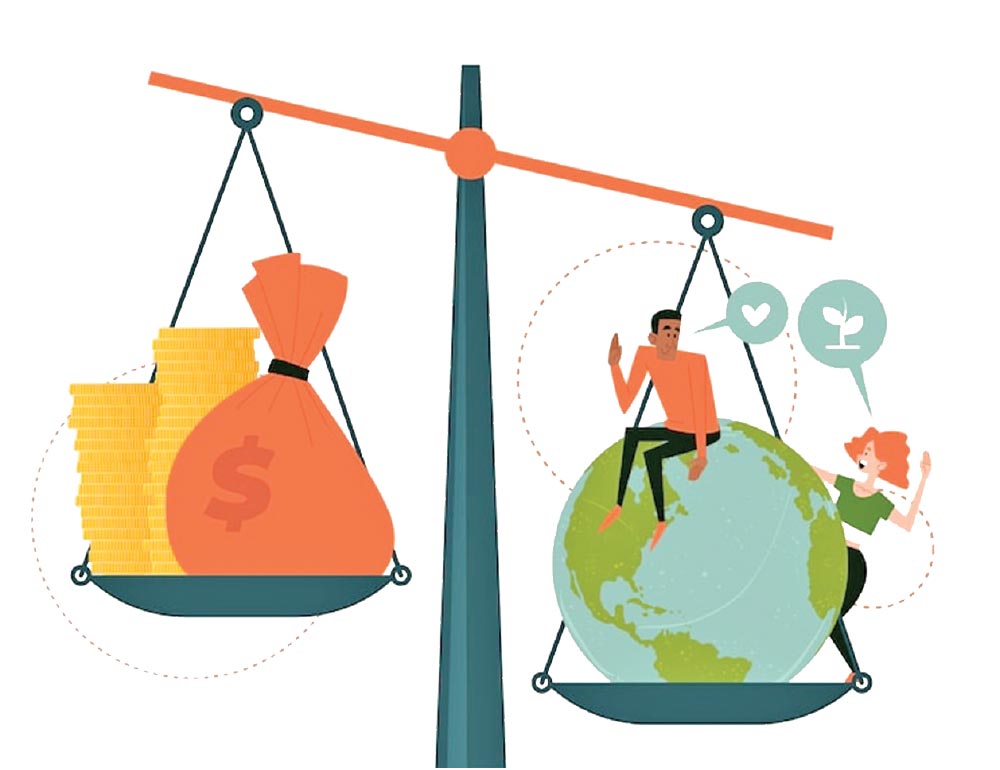 Bangladesh is increasingly becoming an economy of striking contradictions.
Despite a decade of economic growth, wealth inequality in Bangladesh remains severe and largely unchanged, with the richest 1% of the population controlling almost a quarter (24%) of the nation's total wealth, according to "World Inequality Report 2026", published by the Paris-based World Inequality Lab.
For every new millionaire emerging from the country's expanding financial system, hundreds of families are sliding deeper into economic insecurity. While wealth continues to accumulate at the top, millions remain trapped by inflation, shrinking purchasing power and limited economic opportunities, exposing a widening fault line beneath the country's impressive development story.
46 Million People Struggle to Make Ends Meet While Millionaire Bank Accounts Continue to Surge
The paradox raises a fundamental question for policymakers: is Bangladesh creating prosperity for the many, or merely expanding wealth for the few?
A recent survey by the Power and Participation Research Centre (PPRC) estimates the national poverty rate at 27.93%, equivalent to approximately 46.5 million people. Of these, nearly 15.5 million live in extreme poverty, struggling to secure even the minimum daily nutritional requirements.
Official figures portray a less severe but still troubling picture. The Bangladesh Bureau of Statistics (BBS) estimates the national poverty rate at between 18.7% and 19.2%, suggesting that around 32 million people remain unable to meet basic consumption needs. Yet even these figures may understate the challenge.
The World Bank has warned that Bangladesh's progress in reducing poverty has suffered a significant setback as geopolitical tensions, persistent inflation and slowing economic activity combine to erode household incomes. The institution estimates that instead of lifting 1.7 million people out of poverty this year, only about 500,000 are now expected to escape it, leaving an additional 1.2 million Bangladeshis trapped by deteriorating economic conditions.
According to the World Bank, the national poverty rate has climbed from 18.7% in 2022 to an estimated 21.4% in 2025, pushing another 1.4 million people below the poverty line. The escalation of conflict in the Middle East, rising global energy prices, disrupted trade routes and elevated transport costs have further complicated Bangladesh's recovery, squeezing household budgets and weakening external balances.
The lender projects economic growth of around 3.9% in FY2025�"26 while cautioning that inequality could widen further as inflation continues to outpace income growth for lower-income households. World Bank Country Director for Bangladesh and Bhutan Jean Pesmehas argued that restoring macroeconomic stability will require stronger private investment, higher domestic revenue mobilisation and accelerated structural reforms capable of generating productive employment.
The warning underscores a deeper concern. Bangladesh's challenge is no longer simply sustaining economic growth; it is ensuring that growth is broadly shared.
Despite widespread financial hardship, wealth at the upper end of the economy continues to expand.
Bangladesh Bank data show that the number of bank accounts holding deposits of Tk 1 crore or more has risen to 136,485, increasing by nearly 12,000 within a single year. International wealth assessments likewise indicate that tens of thousands of Bangladeshis now possess net assets exceeding US$1 million, illustrating the rapid accumulation of private wealth despite subdued economic momentum.
The geography of poverty is also changing. Once synonymous with chronic deprivation, Rangpur has gradually been overtaken by Barishal as the country's poorest division, reflecting shifting patterns of regional inequality and uneven economic development.
For many economists, these trends point to a structural imbalance rather than a temporary economic cycle.
Bangladesh has recorded remarkable gains in exports, industrialisation and per-capita income over the past two decades. Yet the benefits of that growth have been distributed unevenly, with asset ownership, financial access and income increasingly concentrated among a relatively small share of the population.
Persistent inflation, averaging around 8.5% over the past year, has intensified the pressure on lower- and middle-income households. Food, transport, housing and energy costs have risen faster than wages, eroding real purchasing power and forcing millions to reduce consumption or draw down savings simply to maintain basic living standards.
Many economists also argue that Bangladesh's tax structure has contributed to widening inequality. Heavy reliance on indirect taxes, particularly Value Added Tax (VAT), places a proportionately larger burden on poorer households, while comparatively limited direct taxation has constrained the redistributive role of fiscal policy.
Against this backdrop, the government led by Prime Minister Tarique Rahman has made narrowing inequality one of its principal economic objectives.
The FY2026�"27 budget combines expanded social protection with fiscal reforms intended to strengthen revenue collection, improve welfare delivery and rebuild confidence in public institutions. Flagship initiatives include digital Family Cards and Farmers' Cards designed to deliver subsidies and food assistance directly to vulnerable households while reducing administrative leakages and opportunities for corruption.
The administration has also proposed tax relief on selected essential commodities, reforms to modernise the National Board of Revenue, tighter tax compliance measures and broader initiatives aimed at improving transparency and accountability in public finance. Ministers argue that these policies are intended not only to cushion vulnerable families from inflation but also to lay the foundations for more inclusive and sustainable growth.
Economists generally welcome the government's emphasis on digital welfare delivery, arguing that direct transfers can substantially reduce leakage, improve targeting and enhance efficiency. Efforts to strengthen tax administration and remove long-standing privileges enjoyed by politically connected groups are also viewed as positive signals of institutional reform.
Yet most analysts stop short of declaring the government's strategy sufficient.
Many argue that social transfers, while essential for protecting vulnerable households, cannot by themselves reverse decades of structural inequality. They contend that sustained progress will depend on creating higher-productivity employment, improving education and healthcare, expanding investment, strengthening financial sector governance and broadening opportunities beyond the country's major urban centres.
Others believe Bangladesh's fiscal architecture still requires more fundamental reform. They advocate a gradual shift from a tax system dominated by consumption-based levies towards one that relies more heavily on progressive direct taxation, stronger compliance among high-income earners and more effective action against tax avoidance and illicit financial flows.
Financial experts also emphasise the importance of safeguarding the operational independence of Bangladesh Bank, restoring confidence in the banking sector and expanding affordable credit for small and medium-sized enterprises, which remain the backbone of employment and entrepreneurship.
Ultimately, the challenge confronting the Rahman administration extends well beyond reducing poverty statistics. Its success will be judged by whether it can transform economic growth into genuinely shared prosperity, where rising national wealth translates into rising living standards across all sections of society.
For millions of Bangladeshis, the real measure of progress will not be GDP growth, stock market performance or the expanding ranks of millionaire depositors. It will be whether inflation is brought under control, decent jobs become more accessible and the gulf separating the country's richest households from its poorest begins, at last, to narrow.
Until then, Bangladesh's economic narrative will remain defined by two sharply contrasting realities: an expanding class of wealthy depositors and millions of citizens still struggling to escape the grip of poverty.
Loading...
Loading...
Also read



Editor : Iqbal Sobhan Chowdhury
Published by the Editor on behalf of the Observer Ltd. from Globe Printers, 24/A, New Eskaton Road, Ramna, Dhaka.
Editorial, News and Commercial Offices : Aziz Bhaban (2nd floor), 93, Motijheel C/A, Dhaka-1000.
Phone: PABX- 41053001-06; Advertisement: 41053012; 01793317829, 01550707291, E-mail: [email protected], [email protected] Online: email: [email protected] 41053014; 01550707297 Advertisement: 01550707296
Published by the Editor on behalf of the Observer Ltd. from Globe Printers, 24/A, New Eskaton Road, Ramna, Dhaka.
Editorial, News and Commercial Offices : Aziz Bhaban (2nd floor), 93, Motijheel C/A, Dhaka-1000.
Phone: PABX- 41053001-06; Advertisement: 41053012; 01793317829, 01550707291, E-mail: [email protected], [email protected] Online: email: [email protected] 41053014; 01550707297 Advertisement: 01550707296


