



| HEADLINE |

|
When a Institution Teacher Beats a Child: What Should Parents Do?
Published : Sunday, 2 August, 2026 at 3:43 PM
Sakia Kawser Siddique


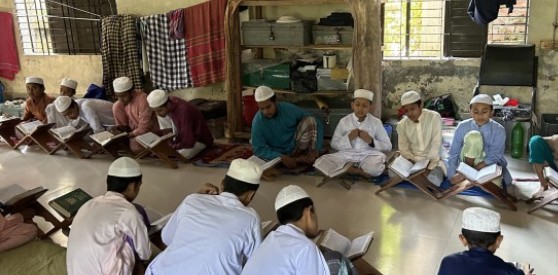
A child comes home from institution unusually quiet. There may be a bruise, pain or simply a sudden fear of returning the next day. When parents ask what happened, the child says a teacher beat them.
For parents, the immediate questions can be difficult: What should they do? Should they approach the institution authorities? How can they protect their child from further harm? And where can they seek help if the complaint is not properly addressed?
The first thing parents should know is that corporal punishment is prohibited in educational institutions in Bangladesh, including institutions covered by the government's 2011 guidelines.
The Guidelines for the Prohibition of Corporal and Mental Punishment of Students in Educational Institutions-2011 define corporal punishment as any kind of physical assault against a student and specifically cover institutions.
What counts as corporal punishment?
The government guidelines describe corporal punishment as physical assault and list examples including hitting or caning a student with a hand, foot or another object, throwing objects, punching or pinching, biting, pulling hair or ears, pushing or shoving, and forcing a student into painful or humiliating positions.
Parents therefore do not have to regard physical assault as simply a normal disciplinary practice.
Listen to the child first
When a child says a teacher has beaten them, the first response should be to create a safe environment for the child to speak.
Parents should remain calm and allow the child to explain what happened in their own words. They can ask simple questions about what happened, where and when it happened, who was involved and whether anyone else witnessed it.
The child should not be blamed or told that the punishment was deserved. Parents should also avoid coaching the child about what to say.
The objective is to understand what happened while making the child feel safe enough to speak.
Make sure the child is safe
The child's immediate safety should come first.
If the alleged perpetrator continues to have access to the child, parents should consider appropriate steps to prevent further harm while the complaint is being addressed.
If the child faces an immediate threat or the situation requires emergency assistance, parents should seek emergency help rather than waiting for an internal response from the institution.
Check for injuries and keep records
If the child has pain or a visible injury, parents should seek appropriate medical attention.
They should retain relevant medical records and, where appropriate, photographs of visible injuries. Parents can also write down the child's account as soon as possible, including the date, place, identity of the alleged perpetrator and any witnesses.
Keeping a clear record can be important if the matter is subsequently reported to the authorities.
Report the matter to the institution
Parents can raise the complaint with the head of the institution or its management and ask what action will be taken to protect the child.
The government's 2011 guidelines require educational institutions to take steps to prevent corporal and mental punishment. The High Court has also directed heads of educational institutions to take necessary measures to stop corporal punishment.
However, parents do not have to rely solely on an internal response if the child remains at risk or the response is inadequate.
Physical punishment is not a legitimate disciplinary shortcut
In its 2011 judgment, the High Court Division declared corporal punishment in educational institutions unconstitutional and directed the authorities to take steps to prevent it.
The judgment also addressed disciplinary consequences for teachers who impose corporal punishment.
The government's subsequent guidelines expressly cover institutions and prohibit corporal and mental punishment.
The issue, therefore, is not whether a teacher considers a beating an effective form of discipline. Physical punishment is prohibited under the relevant government guidelines.
Watch for changes in behaviour
Not every child will immediately say that they have been beaten.
Parents should pay attention to significant changes in behaviour, particularly if a child suddenly becomes fearful about attending institution, becomes unusually withdrawn or distressed, or becomes reluctant to talk about a particular teacher or class.
Such signs do not by themselves establish that a child has been abused. But they may be reasons for parents to gently ask whether something is wrong and give the child an opportunity to speak.
Do not blame or shame the child
A child who has been beaten may already feel frightened or humiliated.
Questions such as "What did you do to make the teacher angry?" can make a child feel responsible and discourage future disclosure.
Parents should instead reassure the child that they can talk about what happened.
That does not mean parents must decide immediately that every allegation is proven. It means giving the child a safe opportunity to speak while the facts are established.
KNOW THE NUMBERS
1098 �" Child Helpline
The Department of Social Services says Child Helpline 1098 operates nationwide and is available 24 hours a day. Children or others calling on their behalf can seek information, counselling and assistance concerning violence, abuse, exploitation and other child-protection concerns. The service can also refer cases to relevant service providers and authorities according to the child's needs.
109 �" Violence against women and children
Bangladesh Police lists 109 as the national helpline for violence against women and children.
999 �" Emergency service
For an immediate emergency requiring police, fire or ambulance assistance, Bangladesh Police lists 999 as the national emergency service.
Protecting children is not about blaming institution
The issue should not be framed as an indictment of institutions or religious education generally.
It is about accountability wherever children are educated.
The government's guidelines expressly prohibit corporal and mental punishment in educational institutions covered by the guidelines, including institutions. The High Court has also directed measures to prevent corporal punishment in educational institutions.
For parents, the message is straightforward: if a child says a teacher has beaten them, do not automatically dismiss it as discipline. Listen, protect, document and seek help when necessary.
A child's right to education should not come at the cost of their safety or dignity.
Loading...
Loading...
Also read







Editor : Iqbal Sobhan Chowdhury
Published by the Editor on behalf of the Observer Ltd. from Globe Printers, 24/A, New Eskaton Road, Ramna, Dhaka.
Editorial, News and Commercial Offices : Aziz Bhaban (2nd floor), 93, Motijheel C/A, Dhaka-1000.
Phone: PABX- 41053001-06; Advertisement: 41053012; 01793317829, 01550707291, E-mail: [email protected], [email protected] Online: email: [email protected] 41053014; 01550707297 Advertisement: 01550707296
Published by the Editor on behalf of the Observer Ltd. from Globe Printers, 24/A, New Eskaton Road, Ramna, Dhaka.
Editorial, News and Commercial Offices : Aziz Bhaban (2nd floor), 93, Motijheel C/A, Dhaka-1000.
Phone: PABX- 41053001-06; Advertisement: 41053012; 01793317829, 01550707291, E-mail: [email protected], [email protected] Online: email: [email protected] 41053014; 01550707297 Advertisement: 01550707296


