



| HEADLINE |

|

The Hollywood rape scandal
Published : Sunday, 9 August, 2026 at 6:27 PM
Observer Online Report


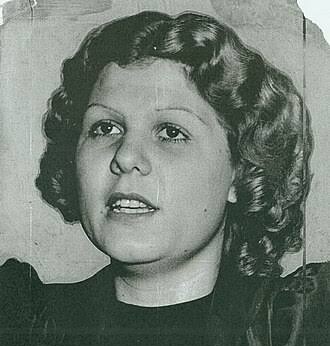
Collected Photo
In 1937, Patricia Douglas, a young dancer and film extra in Hollywood’s golden age, accused an MGM employee of rape after a studio party. Instead of justice, she faced public humiliation, victim-blaming and a professional blacklisting that effectively ended her career. Decades later, her story resurfaced through the documentary 'Girl 27'.
Hollywood in the 1930s was celebrated as the golden age of cinema, a time of glamorous stars, lavish parties and powerful studios. But behind that glittering image was a darker reality for many women working in the industry.
One of the most disturbing cases from that era involved Patricia Douglas, a young dancer and film extra who accused an MGM employee of sexually assaulting her following a studio party in 1937. Her decision to report the alleged rape was extraordinarily courageous for its time. But instead of receiving justice, Douglas found herself facing scrutiny, humiliation and attacks on her character.
A party that turned into a nightmare
In 1937, Metro-Goldwyn-Mayer (MGM) organized a corporate party at a ranch for employees and guests. Douglas was among a group of women hired to entertain the attendees by dancing.
According to Douglas's account, she was forced to drink alcohol during the event. After becoming ill, she left the party. She later alleged that MGM sales employee David Ross took her into a car, where he raped her.
Douglas went to a hospital soon after the incident and reported the alleged assault to police. She also paid her own legal expenses as she pursued the case.
But what followed became almost as troubling as the original allegation.
Douglas later said that, rather than preserving potential evidence, hospital staff cleaned her body, potentially destroying important forensic evidence. The case then became the subject of intense media attention.
Instead of focusing on the allegation, some reports scrutinized Douglas's personal life and portrayed her as sexually promiscuous or immoral. Claims about her alleged sexual health were also circulated. There were even allegations that the prosecutor had accepted a bribe in exchange for dropping the case.Ultimately, the case did not result in a trial or conviction.
An allegation that cost her career
Douglas's decision to speak out came at a heavy personal and professional cost.
Following the controversy, she largely disappeared from Hollywood. Researchers and historians have suggested that she was informally blacklisted, making it extremely difficult for her to find further work in the industry.
For decades, Douglas remained largely silent about what had happened. She eventually left Hollywood and lived away from the public spotlight.
Her experience became an example of how difficult it could be for women to challenge powerful institutions in an industry dominated by major studios and influential men.
Her story resurfaced decades later
Several decades after the alleged assault, filmmaker and writer David Stenn tracked Douglas down. Initially, she was reluctant to revisit the painful events.
Later in life, however, Douglas agreed to recount her experience on camera. Her interview became a central part of Stenn's 2007 documentary 'Girl 27'.
The documentary explored not only Douglas's case but also the broader culture of sexual exploitation and abuse faced by women in early Hollywood.
The title 'Girl 27' refers to Douglas's designation as 'Girl 27', the 27th woman among the extras hired for the MGM event.
Douglas was born in 1917. She was about 20 years old when the alleged assault took place. She died in 2003, before the documentary was released.
A story that returned to the spotlight
'Girl 27' received attention at the Sundance Film Festival and brought renewed public interest to Douglas's story.
Actresses including Rose McGowan and Jessica Chastain praised the documentary and highlighted its importance in understanding Hollywood's history of sexual abuse and institutional power.
McGowan also alleged that other women had been sexually assaulted at the same ranch where the party took place, although no comparable legal proceedings became part of Douglas's case.
Why Patricia Douglas's story still matters
Patricia Douglas's case remains controversial and significant because it illustrates the enormous obstacles faced by women who accused powerful people and institutions of sexual violence long before the modern #MeToo movement.
Her story has been cited by researchers and film historians as an example of victim-blaming, abuse of institutional power and the failure of Hollywood's system to protect vulnerable women.
Although Douglas never received the courtroom justice she sought, her story eventually emerged from decades of silence through 'Girl 27'.
The 86-minute documentary offers a disturbing look at the hidden history of Hollywood and at how money, power and fear could keep the truth buried for generations.
-HIS

Loading...
Loading...
Also read









Editor : Iqbal Sobhan Chowdhury
Published by the Editor on behalf of the Observer Ltd. from Globe Printers, 24/A, New Eskaton Road, Ramna, Dhaka.
Editorial, News and Commercial Offices : Aziz Bhaban (2nd floor), 93, Motijheel C/A, Dhaka-1000.
Phone: PABX- 41053001-06; Advertisement: 41053012; 01793317829, 01550707291, E-mail: [email protected], [email protected] Online: email: [email protected] 41053014; 01550707297 Advertisement: 01550707296
Published by the Editor on behalf of the Observer Ltd. from Globe Printers, 24/A, New Eskaton Road, Ramna, Dhaka.
Editorial, News and Commercial Offices : Aziz Bhaban (2nd floor), 93, Motijheel C/A, Dhaka-1000.
Phone: PABX- 41053001-06; Advertisement: 41053012; 01793317829, 01550707291, E-mail: [email protected], [email protected] Online: email: [email protected] 41053014; 01550707297 Advertisement: 01550707296


