



| HEADLINE |

|

Hardliner Mohsen Rezaei takes over Iran's security body
Published : Monday, 10 August, 2026 at 7:08 PM
Observer Online Report


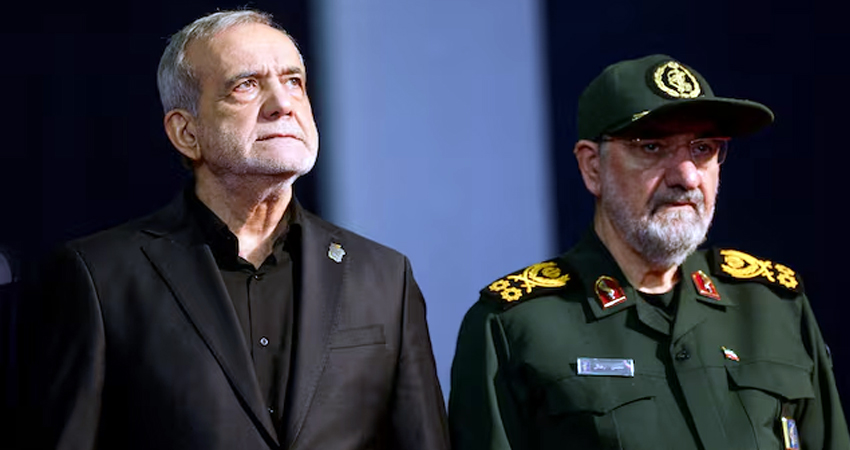
Iran has appointed veteran hardliner Mohsen Rezaei as secretary of its Supreme National Security Council (SNSC), promoting a close ally of Supreme Leader Ayatollah Mojtaba Khamenei to the key post.
According to a report by Reuters, the appointment comes more than five months into the ongoing conflict involving the United States.
Rezaei, 71, replaces Mohammad Baqer Zolqadr as second-in-command of the SNSC, the body that coordinates Iran's national security and foreign policy under the chairmanship of President Masoud Pezeshkian. Zolqadr has been reassigned as a political adviser to the Supreme Leader.
In a separate decree issued on Sunday, Supreme Leader Ayatollah Mojtaba Khamenei appointed Rezaei as his official representative on the SNSC, citing his long military career and executive experience.
Early Life and Military Leadership
Rezaei joined the Islamic Revolutionary Guard Corps (IRGC) shortly after the 1979 Islamic Revolution. He became its commander-in-chief in 1981 at the age of 27 and led the force for 16 years, expanding its ground, naval, and air capabilities during the 1980-1988 Iran-Iraq War.
Prior to the revolution, Rezaei was active in the anti-Pahlavi movement as a teenager. He was imprisoned by the Shah's security service, SAVAK, in 1973 and helped establish the Mansouroun militant group.
Political Roles and Stance
After stepping down as IRGC commander, Rezaei became a prominent political and security figure, running for president multiple times. He served as vice president for economic affairs from 2021 to 2023 under late President Ebrahim Raisi and holds a doctorate in economics from Tehran University.
Known for his hardline positions, Rezaei served as military adviser to Supreme Leader Mojtaba Khamenei after the leader succeeded his late father. Throughout the current conflict, Rezaei has voiced deep skepticism toward negotiations and issued stark warnings against foreign aggression.
Iran-Iraq War Controversies
Rezaei’s wartime record remains a subject of domestic debate. Critics have questioned his command during costly offensives, including Operation Karbala-4 in December 1986, which resulted in heavy Iranian casualties.
In 2018, his public remarks suggesting the operation was conducted partly as a deception strategy sparked widespread criticism from war veterans, bereaved families, and senior political figures.
-SA
Loading...
Loading...
Also read




Editor : Iqbal Sobhan Chowdhury
Published by the Editor on behalf of the Observer Ltd. from Globe Printers, 24/A, New Eskaton Road, Ramna, Dhaka.
Editorial, News and Commercial Offices : Aziz Bhaban (2nd floor), 93, Motijheel C/A, Dhaka-1000.
Phone: PABX- 41053001-06; Advertisement: 41053012; 01793317829, 01550707291, E-mail: [email protected], [email protected] Online: email: [email protected] 41053014; 01550707297 Advertisement: 01550707296
Published by the Editor on behalf of the Observer Ltd. from Globe Printers, 24/A, New Eskaton Road, Ramna, Dhaka.
Editorial, News and Commercial Offices : Aziz Bhaban (2nd floor), 93, Motijheel C/A, Dhaka-1000.
Phone: PABX- 41053001-06; Advertisement: 41053012; 01793317829, 01550707291, E-mail: [email protected], [email protected] Online: email: [email protected] 41053014; 01550707297 Advertisement: 01550707296


