



| HEADLINE |

|
China's economic reformer Zhu Rongji dies at 97
Published : Wednesday, 12 August, 2026 at 7:57 PM
Observer Online Report


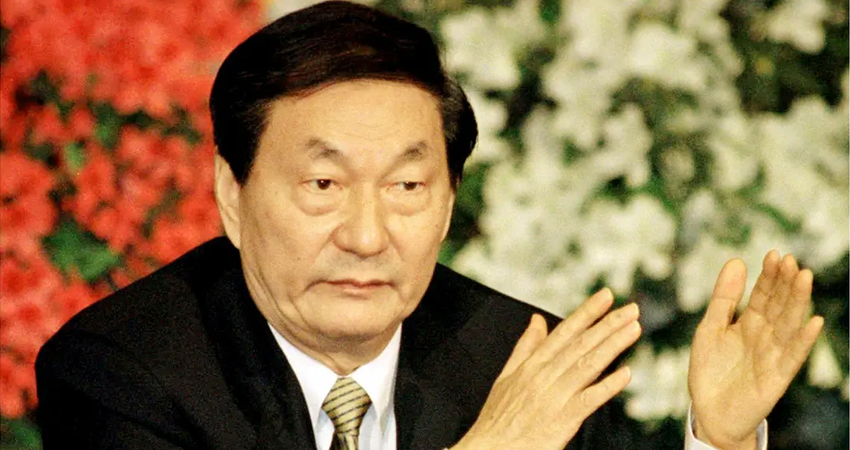
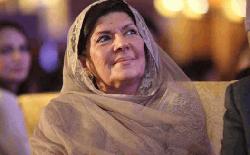
Collected Photo
The visionary reformer of China’s economy and turning it into the ‘world’s factory’ - former Chinese Prime Minister Zhu Rongji passed away on Wednesday (August 12).
State news agency Xinhua confirmed his death in Beijing.
Zhu died around 11:00AM local while undergoing treatment in Beijing. He was 97, the report stated.
The sharp-tongued and decisive leader reformed China's state-owned industries and led its entry into the World Trade Organization (WTO) during the 1990s, accelerating the country's economic growth.
Zhu served as China's economic premier from 1998 to 2003, pushing through aggressive reforms despite resistance from Communist Party conservatives and state-industry heads.
Though millions lost jobs during the restructuring, his moves made state enterprises profitable and helped China surpass Japan in 2010 to become the world's second-largest economy.
Building on Deng Xiaoping's 1979 reforms, Zhu's persistence in securing WTO membership in December 2001 transformed China into a global export powerhouse.
Between 2000 and 2010, China maintained annual economic growth above 8 per cent, peaking at 14.2 per cent in 2007.
Taking office as premier at 69 in 1998, Zhu gained public popularity by criticizing official corruption and taking personal accountability for government failures. His demanding style earned him the nickname "Mad Zhu."
He famously declared in 1998: "I have prepared 100 coffins here - 99 for corrupt officials, and one for myself."
Born on October 23, 1928, in Mao Zedong's home province of Hunan, Zhu suffered early setbacks for his outspoken nature.
Purged as a "right-handed" critic in 1957, his career was stalled for 22 years, and he was exiled to a village during the Cultural Revolution.
Rehabilitated in 1979, Zhu rose quickly, becoming Mayor of Shanghai in 1988, Vice Premier in 1991, and a member of the Politburo Standing Committee in 1993.
As Vice Premier, he brought inflation under control, reformed the tax system to direct local revenues to Beijing, and overhauled China's urban housing market in 1998 by allowing private homeownership.
After retiring as premier in 2003, the architect of modern China's economy stepped back from public life.
-SA
Loading...
Loading...
Also read





Editor : Iqbal Sobhan Chowdhury
Published by the Editor on behalf of the Observer Ltd. from Globe Printers, 24/A, New Eskaton Road, Ramna, Dhaka.
Editorial, News and Commercial Offices : Aziz Bhaban (2nd floor), 93, Motijheel C/A, Dhaka-1000.
Phone: PABX- 41053001-06; Advertisement: 41053012; 01793317829, 01550707291, E-mail: [email protected], [email protected] Online: email: [email protected] 41053014; 01550707297 Advertisement: 01550707296
Published by the Editor on behalf of the Observer Ltd. from Globe Printers, 24/A, New Eskaton Road, Ramna, Dhaka.
Editorial, News and Commercial Offices : Aziz Bhaban (2nd floor), 93, Motijheel C/A, Dhaka-1000.
Phone: PABX- 41053001-06; Advertisement: 41053012; 01793317829, 01550707291, E-mail: [email protected], [email protected] Online: email: [email protected] 41053014; 01550707297 Advertisement: 01550707296


