



| HEADLINE |

|

Oil prices rise again as tensions escalate around Iran
Published : Friday, 14 August, 2026 at 9:10 AM
Observer Online Report



Oil prices rose again on Friday as renewed military tensions surrounding Iran fueled fresh concerns over global crude supplies, particularly after the United States threatened to maintain its naval blockade of Iran indefinitely.**
According to Reuters, at 1:30 a.m. GMT on Friday, Brent crude futures rose 9 cents, or 0.1 percent, to $87.16 a barrel. U.S. West Texas Intermediate (WTI) crude also gained 4 cents to $81.29 a barrel.
Both benchmarks had fallen more than 2 percent on Thursday amid concerns over weakening global oil demand. Despite the recent decline, Brent is still on track to gain around 4 percent this week, while WTI is also heading for a weekly increase of roughly 4 percent.
Meanwhile, Hossein Taeb, head of Iran's paramilitary Basij force, said the Strait of Hormuz is under the “management and control” of the Islamic Republic, according to the semi-official Fars news agency.
A prolonged conflict around the strategic waterway could disrupt global oil supplies, raising concerns that an extended war could put further upward pressure on crude prices.
However, weaker demand expectations are limiting the rise in oil prices. Both OPEC and the International Energy Agency (IEA) lowered their forecasts for global oil demand growth this week.
U.S. crude inventories also recorded their largest weekly increase in more than three and a half years, adding further pressure to prices.
Tim Waterer, chief market analyst at KCM, said two opposing forces are currently shaping the oil market. Supply concerns are supporting prices, while weaker demand forecasts are preventing a sharper increase.
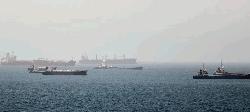
Separately, the UAE's state news agency WAM reported that two vessels owned by Abu Dhabi National Oil Company (ADNOC) were attacked while passing through the Strait of Hormuz on Thursday evening.
The United Arab Emirates government blamed Iran for the attacks, further intensifying concerns over the security of the Strait of Hormuz and the potential impact on global oil supplies.
-HIS
Loading...
Loading...
Also read







Editor : Iqbal Sobhan Chowdhury
Published by the Editor on behalf of the Observer Ltd. from Globe Printers, 24/A, New Eskaton Road, Ramna, Dhaka.
Editorial, News and Commercial Offices : Aziz Bhaban (2nd floor), 93, Motijheel C/A, Dhaka-1000.
Phone: PABX- 41053001-06; Advertisement: 41053012; 01793317829, 01550707291, E-mail: [email protected], [email protected] Online: email: [email protected] 41053014; 01550707297 Advertisement: 01550707296
Published by the Editor on behalf of the Observer Ltd. from Globe Printers, 24/A, New Eskaton Road, Ramna, Dhaka.
Editorial, News and Commercial Offices : Aziz Bhaban (2nd floor), 93, Motijheel C/A, Dhaka-1000.
Phone: PABX- 41053001-06; Advertisement: 41053012; 01793317829, 01550707291, E-mail: [email protected], [email protected] Online: email: [email protected] 41053014; 01550707297 Advertisement: 01550707296


