



| HEADLINE |

|

Aug 15 Tragedy
Bangabandhu’s 51st assassination day today
Published : Saturday, 15 August, 2026 at 12:00 AM
Staff Correspondent


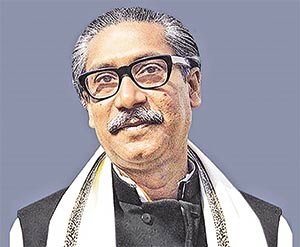 Fifty-one years ago, the lights of a family home at Dhanmondi 32 were extinguished in one of the darkest chapters of Bangladesh’s political history. On this day in 1975, a group of army personnel assassinated the then President Bangabandhu Sheikh Mujibur Rahman at his residence, killing most of his family members and leaving a wound that continues shape the country’s politics for decades.
Born on March 17, 1920, in Tungipara, Gopalganj, Sheikh Mujibur Rahman was affectionately called ‘Khoka’ by his parents. Among a generation of prominent politicians who emerged in the late 1960s, his political leadership and nationalist vision gradually set him apart, eventually making him the central figure of Bangladesh's independence struggle.
His March 7, 1971 speech at the then Ramna Race Course Maidan, now Suhrawardy Udyan, became a defining moment in the country's political history and inspired the people during the Liberation War. Addressing millions gathered there, he declared: " Ebarer Sangram Amader Muktir Sangram, Ebarer Sangram Swadheenotar Sangram (This time's struggle is our struggle for freedom, this time's struggle is our struggle for independence)."
The events of August 15, however, extended far beyond Bangabandhu himself. His wife Begum Fazilatunnesa Mujib, sons Sheikh Kamal, Sheikh Jamal and 10-year-old Sheikh Russell, daughters-in-law Sultana Kamal and Rosy Jamal, and his only brother Sheikh Abu Naser were killed that night.
Colonel Jamil, who rushed to Bangabandhu's residence after receiving his call, SB officer Siddiqur Rahman and army member Syed Mahbubul Haque were also killed.
Bangabandhu's daughters Sheikh Hasina and Sheikh Rehana survived because they were staying in Brussels, Belgium, at the time.
The political and legal consequences of the killings unfolded over years. After the Awami League returned to power in 1996 under Sheikh Hasina, the trial of the assassination began. August 15 was subsequently observed as the National Day of Mourning and declared a public holiday.
In the assassination case, a court on November 8, 1998 sentenced 15 people to death. The High Court later upheld death sentences against 12 of the accused. Six convicts have since been executed, one died abroad, while five still remain absconding.
Fifty-one years after the assassination, August 15 remains intertwined with Bangladesh's contested political memory, the evolution of its constitutional order and the unresolved tensions surrounding the country's history. For a nation born through a prolonged struggle for political and national rights, the day continues to raise questions about power, accountability, justice and the ways in which history is remembered.
Loading...
Loading...



Editor : Iqbal Sobhan Chowdhury
Published by the Editor on behalf of the Observer Ltd. from Globe Printers, 24/A, New Eskaton Road, Ramna, Dhaka.
Editorial, News and Commercial Offices : Aziz Bhaban (2nd floor), 93, Motijheel C/A, Dhaka-1000.
Phone: PABX- 41053001-06; Advertisement: 41053012; 01793317829, 01550707291, E-mail: [email protected], [email protected] Online: email: [email protected] 41053014; 01550707297 Advertisement: 01550707296
Published by the Editor on behalf of the Observer Ltd. from Globe Printers, 24/A, New Eskaton Road, Ramna, Dhaka.
Editorial, News and Commercial Offices : Aziz Bhaban (2nd floor), 93, Motijheel C/A, Dhaka-1000.
Phone: PABX- 41053001-06; Advertisement: 41053012; 01793317829, 01550707291, E-mail: [email protected], [email protected] Online: email: [email protected] 41053014; 01550707297 Advertisement: 01550707296


