



| HEADLINE |

|
Gridlock nightmare: Why Dhaka’s traffic collapses every single day
Published : Sunday, 23 August, 2026 at 6:19 PM
Observer Online Report


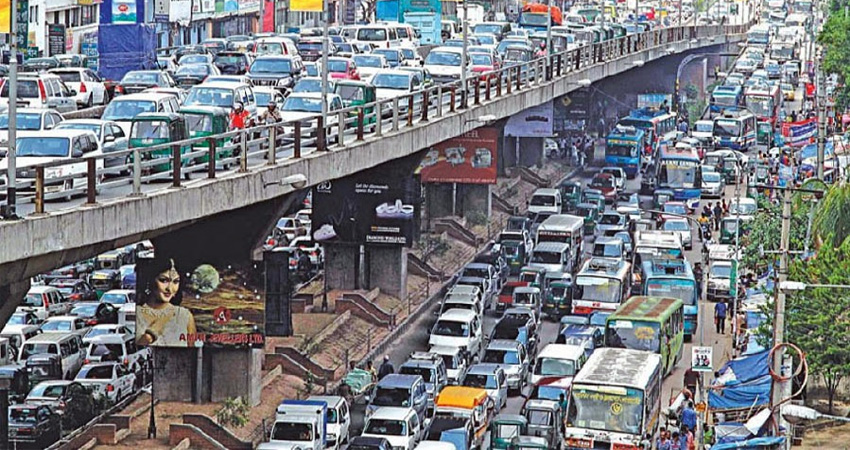
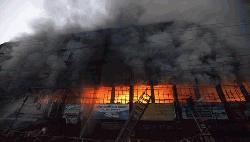
Collected Photo
Dhaka is considered as one of the busiest cities in the world with continuous gridlock daily - where traffic comes to standstill from morning to night.
Compounding factors such as rainfall, water-logging, and even damaged roads - make comfortable commuting nearly impossible. Political and social rallies, unplanned development, lack of coordination and lastly, ‘Tesla’ of Dhaka (engine powered rickshaws) contribute greatly to disrupt the working hours of this city.
Analysis of reports by Traffic Division of Dhaka Metropolitan Police (DMP) covering July and August reveal that severe traffic congestion stems less from traffic management failures, rather from administrative issues, social unrest and physical infrastructure deficits.
When a major intersection closes, traffic congestion cascades across adjacent routes, trapping office-goers, students, public transport passengers, and emergency services.
DMP internal reports analysis
The DMP Traffic Division documented specific causes behind gridlock incidents across the capital in July and August.
In July alone, 21 major traffic congestion events were recorded. Incidents like protests, local residents or transport operators blocked or occupied the roads in at least 16 of these instances. Five of the incidents were linked to rain, water-logging and road damage, while police closed one road due to security reasons.
Education related protests: on July 14-15, students blocked major intersections; including BNS tower, Science Lab, Board of Intermediate and Secondary Education, and the ICB incoming road with the demand of the resignation of Education Ministry. HSC examinees also blocked ICB square, Gulshan-1 and Shahbagh. Such demonstrations alone disrupted traffic situation across the city over two days.
Diverse causes with identical impacts: On July 4, local dwellers from Mirpur-10 demanded justice for the assault and murder of an eight-year-old child. On July 5, auto-rickshaw drivers blocked roads near Gulistan underground market protesting auto-rickshaw dumping. Job seekers demanded extension of the age limit for civil services entry - effectively blocking the UBL crossing on July 12, while CNG drivers blocked outgoing lanes near Khilkhet Police Station on July 22 due to gas shortage.
Protests and rallies in August: In the DMP’s report, 20 primary causes of severe traffic congestion in August were addressed. On August 14, NCP erected a stage near Jatrabari Popular Hospital, causing a massive gridlock. On the same day, residents from Bihari Camp blocked Mirpur-10 demanding potable water. Rallies for Youth Day on August 12 blocked the Press Club area, Matsya Bhaban and Kakrail crossings. On August 6, a sit-in of Jamaat-e-Islami and its Ameer Dr Shafiqur Rahman at Secretariat area caused severe gridlock at Gulistan's Zero Point.
Infrastructure falls, rainfall and funding delays
Not just political and social demonstrations, physical infrastructure and adverse weather conditions also contributed significantly in daily gridlocks. Heavy rainfall on July 12 led to severe water-logging under the Karwan Bazar section of the elevated expressway, as well as in Banani and Khilkhet. Rainwater caused a four-to-five-foot section of the road at Narinda-Dholaikhal crossing to cave in, rendering it impossible for heavy vehicles to move through the road.
However, that road has been repaired and traffic movement is normal through that road.
Metro excavation works, WASA constructions along the Rampura-Badda corridor narrowed the roads under flyovers.
DMP Additional Commissioner (Traffic) Md Anisur Rahman stated that daily congestion reports are compiled to track root causes. "Daily traffic congestion is rarely caused by traffic management alone; it is the result of external events," Rahman explained. "When stages are suddenly built on roads; entire traffic networks freeze. Recent heavy rains flooded Manik Mia Avenue, causing citywide transport disruptions. Conflicts near educational institutions and unexpected fires also trigger severe delays."
Drone surveillance and automated enforcement
DMP has already introduced Artificial Intelligence (AI) cameras around major highways and roads in the city to address this crisis. Drone surveillances are to introduce to reduce congestions. A single drone will initially be deployed on a trial basis to collect real-time data across high congestion corridors and flyovers in Dhaka to pinpoint the exact cause of traffic gridlock.
Future expansion plans include integrating Automated Number Plate Recognition (ANPR) technology to issue video citations and equipping drones with audio speakers to warn traffic violators directly from above.
-SA
Loading...
Loading...
Also read





Editor : Iqbal Sobhan Chowdhury
Published by the Editor on behalf of the Observer Ltd. from Globe Printers, 24/A, New Eskaton Road, Ramna, Dhaka.
Editorial, News and Commercial Offices : Aziz Bhaban (2nd floor), 93, Motijheel C/A, Dhaka-1000.
Phone: PABX- 41053001-06; Advertisement: 41053012; 01793317829, 01550707291, E-mail: [email protected], [email protected] Online: email: [email protected] 41053014; 01550707297 Advertisement: 01550707296
Published by the Editor on behalf of the Observer Ltd. from Globe Printers, 24/A, New Eskaton Road, Ramna, Dhaka.
Editorial, News and Commercial Offices : Aziz Bhaban (2nd floor), 93, Motijheel C/A, Dhaka-1000.
Phone: PABX- 41053001-06; Advertisement: 41053012; 01793317829, 01550707291, E-mail: [email protected], [email protected] Online: email: [email protected] 41053014; 01550707297 Advertisement: 01550707296


