



| HEADLINE |

|

Tax Even at a Loss! Small and medium businessmen under pressure
Published : Monday, 24 August, 2026 at 2:29 PM
Tanjeem


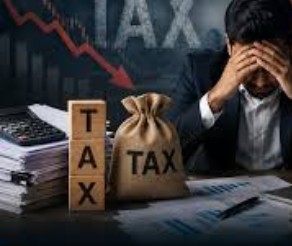
Bangladesh’s move to strengthen revenue collection through a turnover-based tax is raising concerns among small and medium-sized businesses, particularly those operating on thin margins or even at a loss.
The debate centres on Section 163 of the Income Tax Act, 2023, amended through the Finance Act, 2026. While tax authorities view the provision as a tool to secure minimum revenue and curb tax evasion, many small and medium entrepreneurs say it could impose a tax burden even when their businesses generate little or no profit.
Under the amended Section 163(6), where the tax calculated under the regular provisions is lower than the prescribed turnover tax, the taxpayer must pay turnover tax at the applicable rate on the business’s gross receipts or turnover.
In effect, for businesses covered by the provision, tax liability can be determined on the basis of sales rather than actual profit.
The amended law sets turnover tax at: three per cent for manufacturers of tobacco products, 2.5 per cent for manufacturers of carbonated and sweetened beverages, 1.5 per cent for mobile phone operators and NTTN companies, one per cent for other businesses covered by the provision.
The law exempts several activities, including the import and sale of fertiliser, seeds and essential consumer goods by government agencies, commission-based businesses, delivery-order businesses and money-exchange businesses.
Why the government wants turnover-based taxation: The government’s rationale is straightforward: determining actual business profits can be difficult when companies maintain inadequate accounts or underreport income and inflate expenses to reduce taxable profits.
A turnover-based tax provides the tax administration with a relatively simple mechanism to ensure a minimum level of revenue while making tax evasion more difficult.
But the same mechanism can create difficulties for businesses whose turnover is high while their profit margins are extremely low.
Tax even when there is no profit: Consider a hypothetical business, Rahim Traders, with annual sales of Tk 50 lakh.
After paying for inventory, shop rent, employee salaries, electricity, transportation, loan interest and other operating expenses, the business ends the year with a Tk 1 lakh loss.
Under a conventional profit-based tax system, the business would generally have no taxable income from which income tax could be assessed.
But if Rahim Traders falls under the 1% turnover-tax provision, it could face a turnover tax of Tk50,000 despite making no profit.
The result is effectively a tax liability created by sales volume rather than profitability.
A similar problem could arise for a grocery store with annual sales of Tk 1 crore but an actual annual profit of only Tk 2 lakh.
At a one per cent turnover-tax rate, the business would owe Tk 1 lakh-- equivalent to half of its actual profit.
For a small entrepreneur already struggling with rising costs, such a payment could reduce working capital and limit the ability to maintain or expand the business.
Thin margins, rising costs: The issue is particularly significant for Bangladesh’s small and medium enterprises, many of which operate with limited capital and narrow profit margins.
Rising raw-material prices, high bank interest rates, electricity and fuel costs, transportation expenses and intense market competition have left many businesses operating on very low margins.
For such businesses, a tax based on gross turnover rather than net profit can become an additional financial burden.
This does not necessarily make turnover taxation inherently unreasonable. It can help ensure minimum tax collection, discourage manipulation of accounts and improve tax administration.
The concern, however, is whether a mechanism designed to prevent tax evasion could inadvertently penalise businesses that are genuinely making little or no profit.
Finding the balance: Tax policy needs to strike a balance between revenue mobilisation and economic growth, particularly when it comes to smaller enterprises that generate employment and drive local investment.
Policymakers could consider targeted relief for businesses facing genuine losses, special provisions for enterprises operating on exceptionally low margins, or mechanisms allowing turnover-tax liabilities to be reconsidered under clearly defined conditions.
At the same time, stronger digital bookkeeping, transparent financial reporting and effective auditing could make it easier for tax authorities to determine actual income, reducing excessive reliance on turnover-based taxation.
Small and medium-sized entrepreneurs are among the key drivers of Bangladesh’s production, investment and employment. A tax system that secures government revenue while allowing viable businesses to survive, invest and expand would therefore serve both fiscal and economic objectives.
The amended Section 163 may strengthen the government’s ability to collect revenue and tackle tax evasion. But its success will ultimately depend on how fairly it is applied-- and whether genuine loss-making and low-margin businesses are protected from disproportionate tax pressure.
The debate centres on Section 163 of the Income Tax Act, 2023, amended through the Finance Act, 2026. While tax authorities view the provision as a tool to secure minimum revenue and curb tax evasion, many small and medium entrepreneurs say it could impose a tax burden even when their businesses generate little or no profit.
Under the amended Section 163(6), where the tax calculated under the regular provisions is lower than the prescribed turnover tax, the taxpayer must pay turnover tax at the applicable rate on the business’s gross receipts or turnover.
In effect, for businesses covered by the provision, tax liability can be determined on the basis of sales rather than actual profit.
The amended law sets turnover tax at: three per cent for manufacturers of tobacco products, 2.5 per cent for manufacturers of carbonated and sweetened beverages, 1.5 per cent for mobile phone operators and NTTN companies, one per cent for other businesses covered by the provision.
The law exempts several activities, including the import and sale of fertiliser, seeds and essential consumer goods by government agencies, commission-based businesses, delivery-order businesses and money-exchange businesses.
Why the government wants turnover-based taxation: The government’s rationale is straightforward: determining actual business profits can be difficult when companies maintain inadequate accounts or underreport income and inflate expenses to reduce taxable profits.
A turnover-based tax provides the tax administration with a relatively simple mechanism to ensure a minimum level of revenue while making tax evasion more difficult.
But the same mechanism can create difficulties for businesses whose turnover is high while their profit margins are extremely low.
Tax even when there is no profit: Consider a hypothetical business, Rahim Traders, with annual sales of Tk 50 lakh.
After paying for inventory, shop rent, employee salaries, electricity, transportation, loan interest and other operating expenses, the business ends the year with a Tk 1 lakh loss.
Under a conventional profit-based tax system, the business would generally have no taxable income from which income tax could be assessed.
But if Rahim Traders falls under the 1% turnover-tax provision, it could face a turnover tax of Tk50,000 despite making no profit.
The result is effectively a tax liability created by sales volume rather than profitability.
A similar problem could arise for a grocery store with annual sales of Tk 1 crore but an actual annual profit of only Tk 2 lakh.
At a one per cent turnover-tax rate, the business would owe Tk 1 lakh-- equivalent to half of its actual profit.
For a small entrepreneur already struggling with rising costs, such a payment could reduce working capital and limit the ability to maintain or expand the business.
Thin margins, rising costs: The issue is particularly significant for Bangladesh’s small and medium enterprises, many of which operate with limited capital and narrow profit margins.
Rising raw-material prices, high bank interest rates, electricity and fuel costs, transportation expenses and intense market competition have left many businesses operating on very low margins.
For such businesses, a tax based on gross turnover rather than net profit can become an additional financial burden.
This does not necessarily make turnover taxation inherently unreasonable. It can help ensure minimum tax collection, discourage manipulation of accounts and improve tax administration.
The concern, however, is whether a mechanism designed to prevent tax evasion could inadvertently penalise businesses that are genuinely making little or no profit.
Finding the balance: Tax policy needs to strike a balance between revenue mobilisation and economic growth, particularly when it comes to smaller enterprises that generate employment and drive local investment.
Policymakers could consider targeted relief for businesses facing genuine losses, special provisions for enterprises operating on exceptionally low margins, or mechanisms allowing turnover-tax liabilities to be reconsidered under clearly defined conditions.
At the same time, stronger digital bookkeeping, transparent financial reporting and effective auditing could make it easier for tax authorities to determine actual income, reducing excessive reliance on turnover-based taxation.
Small and medium-sized entrepreneurs are among the key drivers of Bangladesh’s production, investment and employment. A tax system that secures government revenue while allowing viable businesses to survive, invest and expand would therefore serve both fiscal and economic objectives.
The amended Section 163 may strengthen the government’s ability to collect revenue and tackle tax evasion. But its success will ultimately depend on how fairly it is applied-- and whether genuine loss-making and low-margin businesses are protected from disproportionate tax pressure.
Loading...
Loading...
Also read








Editor : Iqbal Sobhan Chowdhury
Published by the Editor on behalf of the Observer Ltd. from Globe Printers, 24/A, New Eskaton Road, Ramna, Dhaka.
Editorial, News and Commercial Offices : Aziz Bhaban (2nd floor), 93, Motijheel C/A, Dhaka-1000.
Phone: PABX- 41053001-06; Advertisement: 41053012; 01793317829, 01550707291, E-mail: [email protected], [email protected] Online: email: [email protected] 41053014; 01550707297 Advertisement: 01550707296
Published by the Editor on behalf of the Observer Ltd. from Globe Printers, 24/A, New Eskaton Road, Ramna, Dhaka.
Editorial, News and Commercial Offices : Aziz Bhaban (2nd floor), 93, Motijheel C/A, Dhaka-1000.
Phone: PABX- 41053001-06; Advertisement: 41053012; 01793317829, 01550707291, E-mail: [email protected], [email protected] Online: email: [email protected] 41053014; 01550707297 Advertisement: 01550707296


