



| HEADLINE |

|

BERC proposes Tk6.48 tariff for solar plants


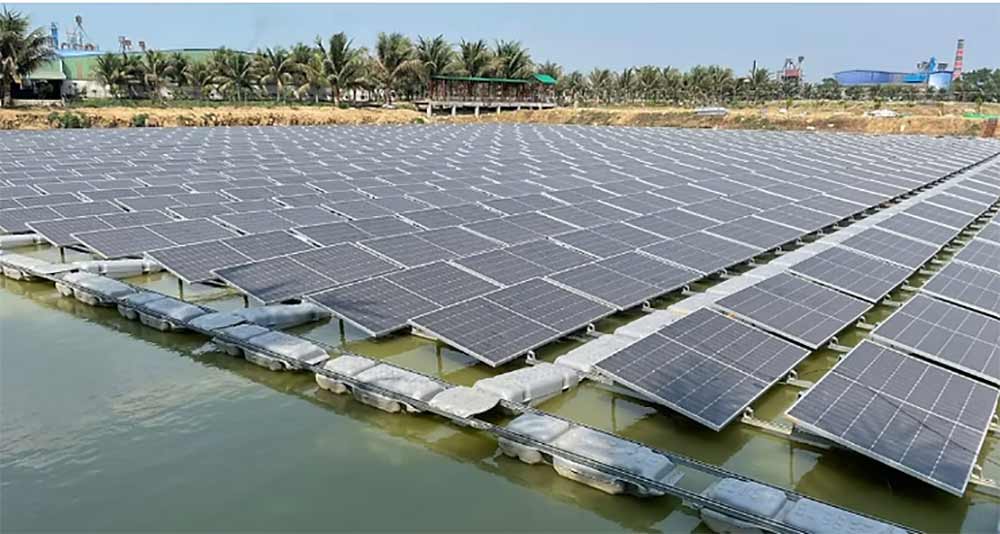 The Bangladesh Energy Regulatory Commission (BERC)’s Technical Evaluation Committee has recommended a generation tariff of Tk6.48 per unit for electricity produced by privately owned solar merchant power plants, along with an average distribution charge of Tk1.17 per unit.
The energy regulator discussed the proposed tariffs at a public hearing on Sunday at the International Mother Language Institute in Dhaka, marking a significant step towards reshaping the country’s electricity market.
Under the merchant power model, private developers can establish power plants and sell electricity directly to eligible customers while using the national transmission and distribution networks. Government-owned distribution companies would retain the option to purchase up to 20 per cent of electricity generated by the plants at the regulator’s recommended tariff.
However, the Bangladesh Power Development Board and distribution companies, including the Northern Electricity Supply Company, expressed concern about losing large industrial customers to merchant power producers.
They argued that industrial consumers currently pay higher tariffs that help subsidise electricity costs for residential users. A significant shift of industrial customers to merchant plants could therefore create substantial revenue shortfalls for utilities.
Utilities also warned that customers might use solar-generated electricity during daylight hours while relying on conventional utility power at night. This could leave traditional generation capacity underused during the day while forcing utilities to operate expensive peaking plants at night, ultimately increasing average generation costs.
BPDB and distribution companies, including the Northern Electricity Supply Company, expressed concern about losing large industrial customers to merchant power producers
During the hearing, Dr Shamsul Alam, energy adviser to the Consumers Association of Bangladesh, challenged the utilities’ position, arguing that distribution companies had failed to adequately justify charges higher than existing tariffs.
He questioned the technical committee’s rationale for recommending a weighted average distribution charge of Tk1.17 per unit.
Drawing international comparisons, Dr Alam said that at an exchange rate of Tk123 to the US dollar, solar electricity costs about Tk3.80 per unit in India and Tk3.90 in Pakistan. He said any higher tariff in Bangladesh should be supported by clear evidence.
He also criticised the use of historical independent power producer prices as benchmarks, advocating a transparent regulatory process based on public consultation.
Business groups called for tax and VAT exemptions for merchant power projects for at least 10 years.
BGMEA Vice-President Bidia Amrut Khan said Bangladesh’s garment exports could face serious pressure without a transition to renewable energy, particularly as European markets impose stricter renewable energy requirements and countries such as India and Vietnam move faster in this area.
She proposed tax-free treatment for solar power for the next decade and recommended that Bangladesh ensure at least 20 per cent of its electricity comes from renewable sources by 2030.
The Bangladesh Sustainable and Renewable Energy Association (BSREA) recommended reducing the open-access tariff to Tk0.50 per unit for the first five years to attract private investment.

Loading...
Loading...
Also read



Editor : Iqbal Sobhan Chowdhury
Published by the Editor on behalf of the Observer Ltd. from Globe Printers, 24/A, New Eskaton Road, Ramna, Dhaka.
Editorial, News and Commercial Offices : Aziz Bhaban (2nd floor), 93, Motijheel C/A, Dhaka-1000.
Phone: PABX- 41053001-06; Advertisement: 41053012; 01793317829, 01550707291, E-mail: [email protected], [email protected] Online: email: [email protected] 41053014; 01550707297 Advertisement: 01550707296
Published by the Editor on behalf of the Observer Ltd. from Globe Printers, 24/A, New Eskaton Road, Ramna, Dhaka.
Editorial, News and Commercial Offices : Aziz Bhaban (2nd floor), 93, Motijheel C/A, Dhaka-1000.
Phone: PABX- 41053001-06; Advertisement: 41053012; 01793317829, 01550707291, E-mail: [email protected], [email protected] Online: email: [email protected] 41053014; 01550707297 Advertisement: 01550707296


