



| HEADLINE |

|

Ponds remain a silent danger for children
Published : Saturday, 3 October, 2026 at 7:56 PM
Abida Jannat Mohima


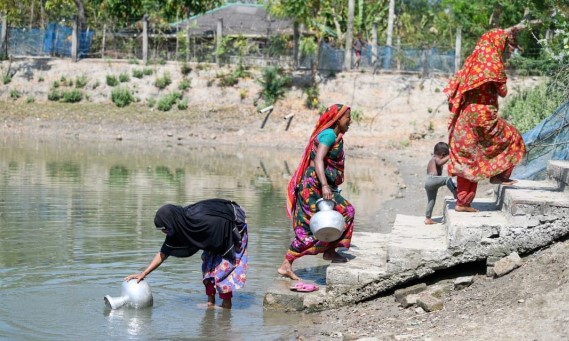
Collected Photo
For many families in Bangladesh, a pond beside the house is part of everyday life. Children play nearby, families use the water for different purposes, and people often pass by it without thinking about the danger.
But for young children, these familiar ponds can quickly become deadly.
From January to June this year, 583 people died in drowning incidents across the country, including 527 children, according to data from the Foundation for Disaster Forum. The figure covers only the first six months of 2026, while the final number for the year is not yet available.
Bangladesh also does not have a regular nationwide system to record drowning deaths. This makes it difficult to determine exactly how many people die from drowning each year.
The World Health Organization (WHO) estimates that around 9,600 people die from drowning in Bangladesh every year. Children aged 1 to 4 are particularly at risk, with drowning among the leading causes of death in this age group.
Many of these incidents happen surprisingly close to home. The WHO says most drowning incidents involving children under five take place within 20 metres of their homes, often in ponds, ditches and other nearby water sources.
A familiar place turns dangerous
For a small child, a pond does not look dangerous. A child may simply be playing, following another child or walking around the house when they suddenly reach the water.
Young children can walk and move around on their own, but they do not understand the danger of deep water. If there is no fence around a pond, they can reach it within minutes.

Pond banks can also be slippery, especially after rain. A child who goes near the edge can lose balance and fall into the water before anyone notices.
The problem becomes more serious when adults are busy. Parents may be cooking, washing clothes, working in the fields or looking after other children. Even a short period without close supervision can end in tragedy.
Ponds account for most drowning cases
The scale of the problem is reflected in the Bangladesh Health and Injury Survey (BHIS) 2023, cited in the WHO's South-East Asia Regional Status Report on Drowning 2025.
The survey recorded 18,268 drowning deaths annually in Bangladesh. Children aged 1 to 4 accounted for 53 percent of the deaths. Ponds were the most common place for drowning, accounting for around 76 percent of cases, while 16 percent occurred in ditches.
Drowning incidents were also found to be more common between 9am and 2pm. This is often a busy time for adults, when children may be playing outside without someone watching them closely.
Swimming is only part of the solution
Teaching children to swim can help, but it cannot solve the problem on its own.


The government's National Drowning Prevention Strategy and Action Plan 2025–2030 includes measures such as water-safety education, swimming and rescue training, safer environments around water bodies and stronger community-level prevention.
Prevention starts at home
Experts say families do not have to wait for a tragedy to happen before taking action.
Ponds and ditches close to homes can be surrounded by fences or other barriers. Parents and caregivers can make sure young children do not go near water alone. Children can also be taught basic water-safety skills as they grow older.

At the community level, more people can be trained in rescue techniques and CPR so they can act quickly when an emergency occurs.
The WHO has also called for stronger investment, better coordination and improved data collection to prevent drowning in Bangladesh. It recommends safer areas around water bodies, swimming and rescue training, and better preparation for floods and other emergencies.
A preventable tragedy
The lack of a regular national system for recording drowning deaths means the full scale of the problem remains difficult to measure. Better data would help authorities identify high-risk areas and plan prevention programmes more effectively.
But the available figures already show how serious the problem is, particularly for young children.
For families living beside ponds, a few simple steps can make a difference—keeping children within sight, putting barriers around water bodies and making sure they do not go near water alone.
A pond may be a familiar part of village life, but for an unsupervised child, it can become dangerous in seconds. With proper supervision, barriers around water and basic water-safety training, many of these deaths can be prevented.If you want, I can also make this more like a Daily Observer feature/news report with a shorter, punchier headline and intro.
But for young children, these familiar ponds can quickly become deadly.
From January to June this year, 583 people died in drowning incidents across the country, including 527 children, according to data from the Foundation for Disaster Forum. The figure covers only the first six months of 2026, while the final number for the year is not yet available.
Bangladesh also does not have a regular nationwide system to record drowning deaths. This makes it difficult to determine exactly how many people die from drowning each year.
The World Health Organization (WHO) estimates that around 9,600 people die from drowning in Bangladesh every year. Children aged 1 to 4 are particularly at risk, with drowning among the leading causes of death in this age group.
Many of these incidents happen surprisingly close to home. The WHO says most drowning incidents involving children under five take place within 20 metres of their homes, often in ponds, ditches and other nearby water sources.
A familiar place turns dangerous
For a small child, a pond does not look dangerous. A child may simply be playing, following another child or walking around the house when they suddenly reach the water.
Young children can walk and move around on their own, but they do not understand the danger of deep water. If there is no fence around a pond, they can reach it within minutes.
The problem becomes more serious when adults are busy. Parents may be cooking, washing clothes, working in the fields or looking after other children. Even a short period without close supervision can end in tragedy.
Ponds account for most drowning cases
The scale of the problem is reflected in the Bangladesh Health and Injury Survey (BHIS) 2023, cited in the WHO's South-East Asia Regional Status Report on Drowning 2025.
The survey recorded 18,268 drowning deaths annually in Bangladesh. Children aged 1 to 4 accounted for 53 percent of the deaths. Ponds were the most common place for drowning, accounting for around 76 percent of cases, while 16 percent occurred in ditches.
Drowning incidents were also found to be more common between 9am and 2pm. This is often a busy time for adults, when children may be playing outside without someone watching them closely.
Swimming is only part of the solution
Teaching children to swim can help, but it cannot solve the problem on its own.
For younger children, keeping them away from water and watching them closely are just as important. Fences or other barriers around ponds and ditches can stop children from reaching the water in the first place.
At the community level, people can also be trained in rescue techniques and CPR so they can act quickly when an emergency occurs.
The government's National Drowning Prevention Strategy and Action Plan 2025–2030 includes measures such as water-safety education, swimming and rescue training, safer environments around water bodies and stronger community-level prevention.
Prevention starts at home
Experts say families do not have to wait for a tragedy to happen before taking action.
Ponds and ditches close to homes can be surrounded by fences or other barriers. Parents and caregivers can make sure young children do not go near water alone. Children can also be taught basic water-safety skills as they grow older.
The WHO has also called for stronger investment, better coordination and improved data collection to prevent drowning in Bangladesh. It recommends safer areas around water bodies, swimming and rescue training, and better preparation for floods and other emergencies.
A preventable tragedy
The lack of a regular national system for recording drowning deaths means the full scale of the problem remains difficult to measure. Better data would help authorities identify high-risk areas and plan prevention programmes more effectively.
But the available figures already show how serious the problem is, particularly for young children.
For families living beside ponds, a few simple steps can make a difference—keeping children within sight, putting barriers around water bodies and making sure they do not go near water alone.
A pond may be a familiar part of village life, but for an unsupervised child, it can become dangerous in seconds. With proper supervision, barriers around water and basic water-safety training, many of these deaths can be prevented.If you want, I can also make this more like a Daily Observer feature/news report with a shorter, punchier headline and intro.
Loading...
Loading...
Also read









Editor : Iqbal Sobhan Chowdhury
Published by the Editor on behalf of the Observer Ltd. from Globe Printers, 24/A, New Eskaton Road, Ramna, Dhaka.
Editorial, News and Commercial Offices : Aziz Bhaban (2nd floor), 93, Motijheel C/A, Dhaka-1000.
Phone: PABX- 41053001-06; Advertisement: 41053012; 01793317829, 01550707291, E-mail: [email protected], [email protected] Online: email: [email protected] 41053014; 01550707297 Advertisement: 01550707296
Published by the Editor on behalf of the Observer Ltd. from Globe Printers, 24/A, New Eskaton Road, Ramna, Dhaka.
Editorial, News and Commercial Offices : Aziz Bhaban (2nd floor), 93, Motijheel C/A, Dhaka-1000.
Phone: PABX- 41053001-06; Advertisement: 41053012; 01793317829, 01550707291, E-mail: [email protected], [email protected] Online: email: [email protected] 41053014; 01550707297 Advertisement: 01550707296


