



| HEADLINE |

|

Home Minister calls opposition walkout an excuse and planned move
Published : Thursday, 27 August, 2026 at 9:38 PM
Observer Online Report


Collected Photo
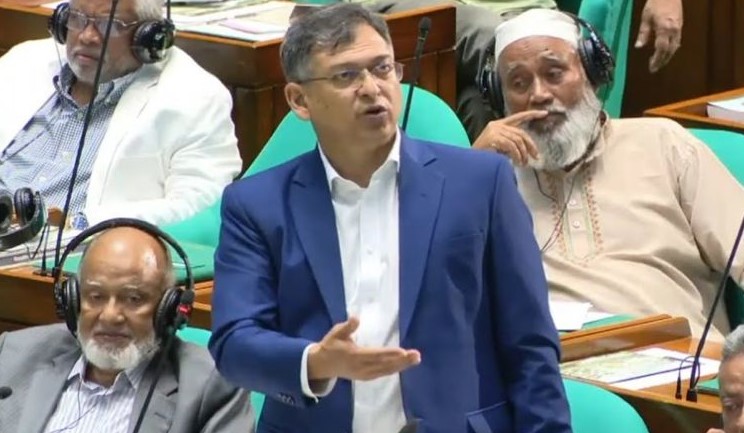
Home Minister Salahuddin Ahmed has described the opposition’s walkout from Parliament as a “planned” move and an excuse to avoid participating in the legislative process, urging the opposition to return to parliamentary practices and warning that repeated walkouts could ultimately undermine democracy.
He made the remarks on Thursday (August 27) in response to the opposition leader’s speech and subsequent walkout from the Jatiya Sangsad. Salahuddin said the government’s primary objective is to resolve the country’s major crises and enact necessary laws through Parliament, stressing that discussions inside the House must be conducted according to parliamentary rules and based on facts and evidence.
Criticising the opposition leader’s remarks, the home minister said the walkout was deliberately staged to avoid cooperation in the lawmaking process. He said the opposition had been demanding a Human Rights Commission law and legislation to prevent enforced disappearances since the first session of Parliament.
According to the minister, the government had worked to address shortcomings in the Human Rights Commission law prepared during the interim government’s tenure. Consultations and seminars were held with domestic and international stakeholders, diplomatic missions, human rights organisations and the UNDP to prepare bills that would meet international standards while remaining compatible with Bangladesh’s national context.
Salahuddin said the Human Rights Commission Bill and the Enforced Disappearances Prevention and Redress Bill were scheduled to be placed before Parliament and sent to the relevant committee for further scrutiny. Copies of the bills had been distributed to lawmakers well in advance, he said, adding that there would have been further opportunity to discuss them in the parliamentary committee. He termed the opposition’s decision to leave Parliament over the tabling of the bills “extremely unfortunate.”
The minister also questioned the opposition leader’s authority to write to the president seeking the summoning of a parliamentary session. He said the opposition leader had no such constitutional authority, while the government had convened the session despite the president’s election, the newly elected president’s swearing-in and other state engagements.
Responding to the opposition’s allegations regarding law and order and alleged attacks on lawmakers, Salahuddin said the government would take action if specific information were provided. He said allegations made in the media or at public rallies without identifying specific incidents or locations could not be addressed in the same way as issues raised in Parliament.
On the country’s gas, electricity and fuel shortages, the home minister said the government was working to address problems left by what he described as 16-17 years of unplanned dependence on gas-based power generation. He said the government was trying to keep fuel and gas prices affordable despite a sharp rise in international energy prices and had adopted both short- and long-term measures, including restarting furnace-oil-based power plants, developing floating storage and regasification units (FSRUs) and ensuring LNG supplies.
Salahuddin also criticised the “July National Charter Implementation Order 2025” issued during the previous interim government, saying it lacked a political foundation or consensus and was issued in a manner resembling a martial law order. He said the demand for a referendum on implementing the July National Charter had originally come from the government to give the charter a direct mandate from the people.
Referring to the proposed constitutional reform council, he said there was no provision for such a body in the existing Constitution. He argued that all lawmakers had taken their oaths under the Constitution and that the president had also been elected and sworn in under the same constitutional framework.
Addressing opposition concerns over the special committee formed in Parliament to consider constitutional amendments, the minister said it had been constituted under Article 266 of the Rules of Procedure. He urged opposition lawmakers to participate in the committee and present their proposals and opinions instead of creating confusion.
At the end of his speech, Salahuddin appealed to lawmakers from both the government and opposition benches to keep Parliament vibrant and effective. He expressed hope that, in honour of the sacrifices made during the July student-public uprising, lawmakers would make Parliament the central forum for political debate and strengthen democratic governance.
-HIS

Loading...
Loading...
Also read



Editor : Iqbal Sobhan Chowdhury
Published by the Editor on behalf of the Observer Ltd. from Globe Printers, 24/A, New Eskaton Road, Ramna, Dhaka.
Editorial, News and Commercial Offices : Aziz Bhaban (2nd floor), 93, Motijheel C/A, Dhaka-1000.
Phone: PABX- 41053001-06; Advertisement: 41053012; 01793317829, 01550707291, E-mail: [email protected], [email protected] Online: email: [email protected] 41053014; 01550707297 Advertisement: 01550707296
Published by the Editor on behalf of the Observer Ltd. from Globe Printers, 24/A, New Eskaton Road, Ramna, Dhaka.
Editorial, News and Commercial Offices : Aziz Bhaban (2nd floor), 93, Motijheel C/A, Dhaka-1000.
Phone: PABX- 41053001-06; Advertisement: 41053012; 01793317829, 01550707291, E-mail: [email protected], [email protected] Online: email: [email protected] 41053014; 01550707297 Advertisement: 01550707296


