



| HEADLINE |

|

Bangladesh and USA discuss the peaceful use of nuclear technology
Published : Sunday, 30 August, 2026 at 12:00 AM
Special Correspondent


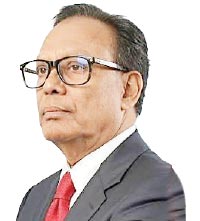 Bangladesh and USA discussed in detail the peaceful use of nuclear technology, Small Modular Reactors (SMRs), energy security, mutual understanding, and the prospects for cooperation and assistance in the energy sector.
These issues were discussed at a bilateral meeting on August 26, 2026, in Washington, D.C between Bangladesh’s Minister for Science and Technology Fakir Mahbub Anam, and the U.S. Secretary of Energy Chris Wright at the sideline of the first ministerial-level Atomic Technologies Licensed for Applications of Sea (ATLAS) Ministerial Launch Event.
During the meeting, Minister for Science and Technology Minister said that the peaceful use of modern and safe nuclear technology could play an important role in meeting Bangladesh’s growing energy demand, ensuring energy security, and achieving sustainable development, Bangladesh is seriously considering the potential of advanced nuclear technologies, particularly Small Modular Reactors (SMRs).
In reply, the U.S. Secretary of Energy Chris Wright expressed a positive attitude toward the prospects for cooperation with Bangladesh in the areas of energy and nuclear technology. He highlighted the United States’ priority in the development and expansion of advanced nuclear technologies and Small Modular Reactors (SMRs).
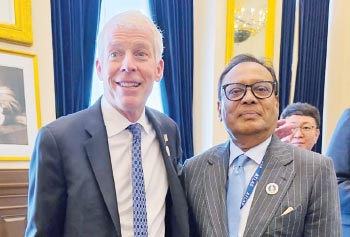 The U.S. Department of Energy is also placing importance on the rapid development and deployment of next-generation nuclear technologies, particularly SMRs.
Both sides expressed their interest in further deepening the existing friendly relations and cooperation between Bangladesh and the United States, as well as working jointly in the future on issues of mutual interest in the fields of nuclear science and technology and the energy sector. Before the meeting, Bangladesh’s Minister delivering Bangladesh’s statement at the ATLAS Ministerial Launch Event 2026.
Referring to the outcome of the first Global Stocktake under the Paris Agreement, the Science and Technology Minister said Bangladesh welcomes the recognition of nuclear energy and supports the initiative to triple global nuclear capacity by 2050.
Highlighting Bangladesh’s energy realities, he said that as a densely populated country with limited domestic energy resources, Bangladesh faces the dual challenge of meeting its growing energy demand while ensuring energy security and addressing the adverse impacts of climate change.
He also highlighted the progress of Bangladesh’s nuclear power programme. He said that through the physical start-up of Unit-1 of the Rooppur Nuclear Power Plant, Bangladesh has reached an important milestone in its journey as a member of the global nuclear energy community. Rooppur, the country’s first nuclear power plant, represents a historic step forward in Bangladesh’s transition towards clean and reliable energy. Science and Technology Minister emphasized the need for stronger international cooperation among partners to facilitate the timely and safe deployment of advanced Small Modular Reactor technologies, including floating nuclear power plants.
Loading...
Loading...
Also read



Editor : Iqbal Sobhan Chowdhury
Published by the Editor on behalf of the Observer Ltd. from Globe Printers, 24/A, New Eskaton Road, Ramna, Dhaka.
Editorial, News and Commercial Offices : Aziz Bhaban (2nd floor), 93, Motijheel C/A, Dhaka-1000.
Phone: PABX- 41053001-06; Advertisement: 41053012; 01793317829, 01550707291, E-mail: [email protected], [email protected] Online: email: [email protected] 41053014; 01550707297 Advertisement: 01550707296
Published by the Editor on behalf of the Observer Ltd. from Globe Printers, 24/A, New Eskaton Road, Ramna, Dhaka.
Editorial, News and Commercial Offices : Aziz Bhaban (2nd floor), 93, Motijheel C/A, Dhaka-1000.
Phone: PABX- 41053001-06; Advertisement: 41053012; 01793317829, 01550707291, E-mail: [email protected], [email protected] Online: email: [email protected] 41053014; 01550707297 Advertisement: 01550707296


