



| HEADLINE |

|
Beyond the scoreboard: Closing the pay gap in women's sports
Published : Saturday, 5 September, 2026 at 12:00 AM
Humaira Parvin


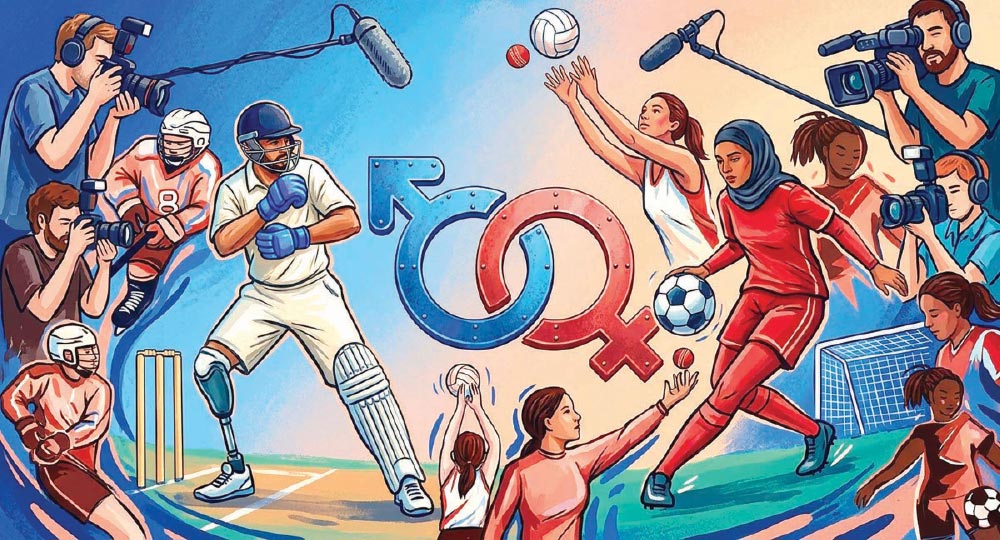 A significant disparity in compensation, corporate sponsorship, and media coverage continues to affect female athletes in professional sports, particularly in cricket and football. While female athletes achieve significant success in national and international competitions, their match fees, central contract wages, and prize money remain considerably lower than those of their male counterparts representing the same organizations and nations.
Data and reports from sports governing bodies indicate that central contracts and match allowances for female cricketers and footballers represent only a fraction of the remuneration allocated to male athletes. In addition to direct compensation gaps, corporate sponsorship distribution remains heavily skewed toward men's leagues and teams. This reduced commercial backing directly limits the revenue potential and overall financial security of professional female sports figures.
Gender pay gap and resource disparities persist in professional women’s sports
To address these inequities, three key measures can be recommended to sports policy experts and advocacy groups:
Wage and Contract Parity: Equalizing match fees, daily allowances, and central contract structures across male and female national teams.
Sponsorship Allocation: Encouraging corporate brands and public sector enterprises to dedicate a balanced portion of their sports marketing budgets to women's teams.
Broadcasting and Media Expansion: Increasing prime-time television broadcasts, digital coverage, and print media reporting to build sustainable viewership and revenue streams.
Sports governing bodies, corporate stakeholders, and broadcasting networks face mounting calls from athletes and international sports organizations to implement systemic reforms aimed at closing the gender pay gap and establishing equal operational resources across all professional sports disciplines.
Loading...
Loading...
Also read



Editor : Iqbal Sobhan Chowdhury
Published by the Editor on behalf of the Observer Ltd. from Globe Printers, 24/A, New Eskaton Road, Ramna, Dhaka.
Editorial, News and Commercial Offices : Aziz Bhaban (2nd floor), 93, Motijheel C/A, Dhaka-1000.
Phone: PABX- 41053001-06; Advertisement: 41053012; 01793317829, 01550707291, E-mail: [email protected], [email protected] Online: email: [email protected] 41053014; 01550707297 Advertisement: 01550707296
Published by the Editor on behalf of the Observer Ltd. from Globe Printers, 24/A, New Eskaton Road, Ramna, Dhaka.
Editorial, News and Commercial Offices : Aziz Bhaban (2nd floor), 93, Motijheel C/A, Dhaka-1000.
Phone: PABX- 41053001-06; Advertisement: 41053012; 01793317829, 01550707291, E-mail: [email protected], [email protected] Online: email: [email protected] 41053014; 01550707297 Advertisement: 01550707296


