



| HEADLINE |

|

Israel faces unprecedented water crisis
Published : Saturday, 5 September, 2026 at 1:33 PM
Observer online report


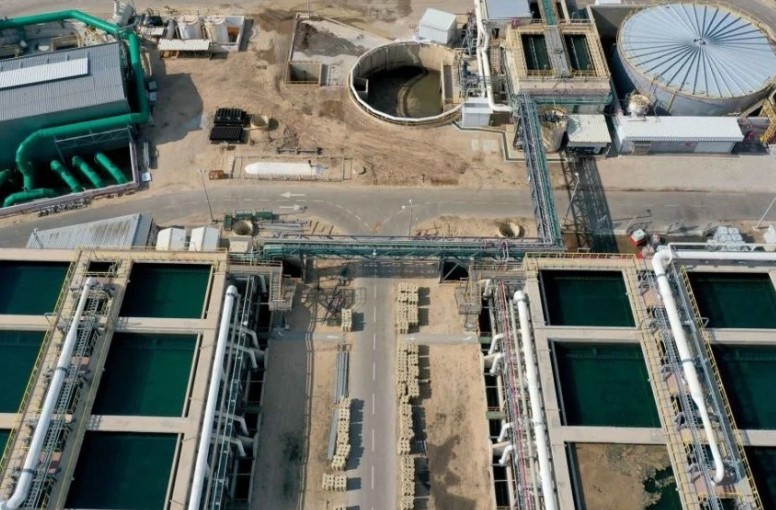
Israel is facing an unprecedented water crisis after a widespread microalgae bloom forced the temporary closure of most of its major coastal desalination plants.
The country’s national water company Mekorot said five of Israel’s six coastal desalination plants were shut down on Sunday. Some have since resumed partial operations, but only one was running at full capacity on Thursday.
“This has never happened before in Israel. It is an extremely rare event,” Mekorot spokesperson Lior Gutman said.
Israel relies heavily on desalination for drinking water, with at least 65 per cent of its potable water coming from the process. The country has no major rivers and receives limited rainfall, making desalination a critical part of its water supply.
The disruption was caused by a large concentration of microalgae stretching for at least 12 miles along the Mediterranean coast, according to Edo Bar-Zeev, an associate professor in the water research department at Ben-Gurion University.
Bar-Zeev and other scientists found that what initially appeared to be widespread pollution was actually a bloom of microscopic algae that can multiply rapidly by using sunlight, carbon dioxide and nutrients in seawater.
He said the bloom may have originated in the Nile Delta and moved northwards along Israel’s coast with ocean currents.
“I have never seen anything like this on such a large scale,” said Bar-Zeev, who has studied coastal waters for two decades.
Most of Israel’s desalination plants use reverse osmosis. After initial treatment, seawater is pushed through specialised membranes that remove salt, bacteria and other particles. However, algae and substances produced by them can damage or clog the membranes, making the treatment process difficult to maintain.
Similar problems have occurred elsewhere. In 2008 and 2009, a major harmful algae bloom, known as a “red tide”, affected several desalination plants in the Gulf of Oman.
Mekorot said the government has relied on alternative water sources to make up for the shortfall, including the Sea of Galilee, groundwater wells and national water reserves.
Some cities have introduced temporary restrictions on activities such as garden irrigation and filling swimming pools. The disruption has particularly affected farmers who use potable-quality water for irrigation.
The timing has also worsened the situation, as the disruption occurred during summer, when demand for water is at its highest.
Mekorot said the algae bloom resulted from an “extremely unusual combination” of environmental conditions, including a storm that increased water turbidity and sea temperatures above 30°C.
Marine ecologist Tamar Guy-Haim said algae blooms can occur when a combination of nutrients, temperature, sunlight, currents and water mixing creates favourable conditions.
Bar-Zeev said the simultaneous closure of several desalination plants across such a large section of the coast was highly unusual.
He warned that climate change could make similar events more frequent as oceans warm, currents change and stronger storms carry greater amounts of pollutants, including sewage and fertilisers, into the sea.
The incident has also highlighted the risks of relying heavily on a centralised technological solution for water security. Michael Christopher Low, director of the Middle East Center at the University of Utah, said the disruption raised concerns about the vulnerability of desalination systems to major interruptions.
Experts also point to other potential threats, including oil spills, cyberattacks and military action. Bar-Zeev said an oil spill near a desalination facility could force plants to remain closed for much longer than the current algae-related disruption.
“Asking whether oil will spill around desalination facilities is not the question; it is when it will happen,” he said.
sks

Loading...
Loading...
Also read





Editor : Iqbal Sobhan Chowdhury
Published by the Editor on behalf of the Observer Ltd. from Globe Printers, 24/A, New Eskaton Road, Ramna, Dhaka.
Editorial, News and Commercial Offices : Aziz Bhaban (2nd floor), 93, Motijheel C/A, Dhaka-1000.
Phone: PABX- 41053001-06; Advertisement: 41053012; 01793317829, 01550707291, E-mail: [email protected], [email protected] Online: email: [email protected] 41053014; 01550707297 Advertisement: 01550707296
Published by the Editor on behalf of the Observer Ltd. from Globe Printers, 24/A, New Eskaton Road, Ramna, Dhaka.
Editorial, News and Commercial Offices : Aziz Bhaban (2nd floor), 93, Motijheel C/A, Dhaka-1000.
Phone: PABX- 41053001-06; Advertisement: 41053012; 01793317829, 01550707291, E-mail: [email protected], [email protected] Online: email: [email protected] 41053014; 01550707297 Advertisement: 01550707296


