



| HEADLINE |

|
Credit, prepaid cards gain wider acceptance across economy
Published : Thursday, 17 September, 2026 at 9:40 AM
Observer Online Report


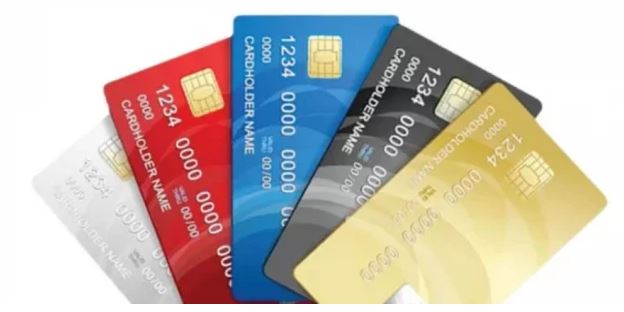
Card-based transactions in the country have more than doubled over the past five years, rising 108 percent as debit, credit and prepaid cards gain wider acceptance across the economy, according to a Bangladesh Bank report.
The number of cards in circulation also increased by 97 per cent during the period, with prepaid cards recording the fastest growth.
According to the central bank data, the number of cards rose from 26.59 million in August 2021 to 52.41 million in July this year. Monthly transactions through cards increased from Tk 2,278.87 billion to Tk 4,748.04 billion over the same period.
By card type, debit cards increased 36 per cent between December 2022 and July this year, while credit cards grew 28 per cent. Prepaid cards, meanwhile, surged 168 per cent.
Bangladeshis spend Tk 9.85b abroad through cards
Bangladeshi cardholders spent Tk 9.85 billion abroad through credit, debit and prepaid cards in July, with 1.74 million transactions recorded during the month.
Credit cards accounted for Tk 5.26 billion, followed by debit cards at Tk 4.01 billion and prepaid cards at Tk 578 million.
Overseas card spending stood at Tk 10.37 billion in June, meaning it fell 5.05 per cent month-on-month in July.
Departmental stores accounted for the largest share of Bangladeshi credit-card spending abroad, at Tk 1.65 billion. Retail outlets, transport, pharmacies and clothing stores were among the other major spending categories.
The United States remained the top destination for Bangladeshi credit-card spending, with Tk 931 million spent there in July. Thailand followed with Tk 614 million, the United Kingdom with Tk 544 million and Singapore with Tk 396 million.
The US was also the leading destination for debit-card spending, accounting for Tk 531 million.
Foreign cardholders spend Tk 2.34b in Bangladesh
Foreign nationals spent Tk 2.34 billion in Bangladesh using cards issued overseas in July, through 321,174 transactions.
The figure was Tk 2.42 billion in June.
Departmental stores accounted for the largest share of spending by foreign cardholders, at Tk 823 million. Cash withdrawals amounted to Tk 563 million, while transport and clothing stores accounted for Tk 323 million and Tk 209 million, respectively.
Cards issued in the United States generated the highest volume of transactions in Bangladesh, at Tk 516 million. India, the UK, Canada and Singapore followed.
Domestic credit-card use jumps 40%
Credit-card transactions inside Bangladesh increased 40.24 per cent year-on-year between July 2025 and July 2026, according to Bangladesh Bank.
Over the same period, Bangladeshi credit-card spending abroad increased 9.71 per cent, while spending in Bangladesh through foreign-issued cards rose 24.14 per cent.
Domestic credit-card transactions totalled Tk 43.25 billion in July, down from Tk 44.61 billion in June.
Departmental stores remained the biggest category, accounting for Tk 21.76 billion, or 50.31 per cent, of total domestic credit-card transactions.
Retail outlets accounted for Tk 4.88 billion, utility bill payments Tk 3.77 billion and cash withdrawals Tk 3.34 billion.
Visa dominated domestic credit-card transactions in July, accounting for Tk 32.98 billion, or 76.25 percent of the total. Mastercard transactions stood at Tk 6.66 billion, while American Express accounted for Tk 3.46 billion.
Credit exposure stands at Tk 433.29b
As of July, 48 banks and one non-bank financial institution had approved Tk 433.29 billion in credit-card loans, according to Bangladesh Bank. Outstanding credit-card loans stood at Tk 145.88 billion.
The central bank said the growing use of cards points to greater financial inclusion and the expansion of the digital economy, with cards increasingly being used for purchases, bill payments, transport, government services and international transactions.
However, Bangladesh Bank identified limited digital infrastructure in rural areas, gaps in financial literacy, cybersecurity risks, fraud and transaction costs as continuing challenges.
The central bank said stronger security measures and greater consumer awareness could further accelerate the expansion of card-based transactions in the country.
Loading...
Loading...
Also read








Editor : Iqbal Sobhan Chowdhury
Published by the Editor on behalf of the Observer Ltd. from Globe Printers, 24/A, New Eskaton Road, Ramna, Dhaka.
Editorial, News and Commercial Offices : Aziz Bhaban (2nd floor), 93, Motijheel C/A, Dhaka-1000.
Phone: PABX- 41053001-06; Advertisement: 41053012; 01793317829, 01550707291, E-mail: [email protected], [email protected] Online: email: [email protected] 41053014; 01550707297 Advertisement: 01550707296
Published by the Editor on behalf of the Observer Ltd. from Globe Printers, 24/A, New Eskaton Road, Ramna, Dhaka.
Editorial, News and Commercial Offices : Aziz Bhaban (2nd floor), 93, Motijheel C/A, Dhaka-1000.
Phone: PABX- 41053001-06; Advertisement: 41053012; 01793317829, 01550707291, E-mail: [email protected], [email protected] Online: email: [email protected] 41053014; 01550707297 Advertisement: 01550707296


