



| HEADLINE |

|
World Rabies Day: Bangladesh steps up awareness as dat bite cases rise
Published : Monday, 28 September, 2026 at 9:31 AM
Observer Online Report


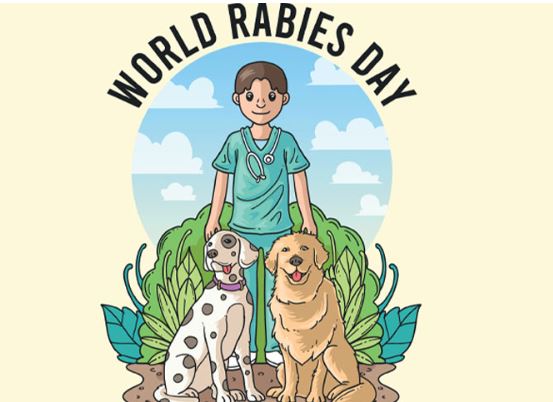
Bangladesh is observing World Rabies Day on Monday (September 28), joining countries around the world in promoting awareness and prevention of the deadly but preventable disease.
This year’s theme, “Rabies Elimination: Everyone’s Responsibility,” highlights the need for coordinated action by government agencies, health professionals, animal welfare organisations and the public.
Various programmes have been organised by government and private organisations to mark the day.
Rabies is a viral disease caused by a virus belonging to the Rhabdoviridae family. It is transmitted primarily through the bites or scratches of infected warm-blooded animals, including dogs, foxes, bats and mongooses. The disease occurs in almost every part of the world.
According to the World Health Organization (WHO), rabies causes around 59,000 deaths globally each year, with cases reported in more than 150 countries. Around 95 per cent of human deaths occur in Asia and Africa.
Experts say rabies can be prevented if appropriate medical treatment is sought immediately after an animal bite or scratch.
Meanwhile, the number of patients seeking treatment following cat bites or scratches has reportedly increased significantly at the Infectious Diseases Hospital in Mohakhali, Dhaka. On average, around 400 to 500 patients are reportedly visiting the hospital every day for treatment related to animal bites.
Doctors advise people to seek medical attention without delay following a dog bite. Post-exposure vaccination can effectively prevent rabies when administered appropriately after exposure. The need for additional treatment, including rabies immunoglobulin, depends on the nature and location of the exposure.
Immediate wound care is also crucial. The wound should be thoroughly washed with soap and running water as soon as possible, followed by medical assessment.
Rabies prevention therefore requires not only timely treatment but also greater public awareness, responsible pet ownership, vaccination of dogs and cats, and effective control of stray animal populations.
The history of rabies prevention is closely associated with French scientist Louis Pasteur, who, along with his colleagues, successfully treated nine-year-old Joseph Meister in 1885 using an experimental rabies vaccine after the boy had been bitten by a rabid dog. The treatment later became a landmark in the development of rabies vaccination.
World Rabies Day is observed every year on September 28, the anniversary of Pasteur’s death in 1895. The day was established in 2007 to commemorate his contribution to rabies prevention and raise global awareness about the disease.
Loading...
Loading...
Also read









Editor : Iqbal Sobhan Chowdhury
Published by the Editor on behalf of the Observer Ltd. from Globe Printers, 24/A, New Eskaton Road, Ramna, Dhaka.
Editorial, News and Commercial Offices : Aziz Bhaban (2nd floor), 93, Motijheel C/A, Dhaka-1000.
Phone: PABX- 41053001-06; Advertisement: 41053012; 01793317829, 01550707291, E-mail: [email protected], [email protected] Online: email: [email protected] 41053014; 01550707297 Advertisement: 01550707296
Published by the Editor on behalf of the Observer Ltd. from Globe Printers, 24/A, New Eskaton Road, Ramna, Dhaka.
Editorial, News and Commercial Offices : Aziz Bhaban (2nd floor), 93, Motijheel C/A, Dhaka-1000.
Phone: PABX- 41053001-06; Advertisement: 41053012; 01793317829, 01550707291, E-mail: [email protected], [email protected] Online: email: [email protected] 41053014; 01550707297 Advertisement: 01550707296


