



| HEADLINE |

|
PSC publishes syllabus for 51st special BCS
Published : Wednesday, 30 September, 2026 at 3:27 PM
Observer Online Report


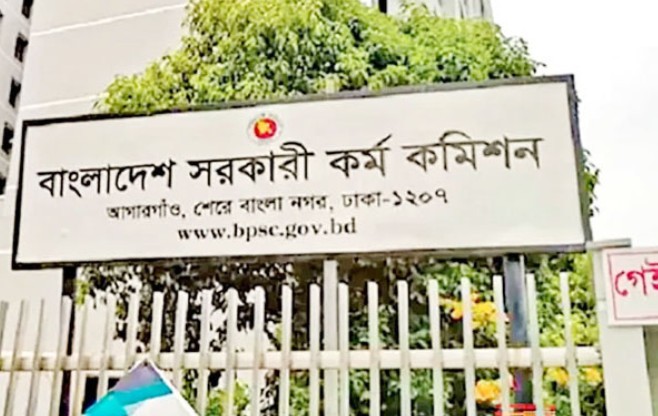
The Bangladesh Public Service Commission (PSC) has published the subject-wise syllabus for the 51st Special Bangladesh Civil Service (BCS) examination, with no to PSC sources, the special recruitment process has been designed to select candidates relatively quickly.
The process will consist of the 200-mark written examination and a 100-mark competency-based viva, process to allow the final results to be published quickly and enable the appointment of 5,000 new doctors to preliminary test planned for the recruitment drive.
The syllabus was published on the PSC website on Wednesday.
According to the notice, the written examination, in multiple-choice question (MCQ) format, may be held in November 2026. The exact date and time will be announced later through the PSC website and the media.
The written test will carry 200 marks, while the viva voce will carry 100 marks.
The 200-mark written examination will consist of 200 questions, with one mark awarded for each correct answer. For every incorrect answer, 0.50 marks will be deducted.
Subject-wise marks
The written examination will include:
Bangla - 20 marks
English - 20 marks
Bangladesh Affairs - 20 marks
International Affairs - 20 marks
Mental Ability - 10 marks
Mathematical Reasoning - 10 marks
Relevant subject for the respective cadre or post - 100 marks
As this is a special BCS examination, the written test will be held only at examination centres in Dhaka.
5,000 doctors to be recruited
A total of 5,000 doctors will be recruited for the health cadre through the special BCS.
Of them, 4,700 will be appointed as assistant surgeons or medical officers, while the remaining 300 will be recruited as dental surgeons.
According to PSC sources, the special recruitment process has been designed to select candidates relatively quickly. The process will consist of the 200-mark written examination and a 100-mark competency-based viva, without a separate preliminary examination.
The authorities expect the streamlined process to allow the final results to be published quickly and enable the appointment of 5,000 new doctors to government hospitals at the upazila and union levels across the country.
Loading...
Loading...
Also read







Editor : Iqbal Sobhan Chowdhury
Published by the Editor on behalf of the Observer Ltd. from Globe Printers, 24/A, New Eskaton Road, Ramna, Dhaka.
Editorial, News and Commercial Offices : Aziz Bhaban (2nd floor), 93, Motijheel C/A, Dhaka-1000.
Phone: PABX- 41053001-06; Advertisement: 41053012; 01793317829, 01550707291, E-mail: [email protected], [email protected] Online: email: [email protected] 41053014; 01550707297 Advertisement: 01550707296
Published by the Editor on behalf of the Observer Ltd. from Globe Printers, 24/A, New Eskaton Road, Ramna, Dhaka.
Editorial, News and Commercial Offices : Aziz Bhaban (2nd floor), 93, Motijheel C/A, Dhaka-1000.
Phone: PABX- 41053001-06; Advertisement: 41053012; 01793317829, 01550707291, E-mail: [email protected], [email protected] Online: email: [email protected] 41053014; 01550707297 Advertisement: 01550707296


