



| HEADLINE |

|

Bangladesh should not replace fossil fuel dependency with debt burden
Published : Sunday, 4 October, 2026 at 12:00 AM
M Zakir Hossain Khan


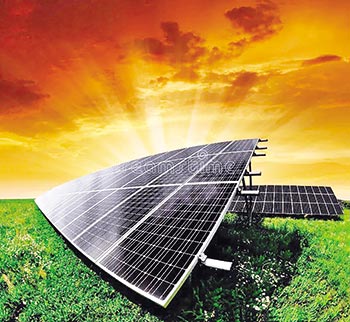 Bangladesh’s energy crisis is no lon ger simply about generating more electricity. It is about escaping an economic model in which the country repeatedly spends scarce foreign exchange on imported fuels while carrying subsidies, capacity payments and exposure to geopolitical shocks. Change Initiative’s From Dependence to Sovereignty estimates that Bangladesh spent almost US$18 billion on LNG between 2018 and 2025, an amount it estimates could have financed roughly 22,000 MW of renewable capacity. This is not a claim that LNG expenditure could have been converted one-for-one into solar overnight; it demonstrates the opportunity cost of repeatedly buying imported fuel instead of progressively accumulating domestic energy assets.
 Bangladesh now has an opening to change that structure. The Renewable Energy Policy 2025, National Renewable Energy Development Strategy 2026-2030 and Merchant Power Plant framework point toward more renewables, private investment and decentralized generation. But as Change Initiative’s review of the strategy argues, a capacity target is not an implementation architecture. Without bankable projects, affordable capital, predictable tariffs, grid readiness, institutional coordination and community participation, even a 10,000 MW target remains a number on paper.
BERC’s latest decision brings this challenge into focus. It set public-sector purchase prices for merchant solar at Tk6.98/kWh at 33kV and Tk7.11/kWh at 132kV. At first glance, a tariff below Tk7 appears commercially problematic if project generation costs approach Tk8. But focusing only on that arithmetic misses the structural significance of the policy.
 The Tk6.98-7.11 tariff is not necessarily the primary financial engine of a merchant project. The greater opportunity is Open Access. Renewable generators can negotiate bilateral power-purchase agreements with eligible industrial consumers and use the grid to deliver that electricity. The public-sector purchase option therefore provides only one revenue channel within a wider merchant model. The real question is no longer simply, “Is Tk7 enough?” It is, can Bangladesh make bilateral renewable electricity bankable?
This aligns with Change Initiative’s renewable-finance research, which identifies capital cost, currency risk, policy uncertainty, approval delays and financing constraints as central barriers; the think-do-tank estimates an annual renewable investment requirement of around US$1.4-1.6 billion. Bangladesh therefore needs a dedicated financing architecture combining domestic banks, Bangladesh Bank refinancing, IDCOL, international climate funds, MDB resources, local-currency lending and guarantees. Under the merchant model, a credit-guarantee facility for corporate renewable PPAs deserves particular consideration.
A second structural risk is “utility cannibalization”. Open access asks for distribution utilities to transport privately generated electricity to some of their most valuable industrial customers. Yet premium commercial and industrial tariffs support utility revenues and cross-subsidization. Utilities can therefore face an inherent conflict: facilitating merchant power may reduce revenues from their best-paying customers.
This reform also offers an opportunity to address why Bangladesh has historically paid more for solar than its technical potential suggests. Change Initiative’s analysis estimates technically achievable solar generation at around 5.78 US cents/kWh, against observed costs closer to 11.60 cents/kWh in the period examined. Sunlight cannot explain that difference. Costly finance, currency exposure, land, duties, lengthy approvals and weak competition can. Transparent competition can therefore reduce electricity costs before another panel is installed.
But decentralisation should not create another market dominated by a handful of corporations. Bangladesh’s cheapest renewable resource may be above our heads rather than across our farmland. Change Initiative’s industrial decarbonisation research estimates that using only 10-20% of available vacant space in BSCIC industrial estates could provide up to 114 MW of solar capacity, while a typical 20kW rooftop system was estimated to recover its investment in about 4.2 years under the study assumptions. Rooftops, factories, warehouses, public buildings and irrigation infrastructure should therefore precede unnecessary conversion of productive farmland.
The same logic can reach Bangladesh’s unions. Instead of treating local solar programs merely as equipment procurement, union councils could become Renewable Energy Enterprise hubs, aggregating rooftops, supporting solar irrigation and cold storage, hosting daytime e-rickshaw charging, training technicians and enabling cooperatives, women entrepreneurs, SMEs and ESCOs to own energy assets. Decentralization should mean not merely distributed electricity but distributed economic ownership.
Finance must follow that principle. Change Initiative’s Climate Debt Painted Green found that, in the dataset examined, of US$2.54 billion in climate finance allocated to Bangladesh’s energy sector, US$2.35 billion came as loans and only US$196 million as grants, a loan-to-grant ratio close to 12:1. Bangladesh should not replace fossil dependency with debt dependency.
BERC’s decision should therefore not be judged simply by whether Tk6.98 or Tk7.11 is too high or too low. The deeper experiment is whether Bangladesh can move from a government-backed single-buyer system toward a competitive, decentralized electricity market without replacing sovereign risk with unmanageable corporate-credit risk, or public monopoly with private concentration.
The transition therefore requires a different sequence is competition before privilege; credit guarantees before expecting SMEs to carry long-term PPAs; grid neutrality before open access in name only; rooftops before land conflict; storage before grid stress; grants and guarantees before debt traps; and community ownership before market concentration.
The transition is ultimately bigger than moving from fossil fuels to solar panels. It is a shift from recurring fuel expenditure to productive domestic assets, from single-buyer dependence to competitive access, and from centralized control to distributed participation.
If Bangladesh gets those rules right, the Tk7 tariff will eventually become a small detail. The real reform will be an electricity market where citizens, SMEs and industries can produce, buy, sell and finance clean power under fair rules, while every new investment progressively reduces exposure to imported fuels, foreign exchange shocks and ecological degradation. That is the pathway from energy dependence to Nature-Smart Energy Sovereignty.
The writer is Chief Executive at Change Initiative, a global think and do tank; Independent Observer of Climate Investment Fund (CIF), MDB’s Trust Fund

Loading...
Loading...
Also read



Editor : Iqbal Sobhan Chowdhury
Published by the Editor on behalf of the Observer Ltd. from Globe Printers, 24/A, New Eskaton Road, Ramna, Dhaka.
Editorial, News and Commercial Offices : Aziz Bhaban (2nd floor), 93, Motijheel C/A, Dhaka-1000.
Phone: PABX- 41053001-06; Advertisement: 41053012; 01793317829, 01550707291, E-mail: [email protected], [email protected] Online: email: [email protected] 41053014; 01550707297 Advertisement: 01550707296
Published by the Editor on behalf of the Observer Ltd. from Globe Printers, 24/A, New Eskaton Road, Ramna, Dhaka.
Editorial, News and Commercial Offices : Aziz Bhaban (2nd floor), 93, Motijheel C/A, Dhaka-1000.
Phone: PABX- 41053001-06; Advertisement: 41053012; 01793317829, 01550707291, E-mail: [email protected], [email protected] Online: email: [email protected] 41053014; 01550707297 Advertisement: 01550707296


