



| HEADLINE |

|

The Malaysian Model: A Policy Roadmap for Bangladesh
Published : Sunday, 11 October, 2026 at 12:00 AM
Mohammed Monir Hossain


 I recently visited Malaysia on an academic assignment, which gave me the opportunity to gain first-hand experience of the country's economy, diplomacy, business environment, socio-economic conditions and quality of life. I feel the need to write something in light of that experience. There is no denying that Malaysia's economic miracle and its efficient and diverse state policies make it one of the emerging countries in South Asia. Personally, I think Malaysia can be a bright direction for Bangladesh. In the 1970s, Malaysia was mainly dependent on rubber- and palm oil-based agriculture and primary natural resources. Today, it has reached the pinnacle of high-tech industrialisation, world-class infrastructure and a strong financial system.
On the other hand, Bangladesh has achieved significant economic growth over the last two decades, relying heavily on the ready-made garment (RMG) sector and remittances from the diaspora. However, it still faces several institutional and policy challenges in achieving sustainable transformation. If Bangladesh is to emerge as a self-reliant, technology-based and high-income developed nation, it has much to learn from Malaysia's economy, modern diplomacy, industrialisation and institutional management. Malaysia's biggest success is the diversification of its economy. Although Bangladesh has many promising sectors, more than 80 per cent of its export earnings still come from RMG, leaving the economy vulnerable to any major downturn in the global market.
In the 1970s, Malaysia took the initiative to develop the electronics industry on the island of Penang. Today, it is one of the world's leading semiconductor and microchip packaging hubs. Bangladesh can similarly develop itself as a hub for manufacturing affordable and efficient electronics and technology products rather than depending mainly on garments. Malaysia has also gone beyond producing palm oil by investing in bio-refinery and food-processing technology to turn it into hundreds of by-products. Bangladesh produces large quantities of vegetables, fruits and fish, but much of this produce is wasted every year due to inadequate processing. We can follow Malaysia's model of agro-industrialisation.
Due to Bangladesh's unstable political environment, we remain far behind in attracting foreign investment. Malaysia, by contrast, is known as an investment-friendly country. It has developed a comprehensive automated framework that allows multinational companies to start and operate businesses easily. Its Malaysian Investment Development Authority (MIDA) acts as a single platform for investors seeking approvals, land allocation, tax exemptions and other services. Many international investors are discouraged by institutional complexity and bureaucratic delays in Bangladesh. We therefore need an effective and corruption-free one-stop service. Malaysia also ensures international-standard electricity, energy, modern ports and immediate logistics facilities in designated investment zones. Its experience is instructive for the 100 economic zones being developed in Bangladesh.
Malaysia is also one of the world’s leading Islamic financial hubs. It has developed a balanced and reliable Islamic finance framework alongside traditional interest-based banking. The government and private sector have widely used Sukuk bonds to attract international investment for mega projects and infrastructure financing. Although Sukuk has been practised in Bangladesh, its legal and institutional infrastructure remains at an early stage.
In the current geopolitical context, a country's economic and sovereign security depends on the prudence of its foreign policy. Malaysia's diplomacy is a shining example. It maintains deliberate strategic and economic relations with both the US and China, a strategy often described as "hedging" diplomacy. While China is its largest trading partner, Malaysia remains vocal in defending its sovereignty in the South China Sea and attracting technological investment from the United States. Bangladesh also needs the diplomatic maturity to put national interests first rather than joining any bloc in conflicts among global and regional powers.
Alongside higher education, Malaysia gives high priority to Technical and Vocational Education and Training (TVET). The curricula of its polytechnics and technical universities are directly tailored to industrial needs. Bangladesh has a large young population, but inadequate technical and vocational skills prevent many from securing desired employment. By applying Malaysia's technical and institutional model, we can prepare young people for globally demanded sectors such as semiconductors, robotics, information technology and nursing and caregiving.
Hundreds of thousands of Bangladeshi workers go to Malaysia, making the country an important destination for our migrant labour and remittances. However, migration costs, syndicates and middlemen repeatedly put this labour market in crisis. There is hope, as Malaysia has announced plans to take workers from Bangladesh again. But several issues must be considered. Restructuring the labour market and introducing a transparent online recruitment system require direct government-to-government (G2G) oversight. Although Malaysia's labour laws have improved, international human rights and labour organisations continue to call for stronger protection of foreign workers, including Bangladeshis. Through bilateral negotiations, Bangladesh can seek fair wages, healthcare and social security for its workers.
Bangladesh and Malaysia have a long history of historical and strategic relations. However, in the era of globalisation, the relationship should not be limited to cordial communication. Bangladesh needs to learn from Malaysia's successful path in economic growth, infrastructure development, industrial modernisation, effective diplomacy and skilled human resources. If Malaysia's institutional skills and experience can be adapted to Bangladesh's own realities and resources, we too can build a self-reliant and developed economy.
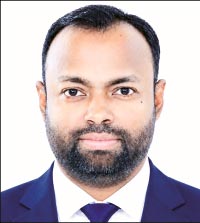
The writer is a journalist
Loading...
Loading...
Also read



Editor : Iqbal Sobhan Chowdhury
Published by the Editor on behalf of the Observer Ltd. from Globe Printers, 24/A, New Eskaton Road, Ramna, Dhaka.
Editorial, News and Commercial Offices : Aziz Bhaban (2nd floor), 93, Motijheel C/A, Dhaka-1000.
Phone: PABX- 41053001-06; Advertisement: 41053012; 01793317829, 01550707291, E-mail: [email protected], [email protected] Online: email: [email protected] 41053014; 01550707297 Advertisement: 01550707296
Published by the Editor on behalf of the Observer Ltd. from Globe Printers, 24/A, New Eskaton Road, Ramna, Dhaka.
Editorial, News and Commercial Offices : Aziz Bhaban (2nd floor), 93, Motijheel C/A, Dhaka-1000.
Phone: PABX- 41053001-06; Advertisement: 41053012; 01793317829, 01550707291, E-mail: [email protected], [email protected] Online: email: [email protected] 41053014; 01550707297 Advertisement: 01550707296


