



| HEADLINE |

|

Asia Energy fled from Bangladesh but did not stop its lobbing till today
Published : Sunday, 18 October, 2026 at 12:00 AM
Anu Muhammad


 Asia Energy fled from the area in 2006 but did not stop its lobbying till today. It changed its name to Global Coal Management (GCM) and despite not holding any license for the Phulbari coal mine, they remain active in illegal share business in the London alternative investment market by showing that. They always claim that they have good connections with top people to get authority over that mine. I suspect that because of being a beneficiary of this fraudulent business, Awami League leaders, instead of stopping their criminal activities, allowed illegal activities to continue. Now it seems that their beneficiaries are even more widespread. We noticed that the finance minister's announcement has once again given a boost to this tout business.
The Project Story Began 32 Years Ago
On August 20, 1994, world's leading coal company, Australia-based BHP signed an agreement with the Bangladesh government for a license to explore coal resources in Phulbari and five other adjacent upazillas. At one stage it confirmed the existence of a big reserve of high-quality coal deposit in that area. But they did not proceed for mining. In 1997 a new company named Asia Energy was formed and mysteriously BHP handed over its license to this newly formed, completely inexperienced company and left Bangladesh.
Two questions are important here. First, why did BHP, despite the existence of such a rich deposit, deprive itself of the opportunity for a big business in the coal-mining sector? Second, who at exactly that time opened a new company targeting the Phulbari coal mine? Why did BHP hand over its own license to that company? And why did the government approve this?
A Clear Answer to the First Question
Nazrul Islam, a Bangladeshi geologist living in Australia, who worked for many years as a consultant geologist for BHP, has given a clear answer. In the beginning, he played an important role in bringing this company to Bangladesh. When I was visiting Sydney in June 2008, he met me to express his concern over Asia Energy's dubious activities. He said, "I had brought BHP to Bangladesh expecting good result from their investment and highest level of expertise. But now, seeing Asia Energy's open pit project, I am terrified. If this is implemented, it will be disastrous for Bangladesh and I will never be able to forgive myself."
He knew very well why BHP had left, and later wrote about it as well. He described details of the causes for BHP's decision to leave the project in our discussion too. The essence of his description was as follows: "An open-pit mine would certainly have been very profitable for BHP. But the coal at Phulbari lies much deeper than what is required for an open-pit mine, at 150 to 260 metres. In Phulbari region, with countless rivers, streams, canals and wetlands, seasonal heavy rainfall and a high risk of flooding, it would not be possible to operate an open-pit mine while complying with Australian standards, let alone the regulations of any other country. Moreover, BHP did not want to take responsibility for another terrible disaster like the Ok Tedi copper mine in Papua New Guinea, where toxic water from the mine caused severe pollution in a nearby river and devastated a vast area downstream. BHP had to cancel the project and return shortly afterwards, and had to pay a huge amount of compensation. Considering Bangladesh's underground water resources and everything else, the situation is even more complicated."
BHP therefore left Bangladesh at an early stage well aware of the consequences.
 The Mystery Remains Unresolved
How did a new company get a license to do what an experienced company like BHP had not dared to do? Even this newly formed company received clearance before conducting an environmental assessment!
In 2006, the BNP-led government formed an expert committee headed by BUET Professor Dr Nurul Islam to examine the 'Mining Development Plan' submitted by Asia Energy and provide its opinion. In its report, the committee concluded that the project was unacceptable from economic, environmental and legal considerations (Expert Committee Report, September 2006).
The report compiled the views of water and environmental experts too. After examining and analysing the project they pointed out the possible adverse consequences of water withdrawal as follows: "The extraction of huge quantities of groundwater would cause the water table to fall over a very large area around the mine, creating an agricultural and a drinking water crisis across northern Bangladesh. Groundwater would become extensively contaminated with arsenic and other toxic chemicals, causing a humanitarian disaster across a wide area. Removing the upper layer of soil would allow pollution to spread through the network of rivers, streams, canals and wetlands, affecting not only the whole of northern Bangladesh but also other parts of the country, and the entire valley would suffer long-term devastation."
Later, independent international mining expert Roger Moody and resettlement expert Jennifer Kalafat analysed their environmental assessment and resettlement plan in detail. They presented examples of inconsistencies, lack of transparency and deception, page after page (2008).
Later, the Patowary Committee (2007-08) was formed during caretaker government and the Mosharraf Committee (2011-12) was formed during Awami League government to analyse and provide its opinion on the geological and environmental conditions of Bangladesh's coal mines. None of them, after examining details, could support the project; they rather gave opinions regarding high danger from open mining in a country like Bangladesh.
The report (January 2012) made several observations on serious risks of the Phulbari coal project. Those include: 800 million litres of groundwater will have to be withdrawn every day for 38 years; the extent and amount of the impact of draining the water are entirely uncertain; the degree of water pollution will bring about a devastating environmental disaster; as a result of extracting groundwater, hand-operated tube wells will cease to function in many places; contamination of the existing water-supply network will cause a severe humanitarian catastrophe; both groundwater and surface water across the entire watershed will suffer long-term contamination; the huge amount of waste stored will create a situation like a bomb; and the resettlement of nearly one million people will create a high risk of social instability and conflict.
It also stated that "it is true that open-pit mining can greatly increase the rate of coal extraction and may be attractive to investors, but along with environmental degradation, the social and ecological damage may be far greater than the benefits obtained from increased coal extraction... The damage caused by open-pit mining is so great that it is in no way acceptable."
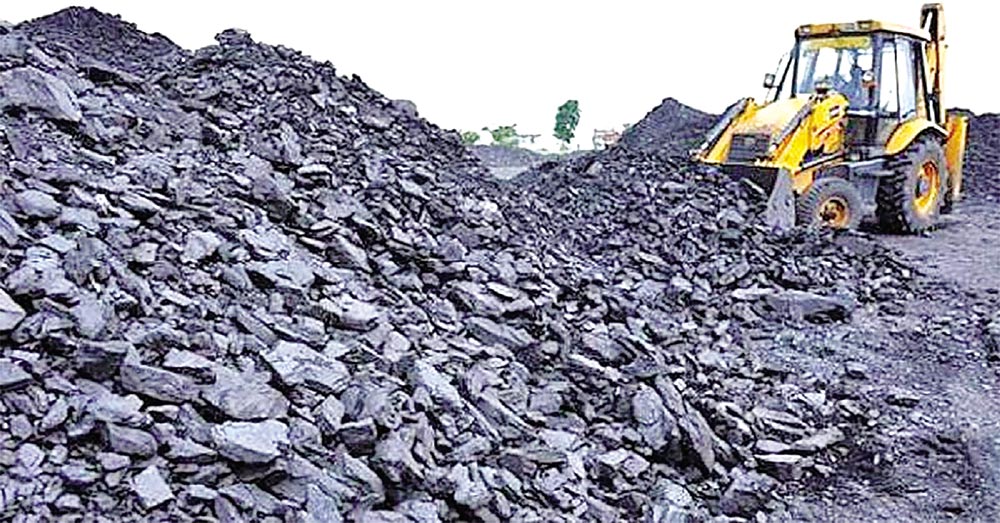
Regarding the quantity and danger of contaminated waste, the report said, "it is highly damaging to the environment. It requires a huge amount of space to dispose of the additional waste (overburden). According to calculations, the ratio of additional waste to coal is 25:1. That means 25 metric tonnes will have to be removed for every 1 metric tonne of coal extracted. These underground materials, which are mainly contaminated, will have to be stored beside agricultural land, water bodies and riverbanks. They will not only contaminate nearby water bodies, but will also contaminate all downstream rivers, canals and wetlands to a severe degree. Due to rain, much of the waste will be washed into the water, contaminating land, rivers, waterways and rivers."
Therefore the issue is not only about the Phulbari, Birampur or Parbatipur areas. If agriculture and water systems across northern Bangladesh are disrupted, the entire region will not only become unsuitable for cultivation, it will be uninhabitable as well. Who will address the food deficit that will result from the destruction of an area of fertile three-crop land? In a very high population density country, who will take responsibility for the millions of people who will be affected badly, many of them will be displaced and become victims of a devastating catastrophe, wandering the streets and roads, with families torn apart and becoming victims of a profit-making demonic project?
The popular uprising in Phulbari 20 years ago, therefore, was not merely a struggle to protect coal, water resources, agricultural land and livelihood from the hands of looters. At the same time, it raised questions about the prevailing development paradigm and demanded a new form of people and nature-friendly model of development.
Phulbari resistance also shows that when the government takes a position against public rights, risking people's lives and livelihoods, when it seeks destruction and plunder in the name of development, the people have rights and responsibility to take on the role of alert and active guardians of the country. The people of Bangladesh have taken on this role time and again. In this trajectory, the Phulbari uprising, with its continued resistance against disastrous multinational plunder project, gives the people strength and hope for a better future with upholding national interest. That is why it matters.

Loading...
Loading...
Also read



Editor : Iqbal Sobhan Chowdhury
Published by the Editor on behalf of the Observer Ltd. from Globe Printers, 24/A, New Eskaton Road, Ramna, Dhaka.
Editorial, News and Commercial Offices : Aziz Bhaban (2nd floor), 93, Motijheel C/A, Dhaka-1000.
Phone: PABX- 41053001-06; Advertisement: 41053012; 01793317829, 01550707291, E-mail: [email protected], [email protected] Online: email: [email protected] 41053014; 01550707297 Advertisement: 01550707296
Published by the Editor on behalf of the Observer Ltd. from Globe Printers, 24/A, New Eskaton Road, Ramna, Dhaka.
Editorial, News and Commercial Offices : Aziz Bhaban (2nd floor), 93, Motijheel C/A, Dhaka-1000.
Phone: PABX- 41053001-06; Advertisement: 41053012; 01793317829, 01550707291, E-mail: [email protected], [email protected] Online: email: [email protected] 41053014; 01550707297 Advertisement: 01550707296


