



| HEADLINE |

|

Open Pit Coal Mining
Is Bangladesh again staring into the same deep hole



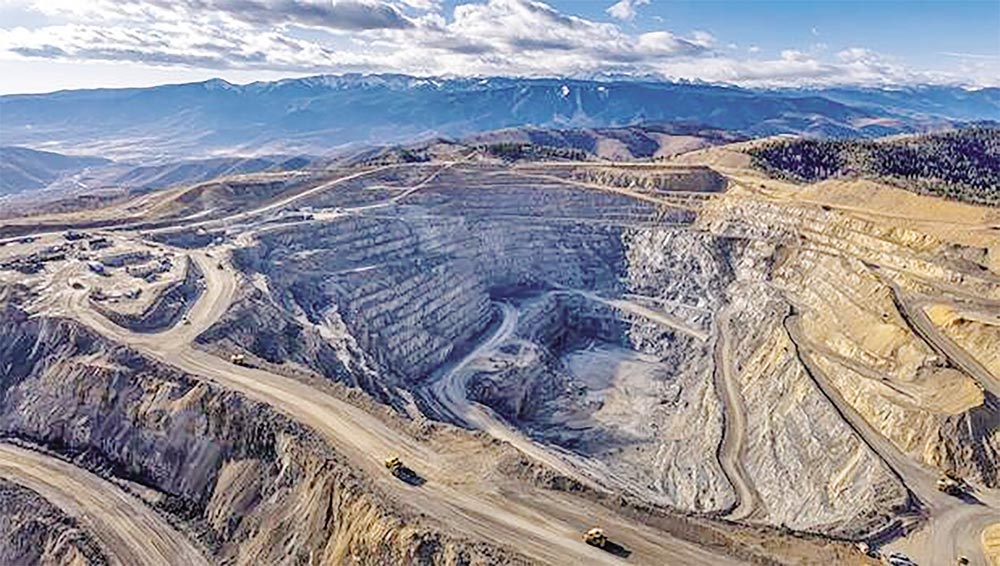 Bangladesh is again staring into the same deep pit of questions. The government’s move to reconsider open-pit coal mining in Dinajpur-a densely populated region-raises more questions than answers. The country’s severe energy and power crisis cannot justify a revival that threatens environmental destruction and renewed confrontation. The Middle East conflict and the global energy crisis have revived a contentious debate: Should Bangladesh extract its own coal to curb reliance on expensive imports, or risk the environmental and social costs outweighing the benefits?
Phulbari is one of Bangladesh’s most fertile agricultural regions, often called the country’s rice bowl. If the project went ahead, it would destroy almost 4,900 hectares of the most fertile farmland in Dinajpur district. The mine would immediately displace over 50,000 people, with as many as 220,000 more displaced over time as mining water pumps drain groundwater wells. It would also displace 50,000 additional people from 23 different Indigenous groups-communities that played a crucial role in resisting the mine.
Recently, the government placed the Phulbari mine on its preliminary list of priorities. Officials connected to the mine say it could yield 15 million tonnes a year if extraction begins, enough to meet 75 percent of the coal imported by the country’s thermal power plants. The studies carried out so far would have to be reviewed before any final decision. Bangladesh’s coal-fired capacity stands at a little over 7,000MW, and 95 percent of the coal burned in those plants is imported. A presentation on the state of the country’s five mines was delivered at the prime minister’s office on October 4; the briefing covered Barapukuria, Phulbari and Dighipara, proposed an initiative to survey the large Jamalganj field, and directed that progress on the mines be followed up monthly.
M Tamim, an energy expert and professor at Independent University Bangladesh, said a neutral study is needed before any final decision. “I believe the management of our coal extraction needs to be examined by a third party with no stake in it. If they conclude that the risk is limited and can be managed, and that there will be no problem, then we can move ahead. If they say the risk is very high, then we can abandon the idea of extracting domestic coal altogether. We can’t be afraid of engineering challenges. No big project, no mega project anywhere in the world, has been without engineering challenges.”
Many mining experts counter that open-pit extraction is not unheard of in densely populated or agricultural areas. Energy experts acknowledge the obstacles but argue the risk has to be taken, not least because global conditions have made using the country’s own coal a matter of urgency for energy security. M Tamim, an energy expert and professor at Independent University Bangladesh, said a neutral study is needed before any final decision. “I believe the management of our coal extraction needs to be examined by a third party with no stake in it. If they conclude that the risk is limited and can be managed, and that there will be no problem, then we can move ahead. If they say the risk is very high, then we can abandon the idea of extracting domestic coal altogether. We can’t be afraid of engineering challenges. No big project, no mega project anywhere in the world, has been without engineering challenges.”
Energy expert and geologist Professor Badrul Imam argued that if coal has to be extracted to make use of local resources, it has to be done by underground mining, and it can be limited or medium in scale. “We are talking about reducing our dependence on imported fuel, which is certainly a good thing. If the plan is to ease the pressure of imports by extracting coal, then farmland, drinking water and environmental complications have to be taken seriously. All the studies on which method of extraction is feasible in that context need to be taken into account.” Md Shoaib, Petrobangla’s director of operations and mines, said that in the current energy crisis, the country’s own natural resources can play an important role. “Coal can be a major alternative. Countries around the world are putting greater emphasis on coal. Studies of underground coal reserves have been carried out at various times and are still underway. Petrobangla is working on other potential coal mines besides Barapukuria.”
Yet the environmental case against open-pit mining at Phulbari is overwhelming. The mine reportedly would extract 572 million tonnes of coal over the next 36 years from a site covering nearly 6,000 hectares and destroy approximately 12,000 hectares of productive agricultural land. Cited international studies warn that keeping the Phulbari pit dry could require extracting 800 million litres of groundwater daily, lowering the water table, drying wells, impairing irrigation and intensifying scarcity.
Heavy monsoon rainfall and vast excavated-earth disposal would add hazards. Officials at Barapukuria Coal Mining Company Limited and Petrobangla say the Phulbari mine covers 10,000 acres and the area is home to 40,000 people; the mine itself would need 48 square kilometres. Each year the government imports 22 million tonnes of coal, worth an estimated $2 billion, to keep coal-fired power plants running. If extraction began, Phulbari alone could yield 15 million tonnes a year, with a further six million from Barapukuria North and three million from Dighipara: 24 million tonnes a year across the three. Once a formal decision is taken, however, it could be five to eight years before coal is actually mined.
UN experts estimate 50,000-130,000 people could be directly displaced and over 220,000 adversely affected, with 12,000 hectares of fertile farmland, 1,000 fisheries and nearly 50,000 fruit trees lost. Barapukuria’s reported freshwater shortages should be a warning, not a precedent. Barapukuria coal costs about $176 a tonne, above the international price below $130 a tonne, while open-pit mining would add substantial upfront costs for land acquisition, compensation and infrastructure. The human-rights dimension is inseparable from development. “By incorporating human rights principles into the national development strategy and fulfilling their human rights obligations, the Government is more likely to reduce poverty. Human rights and development policies are mutually reinforcing,” noted Magdalena Sepúlveda, the Special Rapporteur on extreme poverty and human rights. UN independent experts warned: “The Phulbari coal mine may entice developers. But for many Bangladeshis the wholesale environmental degradation of the Phulbari region will exacerbate food insecurity, poverty and vulnerability to climate events for generations to come.”
The water story is at the heart of the danger. Open-pit exploration would influence groundwater resources in and around the mine because of groundwater pumping and precipitated water accumulating on the pit floor. Roughly 30 percent of the tube wells used to access water are already inoperative during the dry season as a result of declining groundwater resources, and nearly half of all people in Phulbari do not currently have enough water to meet their needs. To maintain dry conditions within the mine, huge pumps would drain up to 800 million litres of water each day from the mine’s deep pits, lowering the water table by 15-25 metres for more than six miles beyond the mine’s footprint, affecting more than 190 square miles and threatening to deprive 220,000 people of access to water. Groundwater is the main source for agriculture and domestic use in the region.
The health risks are equally grave. The Phulbari Coal Project would reproduce the severe pollution of air, water and soil that has plagued communities living with coal extraction and coal-fired power, with grave health impacts for local people. Each stage in the life cycle of coal generates a waste stream that poses serious threats to health and the environment. Coal itself contains toxic heavy metals and carcinogens, including mercury, lead and arsenic. Crushing, processing and washing coal releases heavy metals and tons of toxic air-borne pollutants. Coal combustion waste contains pollutants known to cause cancer, birth defects, reproductive disorders, neurological damage, learning disabilities, kidney disease and diabetes. The project’s Environmental and Social Impact Assessment rates the risk that barge fuel could contaminate the reserve as “extremely high,” adding that a “worst case scenario” spill would result in “extreme mortality or severe damage to mangroves and other shoreline plant species.”
The project’s corporate history shows how the idea has persisted. On November 27, 2018, GCM Resources announced that it had signed an agreement with Power Construction Corp of China Ltd to develop a coal mine and electricity plant in Phulbari, Bangladesh. Engineering construction firm Power China will undertake feasibility and viability studies of the integrated coal mine and power plant. GCM Resources plc signed a second Joint Venture Agreement on March 15, 2019, with Power Construction Corporation of China, Ltd for the development of an additional 2×1,000MW coal-fired power plant project in Phulbari. The second joint venture agreement is in addition to the initial agreement signed with Power China as announced on January 17, 2019.
The story of Phulbari is therefore not only a story about coal. It is a story about a rice bowl that could become a pit, about wells that could run dry, about communities that could be displaced, and about whether an energy emergency can be allowed to override genuine environmental concerns. Bangladesh needs reliable and affordable electricity, but the answer cannot be to sacrifice fertile farmland, groundwater, livelihoods and entire communities for a fuel whose environmental footprints are dangerous and economic prospects increasingly uncertain.

Loading...
Loading...
Also read



Editor : Iqbal Sobhan Chowdhury
Published by the Editor on behalf of the Observer Ltd. from Globe Printers, 24/A, New Eskaton Road, Ramna, Dhaka.
Editorial, News and Commercial Offices : Aziz Bhaban (2nd floor), 93, Motijheel C/A, Dhaka-1000.
Phone: PABX- 41053001-06; Advertisement: 41053012; 01793317829, 01550707291, E-mail: [email protected], [email protected] Online: email: [email protected] 41053014; 01550707297 Advertisement: 01550707296
Published by the Editor on behalf of the Observer Ltd. from Globe Printers, 24/A, New Eskaton Road, Ramna, Dhaka.
Editorial, News and Commercial Offices : Aziz Bhaban (2nd floor), 93, Motijheel C/A, Dhaka-1000.
Phone: PABX- 41053001-06; Advertisement: 41053012; 01793317829, 01550707291, E-mail: [email protected], [email protected] Online: email: [email protected] 41053014; 01550707297 Advertisement: 01550707296


