



| HEADLINE |

|

Climate change puts slum children at greater health risk
Published : Tuesday, 27 October, 2026 at 7:33 PM
Staff Correspondent


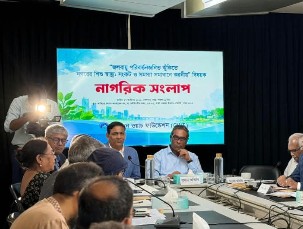
Climate change is exposing children in Bangladesh’s cities, particularly those living in low-income families and slums, to growing health risks from heatwaves, floods, waterlogging, unsafe drinking water and poor sanitation, according to a new study.
A field survey conducted in 2025 found that 54.5 per cent of the slum families surveyed identified children as the most affected members of their households, highlighting the heavy burden of climate change on the youngest members of society.
The findings were presented at a citizen dialogue organised by the Children Watch Foundation (CWF) in Dhaka on Tuesday.
The event brought together government representatives, public health experts, environmental activists and students to discuss the health risks facing urban children and ways to protect them.
Health and Family Welfare State Minister Dr MA Muhith, MP, attended the event as the chief guest, while Madaripur-3 lawmaker Anisur Rahman Khokon was the special guest.
The CWF general secretary Md Zahangir Alam chaired the session while its chairman and also executive director of Environmental Innovation and Research Network (EIRN) Shah Israt Azmeri presented the keynote paper.
Azmeri said poor housing, inadequate drainage, unsafe water and limited sanitation facilities were making children in urban slums increasingly vulnerable to climate-related illnesses.
During heatwaves, tin-roofed homes can become dangerously hot, increasing the risk of dehydration.
Waterlogging and unhygienic surroundings also raise the risk of dengue, diarrhoea and skin diseases, she said.
An analysis of temperature trends from 1990 to 2025 found that periods with temperatures above 35 degrees Celsius had increased in Dhaka, Rajshahi and Satkhira. Dhaka experienced the greatest spread and intensity of prolonged heat, according to the study.
Climate change is also affecting children's education and overall development. Around 35 million children in Bangladesh had their education disrupted by climate-related events in 2024, the research found.
The study warned that the combined effects of climate hazards and economic hardship were putting children from low-income households at particular risk, affecting their health, nutrition, education and normal development.
Speaking at the dialogue, State Minister Muhith said the unity among young people that emerged through the 2024 mass uprising could be used to address climate change, child health and the problems associated with rapid urbanisation.
He stressed the need to raise awareness in schools and involve local communities in protecting children from environmental risks.
Although all schools might not have the resources to employ permanent doctors and nurses, schools could provide healthcare through visiting doctors and mobile nursing services, he said.
Special guest Anisur Rahman Khokon called for experts' views to be included in government policymaking on environmental protection.
He said Bangladesh had experts, skilled people and young volunteers who could help raise public awareness. A volunteer force could be developed to support environmental protection campaigns, he added.
Khokon also stressed that protecting the environment should begin at home and extend to every level of society. He called for environmental education from primary school onwards so that children could develop responsible habits from an early age.
Government agencies, non-governmental organisations, experts and citizens must work together to build a safer and more liveable country for future generations, he said.
The study recommended ensuring safe drinking water and sanitation, improving drainage and waste management in slum areas, and providing shaded spaces and adequate drinking water during heatwaves.
It also called for affordable healthcare, stronger dengue prevention, measures to control air pollution and emergency health services and safe shelters for children during disasters.
Student representative Zaira Rahman of Scholastica school called for greater youth involvement in tackling climate risks and better health protection for children during disasters.
She also urged authorities to ensure safe drinking water and essential healthcare services in schools. To help children continue their education during extreme heat, she suggested expanding opportunities for online classes.
The dialogue, titled Urban Child Health at Risk from Climate Change: Challenges and Ways Forward, was held at The Daily Star's Azimur Rahman Conference Room in Dhaka.
Among those attending were Professor Dr Mohammad Nurunnabi, director of the Centre for Sustainability and Climate and a UNESCO Chair; public health expert Dr Mohammad Mushtuq Hossain; Professor Dr Mahmud Hossain Faruquee; and Mohammad Alamgir Kabir, general secretary of the Bangladesh Poribesh Andolon (BAPA)

Loading...
Loading...
Also read





Editor : Iqbal Sobhan Chowdhury
Published by the Editor on behalf of the Observer Ltd. from Globe Printers, 24/A, New Eskaton Road, Ramna, Dhaka.
Editorial, News and Commercial Offices : Aziz Bhaban (2nd floor), 93, Motijheel C/A, Dhaka-1000.
Phone: PABX- 41053001-06; Advertisement: 41053012; 01793317829, 01550707291, 01550707296
E-mail: [email protected], [email protected]. [email protected], [email protected], [email protected], [email protected], Online-email: [email protected]


