



| HEADLINE |

|
Firoza falls silent
The grief-stricken house in Gulshan echoes the legacy of Khaleda Zia
Published : Saturday, 3 January, 2026 at 12:00 AM
Tanvir Raihan


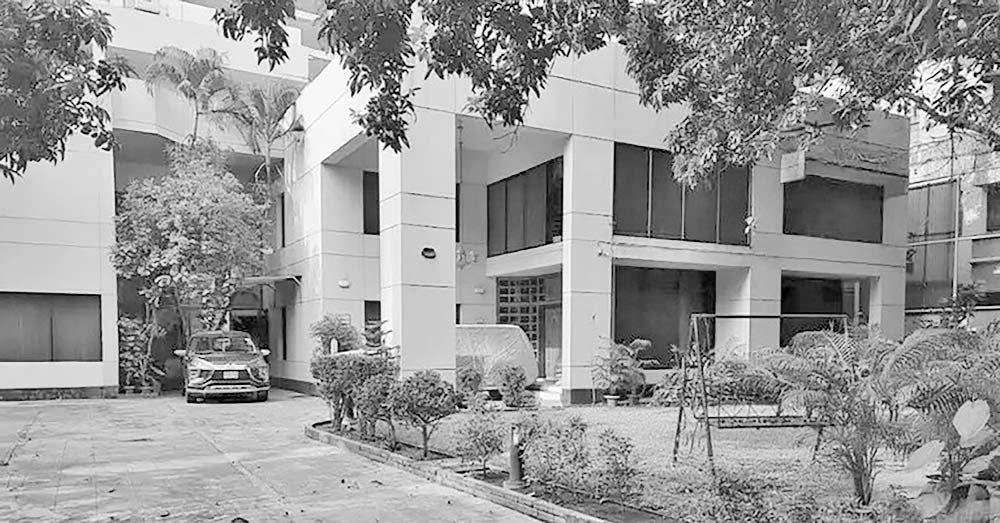 In the heart of Dhaka's Gulshan Diplomatic Zone, the residence known as Firoza stands in profound silence. Once the home and political sanctuary of BNP Chairperson and former Prime Minister Begum Khaleda Zia, the house now feels emptied of life following her passing. Guarded as it always has been, Firoza today is less a residence than a living monument-holding memories of struggle, leadership, and an enduring commitment to democracy.
The Gulshan residence became Khaleda Zia's home after she was displaced from her earlier house on Shahid Moinul Road near Dhaka Cantonment, where she lived with her late husband, President Ziaur Rahman. Since her death, the atmosphere inside Firoza has turned somber and still, though security arrangements remain unchanged. Guards continue their vigilant watch, and security posts stand fully maintained, as if preserving the rhythm of a life that once animated the house.
Firoza is deeply intertwined with Khaleda Zia's personal and political journey. BNP media cell member Shairul Kabir Khan told The Daily Observer, "Countless memories of the Chairperson are tied to this house. People who have been associated with Firoza for decades are emotionally connected to it and continue to feel her presence even after her death."
Another media cell member, Shamsuddin Didar, reflected on working closely with her, saying it allowed them to experience her leadership and personality from an intimate distance. For the security personnel who served her daily, the emptiness feels especially heavy. One former security officer recalled, "Madam always cared about us. She would ask if we were eating properly, whether we were well. She was like a mother to all of us. Today, stepping inside feels like stepping into a void." Several guards were seen wearing black armbands as a mark of mourning.
The house itself carries historical significance. After the assassination of President Ziaur Rahman in 1981, the government under then Acting President Justice Abdus Sattar allocated the property to Khaleda Zia. In recent months, the caretaker government formally handed over ownership documents to her at Firoza, reaffirming her legal claim and long association with the residence.
At present, BNP Acting Chairperson Tarique Rahman resides at Firoza, overseeing the property while carrying forward his mother's political legacy. Following her death, the house has become a quiet center of mourning and reflection for the party. Tarique Rahman spent much of Thursday in prayer, Quran recitation, and contemplation, accompanied by close family members and party aides who gathered to share memories and offer comfort.
Outside Firoza, the mood reflects solemn respect. While the Gulshan Avenue Diplomatic Zone remains largely quiet due to security protocols, neighbors and supporters continue to visit the area to pay tribute. Local resident Hasanuzzaman Khan said, "I live nearby and came out for a walk. Her absence is felt deeply-not just by her family but by every citizen who values democracy. Now people look to Tarique Rahman for leadership and hope."
Mourning has extended beyond Gulshan into the BNP headquarters, where black flags fly and both party and national flags remain at half-mast. Condolence books have been opened, drawing diplomats, religious leaders, and political figures. Among those who paid their respects were Sharmeen S. Murshid, U.S. Charge d'Affaires Tracy Ann Jacobson, Iranian Ambassador Mansour Chavoshi, and Pir Mufti Shah Abu Nasr Nesaruddin Ahmed of the Charchina Darbar Sharif.
For party members and supporters alike, Firoza is far more than a building. It stands as a symbol of Khaleda Zia's resilience, sacrifice, and leadership. Former student leader and Krishak Dal Vice President Ibrahim said, "Accepting that she is gone is difficult. Her popularity and contributions to Bangladesh's political history are unparalleled. She will remain immortal in our hearts."
Supporters continue to recall the years of struggle she endured-imprisonment, political pressure, and illness-while remaining steadfast in her commitment to democratic principles and national service. Her funeral, held at Sher-e-Bangla Nagar beside the grave of President Ziaur Rahman, drew thousands in person and countless more virtually, underscoring the emotional bond she shared with the people of Bangladesh.
Today, as security personnel stand watch and the halls of Firoza remain quiet, the house serves as a poignant reminder of a life defined by sacrifice and public service. In its silence lies continuity-of ideals, leadership, and memory. As Bangladesh reflects on the passing of one of its most influential political figures, Firoza stands not only as a symbol of loss, but also as a testament to a legacy that will continue to shape the nation for generations to come.
Loading...
Loading...
Also read



Editor : Iqbal Sobhan Chowdhury
Published by the Editor on behalf of the Observer Ltd. from Globe Printers, 24/A, New Eskaton Road, Ramna, Dhaka.
Editorial, News and Commercial Offices : Aziz Bhaban (2nd floor), 93, Motijheel C/A, Dhaka-1000.
Phone: PABX- 41053001-06; Advertisement: 41053012; 01793317829, 01550707291, E-mail: [email protected], [email protected] Online: email: [email protected] 41053014; 01550707297 Advertisement: 01550707296
Published by the Editor on behalf of the Observer Ltd. from Globe Printers, 24/A, New Eskaton Road, Ramna, Dhaka.
Editorial, News and Commercial Offices : Aziz Bhaban (2nd floor), 93, Motijheel C/A, Dhaka-1000.
Phone: PABX- 41053001-06; Advertisement: 41053012; 01793317829, 01550707291, E-mail: [email protected], [email protected] Online: email: [email protected] 41053014; 01550707297 Advertisement: 01550707296


