



| HEADLINE |

|
Canal excavation: Opening a new gateway to development, production
Published : Monday, 16 March, 2026 at 8:08 PM
Ahsan Habib Barun


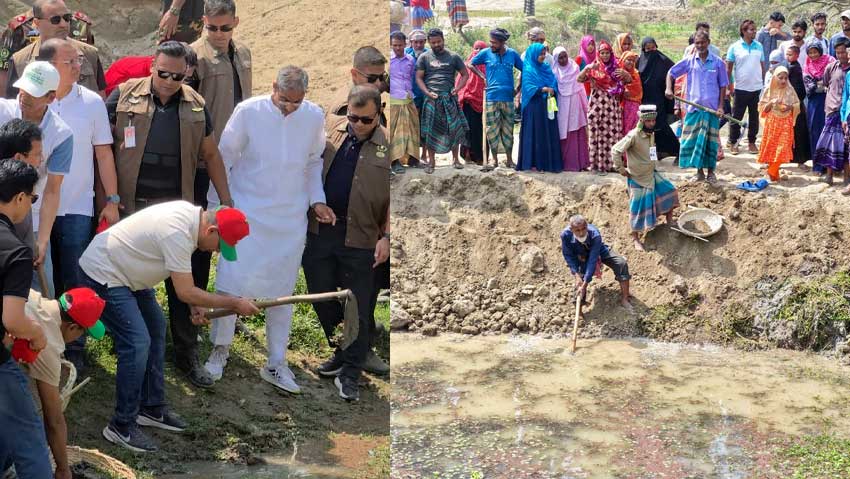
Once, canals were inseparably connected with the settlements, agriculture and livelihoods of rural Bangladesh. However, due to neglect, encroachment, and unplanned development, countless canals across the country have now become nearly extinct. As a result, waterlogging, irrigation crises, and environmental imbalance have intensified over time. In this context, canal excavation and re-excavation programs are gaining renewed importance; an initiative that is not merely an infrastructural effort, but rather a national endeavor to revitalize Bangladesh’s agriculture, environment and rural economy.
In this regard, on March 16, Prime Minister Tarique Rahman is set to inaugurate the excavation of 53 canals simultaneously across the country by launching the re-excavation of a 12-kilometer-long canal in the Sahapara–Balarampur area of Kaharole Upazila in Dinajpur. The Prime Minister will travel by air from the capital to Saidpur and then proceed by road to Dinajpur, where he will formally initiate the program, confirmed the Prime Minister’s Press Secretary Saleh Shibly.
Many observers are not viewing this initiative merely as an infrastructure development project; rather, it is being considered the beginning of a new perspective in Bangladesh’s rural economy, agricultural production, and water management.
The history of canal excavation programs in Bangladesh is not new. After independence, with the aim of improving rural development and increasing agricultural production, the martyred President Ziaur Rahman transformed canal excavation into a mass-oriented program. During his tenure, initiatives were undertaken to improve irrigation systems, reduce waterlogging, and create employment opportunities for rural communities through canal excavation.
At that time, the program had a positive impact in many areas. Canal excavation made it easier for water to reach farmland, increased agricultural production, and improved communication systems in several regions. However, over time, the continuity of that initiative could not be maintained. Due to administrative weaknesses, lack of planning, and encroachment and filling at the local level, many canals disappeared. As a result, the historic network of natural water flow gradually collapsed.
Today, in many regions of Bangladesh, a strange paradox can be observed. During the monsoon season, excessive rainfall cannot drain properly due to the absence of natural channels, leaving agricultural land submerged for long periods. This destroys crops and causes significant financial losses for farmers.
On the other hand, during the dry season, water scarcity becomes a major issue. Due to insufficient irrigation facilities, much land remains uncultivated, or farmers have to rely heavily on deep tube wells. In other words, farmers are forced to face a dual crisis in the same areas—sometimes too much water and sometimes too little.
Canal re-excavation can be an effective solution to this problem. If canals are restored and connected with rivers and wetlands, excess monsoon water can be drained quickly, and that water can also be conserved for irrigation during the dry season. As a result, agricultural production will increase and food security will be further strengthened.
The benefits of canal re-excavation are not limited to agriculture alone. A wide range of rural economic activities can develop around canals. Fish farming, duck rearing, and the cultivation of aquatic plants can be carried out in canal waters. At the same time, tree plantation and vegetable cultivation along the canal banks can create new income opportunities for local people.
According to relevant sources, approximately 350,000 people will benefit from the re-excavation of the Sahapara–Balarampur canal in Dinajpur. Once restored, this canal will not only protect the area from excessive flooding but also improve irrigation facilities during the dry season.
The Ministry of Water Resources, the Ministry of Disaster Management and Relief, and the Bangladesh Agricultural Development Corporation (BADC) will jointly implement this program. In addition to canal excavation, the project also includes canal bank protection, embankment construction, and tree plantation.
Many countries around the world have achieved agricultural revolutions through advanced water management systems. The Netherlands is a remarkable example. Despite being located below sea level, the country has become one of the world’s leading agricultural producers through its highly developed canal and water control systems.
Similarly, Vietnam and Thailand have strengthened their agricultural sectors through the development of canals and irrigation systems and have established themselves as major food-exporting nations. Considering Bangladesh’s geography and climate, these experiences are highly relevant. With proper planning and the use of modern technology, Bangladesh’s canals can also become one of the most important infrastructures for increasing agricultural production.
Another significant aspect of canal re-excavation is the preservation of environmental balance. Canals are not merely channels for water flow; they are also important ecosystems.
Regular water flow in canals helps maintain the stability of the surrounding groundwater level, which is extremely important for agriculture, forest resources, and biodiversity.
Moreover, canals can hold excess rainwater and reduce the risk of flooding. Due to climate change, irregular rainfall and sudden floods are increasing in many parts of Bangladesh. In such circumstances, restoring natural waterways can be an effective strategy.
However, the success of canal excavation programs does not depend solely on the excavation work itself. It requires long-term planning, administrative efficiency, and transparency.
In the past, it has often been seen that within a few years of excavation, canals again became filled with silt or were encroached upon. As a result, the benefits of such projects did not last long.
Learning from these experiences, canal restoration must now be viewed as part of an integrated water management system. Regular maintenance of canals, ensuring that they remain free from encroachment, and guaranteeing the participation of local communities are extremely important.
If local farmers, public representatives, and social organizations can be involved in this program, a sense of ownership will be created among the people, making the project sustainable in the long term.
The re-excavation of the canal in the Sahapara area of Dinajpur, which will mark the beginning of this program, is not merely a local development project; rather, it symbolizes a broader national initiative. If Prime Minister Tarique Rahman’s initiative is successfully implemented, it could bring positive changes to agriculture and rural life in many parts of the country. At the same time, it could demonstrate that development does not always require building new infrastructure; restoring lost natural resources can also serve as a powerful foundation for sustainable development.
Today the country stands at the threshold of a new economic reality. Rapid population growth, the risks of climate change, and the challenges of food security together have created a complex situation for the nation.
In this context, the proper use of natural resources and sustainable water management have become extremely important. If the canal excavation program is implemented in a planned manner, it will not only eliminate waterlogging but also revitalize agriculture, the environment, and the rural economy.
Therefore, if the lost canals once again come back to life, they will not only restore the flow of water but may also open a new gateway to development, production, and self-reliance.
-The writer is a Journalist, Columnist and Political Analyst.
In this regard, on March 16, Prime Minister Tarique Rahman is set to inaugurate the excavation of 53 canals simultaneously across the country by launching the re-excavation of a 12-kilometer-long canal in the Sahapara–Balarampur area of Kaharole Upazila in Dinajpur. The Prime Minister will travel by air from the capital to Saidpur and then proceed by road to Dinajpur, where he will formally initiate the program, confirmed the Prime Minister’s Press Secretary Saleh Shibly.
Many observers are not viewing this initiative merely as an infrastructure development project; rather, it is being considered the beginning of a new perspective in Bangladesh’s rural economy, agricultural production, and water management.
The history of canal excavation programs in Bangladesh is not new. After independence, with the aim of improving rural development and increasing agricultural production, the martyred President Ziaur Rahman transformed canal excavation into a mass-oriented program. During his tenure, initiatives were undertaken to improve irrigation systems, reduce waterlogging, and create employment opportunities for rural communities through canal excavation.
At that time, the program had a positive impact in many areas. Canal excavation made it easier for water to reach farmland, increased agricultural production, and improved communication systems in several regions. However, over time, the continuity of that initiative could not be maintained. Due to administrative weaknesses, lack of planning, and encroachment and filling at the local level, many canals disappeared. As a result, the historic network of natural water flow gradually collapsed.
Today, in many regions of Bangladesh, a strange paradox can be observed. During the monsoon season, excessive rainfall cannot drain properly due to the absence of natural channels, leaving agricultural land submerged for long periods. This destroys crops and causes significant financial losses for farmers.
On the other hand, during the dry season, water scarcity becomes a major issue. Due to insufficient irrigation facilities, much land remains uncultivated, or farmers have to rely heavily on deep tube wells. In other words, farmers are forced to face a dual crisis in the same areas—sometimes too much water and sometimes too little.
Canal re-excavation can be an effective solution to this problem. If canals are restored and connected with rivers and wetlands, excess monsoon water can be drained quickly, and that water can also be conserved for irrigation during the dry season. As a result, agricultural production will increase and food security will be further strengthened.
The benefits of canal re-excavation are not limited to agriculture alone. A wide range of rural economic activities can develop around canals. Fish farming, duck rearing, and the cultivation of aquatic plants can be carried out in canal waters. At the same time, tree plantation and vegetable cultivation along the canal banks can create new income opportunities for local people.
According to relevant sources, approximately 350,000 people will benefit from the re-excavation of the Sahapara–Balarampur canal in Dinajpur. Once restored, this canal will not only protect the area from excessive flooding but also improve irrigation facilities during the dry season.
The Ministry of Water Resources, the Ministry of Disaster Management and Relief, and the Bangladesh Agricultural Development Corporation (BADC) will jointly implement this program. In addition to canal excavation, the project also includes canal bank protection, embankment construction, and tree plantation.
Many countries around the world have achieved agricultural revolutions through advanced water management systems. The Netherlands is a remarkable example. Despite being located below sea level, the country has become one of the world’s leading agricultural producers through its highly developed canal and water control systems.
Similarly, Vietnam and Thailand have strengthened their agricultural sectors through the development of canals and irrigation systems and have established themselves as major food-exporting nations. Considering Bangladesh’s geography and climate, these experiences are highly relevant. With proper planning and the use of modern technology, Bangladesh’s canals can also become one of the most important infrastructures for increasing agricultural production.
Another significant aspect of canal re-excavation is the preservation of environmental balance. Canals are not merely channels for water flow; they are also important ecosystems.
Regular water flow in canals helps maintain the stability of the surrounding groundwater level, which is extremely important for agriculture, forest resources, and biodiversity.
Moreover, canals can hold excess rainwater and reduce the risk of flooding. Due to climate change, irregular rainfall and sudden floods are increasing in many parts of Bangladesh. In such circumstances, restoring natural waterways can be an effective strategy.
However, the success of canal excavation programs does not depend solely on the excavation work itself. It requires long-term planning, administrative efficiency, and transparency.
In the past, it has often been seen that within a few years of excavation, canals again became filled with silt or were encroached upon. As a result, the benefits of such projects did not last long.
Learning from these experiences, canal restoration must now be viewed as part of an integrated water management system. Regular maintenance of canals, ensuring that they remain free from encroachment, and guaranteeing the participation of local communities are extremely important.
If local farmers, public representatives, and social organizations can be involved in this program, a sense of ownership will be created among the people, making the project sustainable in the long term.
The re-excavation of the canal in the Sahapara area of Dinajpur, which will mark the beginning of this program, is not merely a local development project; rather, it symbolizes a broader national initiative. If Prime Minister Tarique Rahman’s initiative is successfully implemented, it could bring positive changes to agriculture and rural life in many parts of the country. At the same time, it could demonstrate that development does not always require building new infrastructure; restoring lost natural resources can also serve as a powerful foundation for sustainable development.
Today the country stands at the threshold of a new economic reality. Rapid population growth, the risks of climate change, and the challenges of food security together have created a complex situation for the nation.
In this context, the proper use of natural resources and sustainable water management have become extremely important. If the canal excavation program is implemented in a planned manner, it will not only eliminate waterlogging but also revitalize agriculture, the environment, and the rural economy.
Therefore, if the lost canals once again come back to life, they will not only restore the flow of water but may also open a new gateway to development, production, and self-reliance.
-The writer is a Journalist, Columnist and Political Analyst.
Loading...
Loading...
Also read








Editor : Iqbal Sobhan Chowdhury
Published by the Editor on behalf of the Observer Ltd. from Globe Printers, 24/A, New Eskaton Road, Ramna, Dhaka.
Editorial, News and Commercial Offices : Aziz Bhaban (2nd floor), 93, Motijheel C/A, Dhaka-1000.
Phone: PABX- 41053001-06; Advertisement: 41053012; 01793317829, 01550707291, E-mail: [email protected], [email protected] Online: email: [email protected] 41053014; 01550707297 Advertisement: 01550707296
Published by the Editor on behalf of the Observer Ltd. from Globe Printers, 24/A, New Eskaton Road, Ramna, Dhaka.
Editorial, News and Commercial Offices : Aziz Bhaban (2nd floor), 93, Motijheel C/A, Dhaka-1000.
Phone: PABX- 41053001-06; Advertisement: 41053012; 01793317829, 01550707291, E-mail: [email protected], [email protected] Online: email: [email protected] 41053014; 01550707297 Advertisement: 01550707296


