



| HEADLINE |

|
Bangladesh enters nuclear era as Rooppur plant begins fuel loading


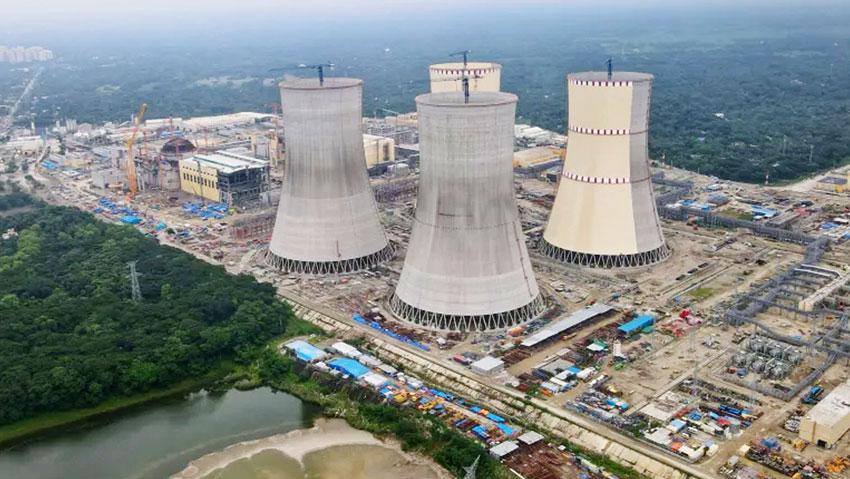
Bangladesh is set to take a historic step into nuclear energy as uranium fuel loading begins Tuesday at the first unit of Rooppur Nuclear Power Plant.
With this milestone, the country is poised to become the world’s 33rd nuclear power-generating nation, marking the end of a decades-long journey toward harnessing atomic energy.
According to Ministry of Science and Technology and Bangladesh Atomic Energy Commission, the loading of uranium fuel into the reactor vessel signals the final phase before electricity generation.
The nuclear fission process will generate heat to produce steam, which will drive turbines and ultimately generate electricity.
Before full commercial operation, the plant must undergo extensive safety and technical tests. Authorities aim to supply around 300 megawatts of electricity to the national grid on a trial basis by the third week of August.
However, achieving full production capacity will take approximately 10 more months, as power output will be gradually increased in stages.
Once fully operational, the plant is expected to meet 10-12 percent of Bangladesh’s total electricity demand.
The Rooppur project is the largest mega infrastructure initiative in the country’s history. Although first conceived in 1961, it faced delays until being revived after independence. The project gained momentum following a 2011 intergovernmental agreement between Bangladesh and Russia.
With an estimated cost of Tk 1,38,686 crore, the project has seen cost increases due to global economic factors, including currency fluctuations, the COVID-19 pandemic and the Russia-Ukraine War. The revised target for full completion is June 2028.
Technically, the reactor uses uranium oxide fuel pellets assembled into rods. A total of 163 fuel bundles, each containing 312 rods, will be installed in the first unit. Once loaded, the fuel can support uninterrupted power generation for up to 18 months.
Experts note that nuclear energy offers a cost-effective alternative to fossil fuels. Compared to coal, the plant will significantly reduce fuel requirements and is expected to cut around 20 million tonnes of carbon dioxide emissions annually.
The facility has a projected lifespan of 60 years, extendable to 90 years with proper maintenance.
The project has also contributed to employment, with around 25,000 people involved during construction and approximately 2,500 permanent jobs created, many requiring advanced technical training.
The inauguration ceremony will be attended by Science and Technology Minister Fakir Mahbub Anam and Alexey Likhachev, head of Rosatom.
Rafael Grossi, Director General of International Atomic Energy Agency, will join virtually to address safety standards. Spent nuclear fuel will be returned to Russia under strict international supervision.
Located in Pabna's Ishwardi, the Rooppur plant will have a total capacity of 2,400 megawatts from two units, each generating 1,200 megawatts, using advanced VVER-1200 Generation III+ reactor technology.
SH
With this milestone, the country is poised to become the world’s 33rd nuclear power-generating nation, marking the end of a decades-long journey toward harnessing atomic energy.
According to Ministry of Science and Technology and Bangladesh Atomic Energy Commission, the loading of uranium fuel into the reactor vessel signals the final phase before electricity generation.
The nuclear fission process will generate heat to produce steam, which will drive turbines and ultimately generate electricity.
Before full commercial operation, the plant must undergo extensive safety and technical tests. Authorities aim to supply around 300 megawatts of electricity to the national grid on a trial basis by the third week of August.
However, achieving full production capacity will take approximately 10 more months, as power output will be gradually increased in stages.
Once fully operational, the plant is expected to meet 10-12 percent of Bangladesh’s total electricity demand.
The Rooppur project is the largest mega infrastructure initiative in the country’s history. Although first conceived in 1961, it faced delays until being revived after independence. The project gained momentum following a 2011 intergovernmental agreement between Bangladesh and Russia.
With an estimated cost of Tk 1,38,686 crore, the project has seen cost increases due to global economic factors, including currency fluctuations, the COVID-19 pandemic and the Russia-Ukraine War. The revised target for full completion is June 2028.
Technically, the reactor uses uranium oxide fuel pellets assembled into rods. A total of 163 fuel bundles, each containing 312 rods, will be installed in the first unit. Once loaded, the fuel can support uninterrupted power generation for up to 18 months.
Experts note that nuclear energy offers a cost-effective alternative to fossil fuels. Compared to coal, the plant will significantly reduce fuel requirements and is expected to cut around 20 million tonnes of carbon dioxide emissions annually.
The facility has a projected lifespan of 60 years, extendable to 90 years with proper maintenance.
The project has also contributed to employment, with around 25,000 people involved during construction and approximately 2,500 permanent jobs created, many requiring advanced technical training.
The inauguration ceremony will be attended by Science and Technology Minister Fakir Mahbub Anam and Alexey Likhachev, head of Rosatom.
Rafael Grossi, Director General of International Atomic Energy Agency, will join virtually to address safety standards. Spent nuclear fuel will be returned to Russia under strict international supervision.
Located in Pabna's Ishwardi, the Rooppur plant will have a total capacity of 2,400 megawatts from two units, each generating 1,200 megawatts, using advanced VVER-1200 Generation III+ reactor technology.
SH
Loading...
Loading...
Also read








Editor : Iqbal Sobhan Chowdhury
Published by the Editor on behalf of the Observer Ltd. from Globe Printers, 24/A, New Eskaton Road, Ramna, Dhaka.
Editorial, News and Commercial Offices : Aziz Bhaban (2nd floor), 93, Motijheel C/A, Dhaka-1000.
Phone: PABX- 41053001-06; Advertisement: 41053012; 01793317829, 01550707291, E-mail: [email protected], [email protected] Online: email: [email protected] 41053014; 01550707297 Advertisement: 01550707296
Published by the Editor on behalf of the Observer Ltd. from Globe Printers, 24/A, New Eskaton Road, Ramna, Dhaka.
Editorial, News and Commercial Offices : Aziz Bhaban (2nd floor), 93, Motijheel C/A, Dhaka-1000.
Phone: PABX- 41053001-06; Advertisement: 41053012; 01793317829, 01550707291, E-mail: [email protected], [email protected] Online: email: [email protected] 41053014; 01550707297 Advertisement: 01550707296


