



| HEADLINE |

|
May Day: Honouring workers, demanding rights
Published : Friday, 1 May, 2026 at 12:00 AM
Komol Chowdhury


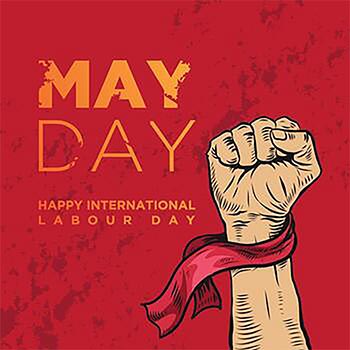 Today is May Day-also known as International Workers' Day. It is a day dedicated to honouring workers across the world and remembering their long struggle for rights, dignity, and fair treatment. But why is May Day celebrated, and what does it truly commemorate?
In 1889, May 1 was designated as May Day, a day in support of workers, by an international federation of socialist groups and trade unions. This decision commemorated the Haymarket Affair, a violent confrontation that took place on May 4, 1886, in Chicago, Illinois.
May Day, also called Workers' Day or International Workers' Day, is a day commemorating the historic struggles and gains made by workers and the labour movement. It is observed in many countries on May 1. In the United States and Canada, a similar observance known as Labour Day occurs on the first Monday of September.
In 1889, an international federation of socialist groups and trade unions designated May 1 as a day in support of workers in commemoration of the Haymarket Riot in Chicago (1886). Five years later, U.S. President Grover Cleveland, uneasy with the socialist origins of Workers' Day, signed legislation making Labour Day-already held in some states on the first Monday of September-the official U.S. holiday in honour of workers. Canada followed suit not long afterward.
In Europe, May 1 was historically associated with rural pagan festivals (May Day), but the original meaning of the day was gradually replaced by its modern association with the labour movement.
In the Soviet Union, leaders embraced the new holiday, believing it would encourage workers in Europe and the United States to unite against capitalism. The day became a significant holiday in the Soviet Union and Eastern Bloc countries, with high-profile parades, including those in Moscow's Red Square, presided over by government and Communist Party leaders, celebrating workers and showcasing Soviet military power.
In Germany, Labour Day became an official holiday in 1933 after the rise of the Nazi Party. Ironically, Germany abolished free trade unions the day after establishing the holiday, virtually destroying the German labour movement.
With the breakup of the Soviet Union and the fall of communist governments in Eastern Europe in the late 20th century, large-scale May Day celebrations in that region declined in importance. In dozens of countries around the world, however, May Day has been recognized as a public holiday and continues to be celebrated with picnics and parties, as well as demonstrations and rallies in support of workers.
May Day or International Workers' Day stands for workers' victory over exploitation and injustice. It began as a day of solidarity with workers in 1889 by the international federation of socialist groups and trade unions. It commemorates the violent Haymarket uprising in 1886 in Chicago, USA. On May 4, a police attack on industrial workers demanding an 8-hour working day led to violent demonstrations and clashes in which 10 workers were killed in police firing.
Over time, May Day has lost much of its appeal due to the relentless march of the free market economy and unrestrained consumerism. Though still celebrated as a day of achievement in the labour rights sector in Bangladesh, it also reflects failures and disillusionments that emerged through various movements.
The nature of labour movements has changed over time. Earlier militancy has largely been replaced by dialogue and negotiation between unions and employers. The jute and cotton mill era has long ended. Bangladesh's industrial sector is now dominated by the readymade garments (RMG) industry and allied sectors.
After decades of demands and agitation for minimum wages in the RMG sector, a semblance of stability now exists. However, sporadic protests still occur over unresolved issues. In the context of market volatility, minimum wages should be increased, and factory working conditions need further improvement.
Survivors of the Rana Plaza tragedy, with or without severe injuries, are still struggling to regain jobs or secure livelihoods. Families of the deceased continue to await compensation. Trade unions and labour rights activists have worked to seek justice, but outcomes have been limited.
Creating a proper environment for workers to meet their basic demands is at the core of the May Day message. In developed countries, strong labour movements often compel authorities to accept legitimate demands. In many developing countries, however, authorities' reluctance to concede workers' rights remains a major challenge.
Workers are often exploited in multiple ways. Factory owners frequently overlook the fact that dissatisfied workers cannot perform efficiently, affecting productivity. Bangladesh is no exception. There are also many workers in the informal sector who are not recognized as a formal working class and remain outside trade union protection. Labour laws should be expanded to include such vulnerable groups to ensure justice and rights protection.
May Day remains not only a celebration but also a reminder-a call to ensure dignity, rights, and justice for all working people. It stands as a symbol of solidarity, urging society to move toward a more equitable and humane future.
The writer is a senior journalist
Loading...
Loading...
Also read



Editor : Iqbal Sobhan Chowdhury
Published by the Editor on behalf of the Observer Ltd. from Globe Printers, 24/A, New Eskaton Road, Ramna, Dhaka.
Editorial, News and Commercial Offices : Aziz Bhaban (2nd floor), 93, Motijheel C/A, Dhaka-1000.
Phone: PABX- 41053001-06; Advertisement: 41053012; 01793317829, 01550707291, E-mail: [email protected], [email protected] Online: email: [email protected] 41053014; 01550707297 Advertisement: 01550707296
Published by the Editor on behalf of the Observer Ltd. from Globe Printers, 24/A, New Eskaton Road, Ramna, Dhaka.
Editorial, News and Commercial Offices : Aziz Bhaban (2nd floor), 93, Motijheel C/A, Dhaka-1000.
Phone: PABX- 41053001-06; Advertisement: 41053012; 01793317829, 01550707291, E-mail: [email protected], [email protected] Online: email: [email protected] 41053014; 01550707297 Advertisement: 01550707296


