



| HEADLINE |

|

CPD Dialogue
Oligarchs grip energy sector: Dr Titumir
Experts suggest tax waiver to encourage solar energy
Published : Monday, 18 May, 2026 at 12:00 AM
Business Correspondent


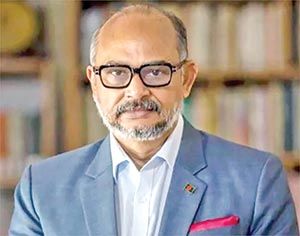 A handful of powerful oligarchs have captured Bangladesh's energy sector, blocking reforms, distorting competition and delaying the renewable transition, Dr Rashed Al Mahmud Titumir, adviser to the Prime Minister for the ministry of Finance and Planning told this in a blunt tone and warning at a high-level dialogue in Pan Pacific Dhaka on Sunday.
He made it clear to break this control now through competition rules, transparent contracts and strict regulatory enforcement, or the country's energy future will remain trapped in inefficiency and dependency.
The dialogue, titled "Renewable Energy in the Upcoming Budget Expectations and Reality," was jointly organised by Centre for Policy Dialogue and Dhaka Stream, bringing policymakers, economists, academics and industry leaders into a focused, policy-driven debate on budget priorities and structural reforms.
Moderating the session, Dr Khondaker Golam Moazzem, research director of the CPD moderated the session.
Md. Khalid Mahmud, programme associate at CPD in his key note speech called for a standalone Renewable Energy Development Fund, arguing that current allocations are diluted within conventional energy spending.
He demanded a dedicated Ministry of Renewable Energy with its own budget and mandate, warning that renewables will continue to lose ground under a shared structure dominated by fossil fuel interests.
He further insisted on restructuring SREDA into a powerful regulatory authority capable of licensing, enforcement, and penal action.
Khalid laid out hard numbers, stating that achieving the 10,000 MW solar target requires installing 1,662 MW annually through 2030.
He urged immediate use of land from cancelled fossil fuel plants, a rolling three-year budget commitment and publication of an annual Energy Transition Booklet to ensure transparency and accountability.
Shahriar Ahmed Chowdhury, director at the Centre for Energy Research, United International University, said Bangladesh remains dangerously behind, with renewables contributing barely 2 per cent of total generation.
He criticised the Tk 62,000 crore subsidy burden, arguing that the same funds could have produced nearly 10,000 MW of solar power.
He called for urgent expansion of solar and wind, particularly in the south and coastal regions, alongside immediate upgrades to transmission and distribution infrastructure.
Dr Moshahida Sultana, associate professor at the University of Dhaka, delivered a direct command increase renewable investment by at least 10 per cent in the upcoming budget, enforce strict timelines and ensure execution.
She rejected the idea of creating new ministries without accountability, stressing measurable results, public monitoring, and shifting subsidies into long-term incentives like power purchase agreements and tax benefits.
Mohammad Hatem, president of the Bangladesh Knitwear Manufacturers and Exporters Association said exporters need reliable and green energy to meet global compliance demands and remain competitive.
On the supply and operational front, Md. Rezaul Karim, chairman of Bangladesh Power Development Board, highlighted system constraints and the need for realistic planning, while Md Erfanul Haque, chairman of Petrobangla, focused on energy resource management and diversification challenges.
Rehan Asif Asad, Adviser to the Prime Minister for the Ministry of Posts, Telecommunications and Information technology as special guest highlighted the role of digital integration in monitoring and accelerating renewable projects.
Representatives from IDCOL urged immediate creation of a dedicated financing window, credit guarantees, and risk-sharing mechanisms to unlock bank lending for renewable projects. They also called for rapid expansion of rooftop solar, rationalisation of wheeling charges and policy alignment with global net-zero demands.
In the open discussion session participants demanded to withdraw taxes and duties on renewable energy equipment.
They demanded for a full waiver of import duties and VAT on solar panels, inverters and batteries, saying high taxation is blocking clean energy growth.
The discussion noted current tax incidence is around 26-37 per cent on solar panels and inverters and up to 58.6 per cent on mounting structures and battery systems and speakers urged reducing or removing these duties in the upcoming budget to accelerate renewable energy expansion.

Loading...
Loading...



Editor : Iqbal Sobhan Chowdhury
Published by the Editor on behalf of the Observer Ltd. from Globe Printers, 24/A, New Eskaton Road, Ramna, Dhaka.
Editorial, News and Commercial Offices : Aziz Bhaban (2nd floor), 93, Motijheel C/A, Dhaka-1000.
Phone: PABX- 41053001-06; Advertisement: 41053012; 01793317829, 01550707291, E-mail: [email protected], [email protected] Online: email: [email protected] 41053014; 01550707297 Advertisement: 01550707296
Published by the Editor on behalf of the Observer Ltd. from Globe Printers, 24/A, New Eskaton Road, Ramna, Dhaka.
Editorial, News and Commercial Offices : Aziz Bhaban (2nd floor), 93, Motijheel C/A, Dhaka-1000.
Phone: PABX- 41053001-06; Advertisement: 41053012; 01793317829, 01550707291, E-mail: [email protected], [email protected] Online: email: [email protected] 41053014; 01550707297 Advertisement: 01550707296


