



| HEADLINE |

|
Sunamganj expects Tk 400cr transaction as 53,000 sacrificial animals ready
Published : Saturday, 23 May, 2026 at 12:00 AM
Our Correspondent


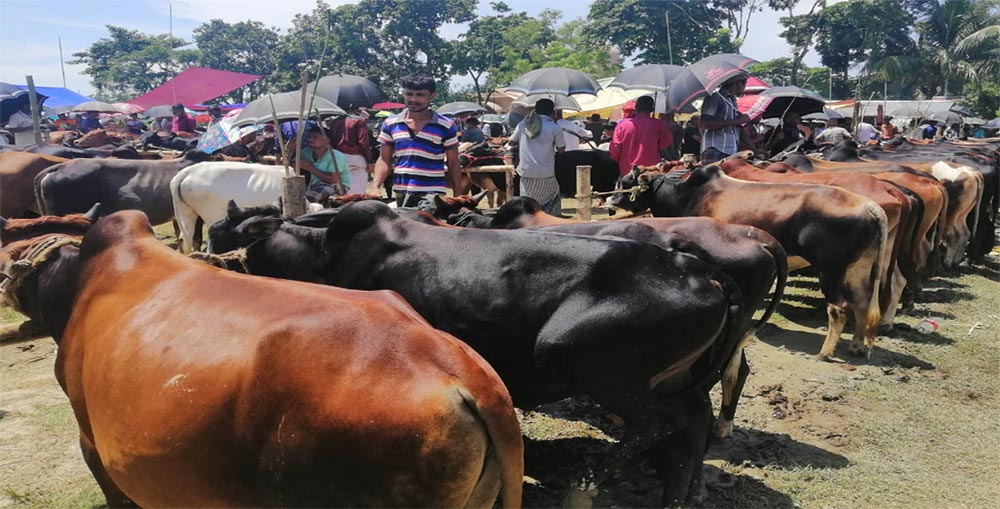 SUNAMGANJ, May 22: A total of more than 53,000 sacrificial animals have been prepared in Sunamganj ahead of Eid-ul-Azha this year, with officials expecting transactions worth around Tk 400 crore in the district's cattle markets.
According to data from the Department of Livestock Services, a total of 53,401 sacrificial animals are ready in the district, against a local demand of 50,494 animals, leaving a surplus of 2,907 livestock.
The prepared animals include 21,176 bulls, 11,897 bullocks, 6,841 cows, 415 buffaloes, 7,963 goats and 4,221 sheep. The district has 737 farms, 26 permanent cattle markets and 34 temporary markets, while 19 veterinary medical teams have been deployed for monitoring and treatment support during the Eid season.
Officials said the highest surplus is recorded in Chhatak Upazila with 3,417 extra animals, while Jagannathpur shows the lowest surplus at 81 animals. On the other hand, Jamalganj Upazila has the highest deficit of 2,655 animals compared to demand.
Sunamganj Sadar Upazila has 6,217 animals against a demand of 3,998, leaving a surplus of 2,219. Chhatak has 7,736 animals against 4,319 demand. In Jagannathpur, 6,581 animals are available against a near-equal demand of 6,500. Several other upazilas, including Tahirpur and Jamalganj, are reporting shortages.
Officials said livestock markets are expected to remain active across all upazilas as Eid approaches, with farmers and traders already engaging in price negotiations.
Veterinary teams have been deployed at markets to ensure animal health monitoring and prevent the use of harmful substances such as steroids for fattening livestock.
District Livestock Officer Dr Md Rofiqul Islam said preparations have been made to ensure a smooth trading environment across the district.
He said 19 veterinary teams are working in markets and that strict monitoring is being conducted, particularly in border areas, to prevent illegal cattle inflow.
He added that around Tk 400 crore worth of livestock trade is expected this Eid season if market conditions remain stable.
Loading...
Loading...
Also read



Editor : Iqbal Sobhan Chowdhury
Published by the Editor on behalf of the Observer Ltd. from Globe Printers, 24/A, New Eskaton Road, Ramna, Dhaka.
Editorial, News and Commercial Offices : Aziz Bhaban (2nd floor), 93, Motijheel C/A, Dhaka-1000.
Phone: PABX- 41053001-06; Advertisement: 41053012; 01793317829, 01550707291, E-mail: [email protected], [email protected] Online: email: [email protected] 41053014; 01550707297 Advertisement: 01550707296
Published by the Editor on behalf of the Observer Ltd. from Globe Printers, 24/A, New Eskaton Road, Ramna, Dhaka.
Editorial, News and Commercial Offices : Aziz Bhaban (2nd floor), 93, Motijheel C/A, Dhaka-1000.
Phone: PABX- 41053001-06; Advertisement: 41053012; 01793317829, 01550707291, E-mail: [email protected], [email protected] Online: email: [email protected] 41053014; 01550707297 Advertisement: 01550707296


