



| HEADLINE |

|

Patients suffer as doctor crisis hits Rajbari hospital
Published : Thursday, 18 June, 2026 at 12:00 AM
Our Correspondent


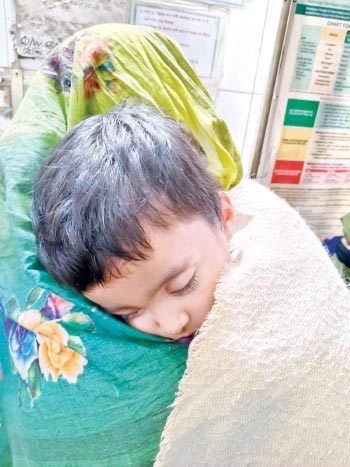 RAJBARI, June 17: The 250-bed Rajbari Sadar Hospital, the largest government healthcare facility in the district, has long been struggling due to a severe shortage of doctors and manpower, leaving it barely functional.
Key specialist posts�"including medicine, cardiology, surgery, paediatrics, gynaecology, dermatology and venereology, forensic medicine, orthopaedic surgery, ENT, anaesthesia, junior specialists, medical officers, emergency medical officers, and radiologists�"remain vacant. As a result, hundreds of thousands of people in the district are being deprived of adequate healthcare services.
Hospital sources said that out of 57 sanctioned posts for specialist doctors, most have remained vacant for a long time. Nearly all major departments are facing manpower shortages. Similar vacancies exist among junior specialists, medical officers, emergency medical officers, and radiologists.
Although 16 medical officers were recently posted to the hospital, none have yet joined, according to hospital Superintendent Dr. Abdul Hannan. As a result, a handful of existing doctors are struggling to handle the overwhelming patient load.
Every day, hundreds of patients from different upazilas of the district visit the hospital for treatment. However, due to insufficient doctors, many patients are forced to wait for long hours. In complicated cases, patients are often referred to Faridpur, Dhaka, or other major hospitals due to the absence of specialist care.
The crisis is not limited to doctors alone. The hospital is also facing a severe shortage of fourth-class employees, including ward boys, ayas, cleaners, and night guards. Vacancies in these posts have disrupted routine hospital operations, and concerns have been raised over weak night-time security.
Patients and attendants have expressed frustration over the situation. One guardian, Maulana Imdadul Haque, said, “How can I leave my child and go home in the children’s ward?” Meanwhile, 68-year-old Aklima said she had been visiting the hospital for seven days without improvement in her son’s condition, adding that the situation in the diarrhoea, children’s, and gynecology wards was particularly poor.
Patients also reported that dental, eye, dermatology, and venereal disease services are either unavailable or involve long waiting times. A single doctor often has to attend to an excessive number of patients, affecting the quality of care.
Health officials said Rajbari Sadar Hospital is the main healthcare hub for nearly 1.2 million people in the district. However, due to years of vacant posts, it is not operating at its full capacity. Poor patients, farmers, labourers, and rural communities are the worst affected.
Stakeholders believe that urgent recruitment to vacant posts, adequate supply of medical equipment, and strengthened security measures could significantly improve healthcare services at the hospital. Otherwise, managing the facility with such limited manpower will become increasingly difficult.
Local civil society members have urged the Ministry of Health and relevant authorities to take immediate steps to fill vacant posts of doctors, nurses, and support staff to improve healthcare delivery in the district.
Loading...
Loading...
Also read



Editor : Iqbal Sobhan Chowdhury
Published by the Editor on behalf of the Observer Ltd. from Globe Printers, 24/A, New Eskaton Road, Ramna, Dhaka.
Editorial, News and Commercial Offices : Aziz Bhaban (2nd floor), 93, Motijheel C/A, Dhaka-1000.
Phone: PABX- 41053001-06; Advertisement: 41053012; 01793317829, 01550707291, E-mail: [email protected], [email protected] Online: email: [email protected] 41053014; 01550707297 Advertisement: 01550707296
Published by the Editor on behalf of the Observer Ltd. from Globe Printers, 24/A, New Eskaton Road, Ramna, Dhaka.
Editorial, News and Commercial Offices : Aziz Bhaban (2nd floor), 93, Motijheel C/A, Dhaka-1000.
Phone: PABX- 41053001-06; Advertisement: 41053012; 01793317829, 01550707291, E-mail: [email protected], [email protected] Online: email: [email protected] 41053014; 01550707297 Advertisement: 01550707296


