



| HEADLINE |

|

Major curriculum overhaul on the cards
AI, vocational education, sports and ethics to be introduced in phases from 2027


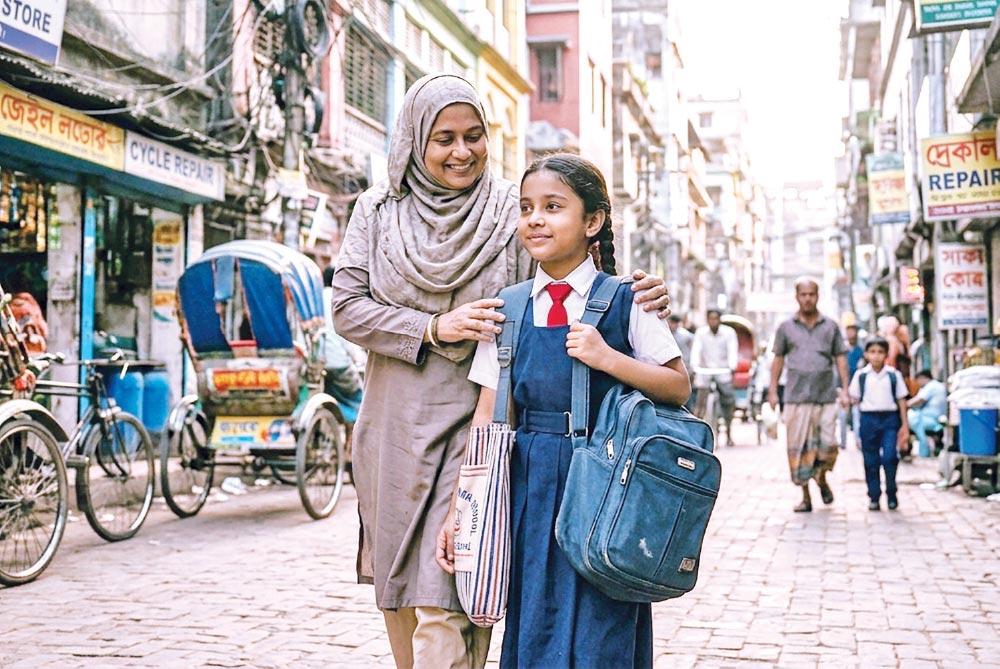 As Bangladesh prepares for one of the most significant overhauls of its education system, the government is planning a curriculum that aims to shift learning beyond examinations and memorisation. Scheduled for full implementation in 2028, the proposed framework seeks to equip students with technical skills, ethics, sports, culture and future-oriented competencies, including artificial intelligence, while addressing longstanding weaknesses in the education system.
Soon after taking office, Education Minister Dr ANM Ehsanul Haque Milon called for a comprehensive review of the curriculum to build a modern and scientific education framework. The government has since allocated its highest-ever education budget to support the reform.
What's changing?
The new curriculum proposes four core components�"Learning with Happiness, Sports, Culture, and Technical and Vocational Education�"with pass/fail assessment replacing grades and GPA in these subjects.
From 2027, Sports and Culture will be introduced in class four, Learning with Happiness in class six, and Life and Career Oriented Education in class seven. Technical and vocational education will begin from class six.
Physical education will be compulsory from classes four to nine, covering football, cricket, badminton, karate, chess, swimming and athletics through continuous assessment. Revised art and culture textbooks will include arts, crafts, music, dance and drama.
A proposal for separate music classes in primary schools was dropped following objections from Islamic political parties. However, State Minister Bobby Hajjaj defended cultural education, saying it promotes creativity, confidence and human values.
History, ethics and future skills
Textbooks are also being revised with greater emphasis on history alongside language and science. Content on the July mass uprising has been added to Bengali, English and history textbooks, while the latest revisions expand coverage of the Liberation War, political developments involving Khaleda Zia and Ziaur Rahman, and introduce a chapter on National Revolution and Solidarity Day. Officials say the objective is to present a more balanced, evidence-based historical narrative.
The National Curriculum and Textbook Board (NCTB) is also updating textbook language, spelling, design and scientific content.
The government is considering introducing the "Four-Way Test"�"an ethical framework linked to Rotary International�"which evaluates actions based on truth, fairness, goodwill and benefit to all. The education minister indicated it could be introduced from class four or six.
The reform also proposes introducing a third foreign language from 2028, with Arabic, Korean, Japanese, Chinese, German and French under consideration, reflecting overseas labour market demand.
Preparing for tomorrow
The curriculum aims to reduce reliance on rote learning and coaching while expanding technical education, strengthening polytechnic institutions and updating ICT education to include artificial intelligence, robotics, cybersecurity and modern hardware.
Its broader vision rests on four pillars: curriculum modernisation, teacher quality, climate-resilient infrastructure and the unification of education streams. It also proposes a learning model comprising 40 per cent academics, 30 per cent practical skills, 20 per cent internships and fieldwork, and 10 per cent soft skills and entrepreneurship to better match labour market needs.
Implementation plan
The reform will be implemented in three phases: textbook revision, curriculum review and development of the new curriculum.
A 200-member committee of educationists, subject specialists, teachers and parents will oversee the process. Around 320 experts are currently revising 601 textbooks, including English versions, with updated editions expected by early 2027 before full implementation in 2028.
The education development budget has increased from Tk 87,000 crore to Tk 1,36,000 crore�"around 2 per cent of GDP�"with a long-term target of reaching 5 per cent.
Challenges ahead
Bangladesh has repeatedly attempted curriculum reform since the Qudrat-e-Khuda Commission in 1972, but long-term policy continuity has remained elusive.
The 2022 curriculum, introduced from 2023, faced criticism from students, parents and experts. Following the political change on August 5, 2024, the interim government restored the 2012 curriculum at the secondary level while retaining the 2022 curriculum in primary education, creating uncertainty over the reform process.
Professor Mojibur Rahman of Dhaka University argues that Bangladesh needs a comprehensive education policy and commission before introducing another curriculum, saying repeated reforms without a structured framework are unlikely to succeed.
Education experts have also questioned the sequencing of the reform, stressing that teacher recruitment, training and institutional capacity are as important as curriculum design.
While the government remains committed to implementing the new curriculum in 2028, experts believe its success will ultimately depend on coherent policy, effective teacher preparation and sustained institutional support.

Loading...
Loading...
Also read



Editor : Iqbal Sobhan Chowdhury
Published by the Editor on behalf of the Observer Ltd. from Globe Printers, 24/A, New Eskaton Road, Ramna, Dhaka.
Editorial, News and Commercial Offices : Aziz Bhaban (2nd floor), 93, Motijheel C/A, Dhaka-1000.
Phone: PABX- 41053001-06; Advertisement: 41053012; 01793317829, 01550707291, E-mail: [email protected], [email protected] Online: email: [email protected] 41053014; 01550707297 Advertisement: 01550707296
Published by the Editor on behalf of the Observer Ltd. from Globe Printers, 24/A, New Eskaton Road, Ramna, Dhaka.
Editorial, News and Commercial Offices : Aziz Bhaban (2nd floor), 93, Motijheel C/A, Dhaka-1000.
Phone: PABX- 41053001-06; Advertisement: 41053012; 01793317829, 01550707291, E-mail: [email protected], [email protected] Online: email: [email protected] 41053014; 01550707297 Advertisement: 01550707296


