



| HEADLINE |

|

BB Tries to Thread the Needle Between Inflation and Stalled Growth
Published : Thursday, 2 July, 2026 at 12:00 AM
Faruk Ahmed


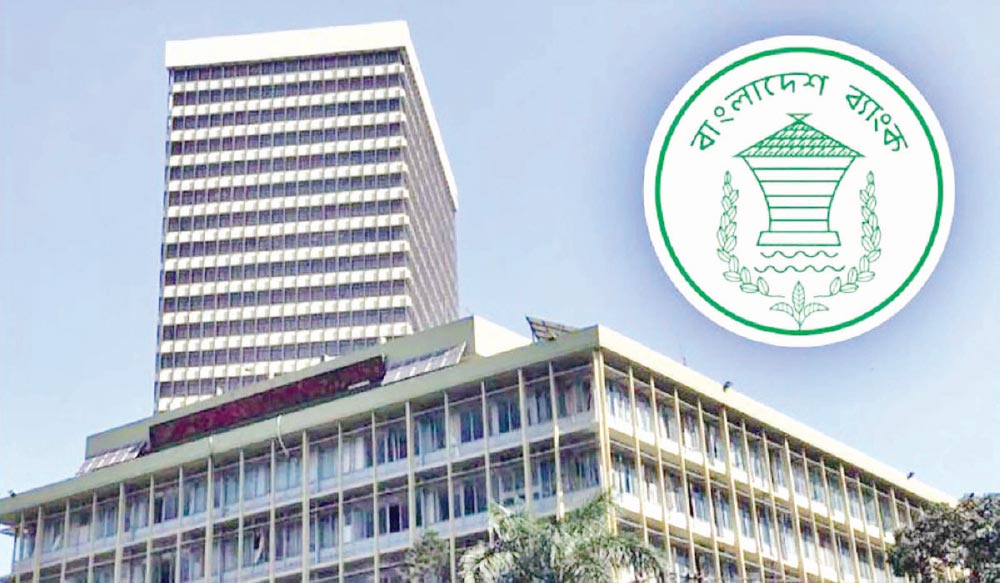 Bangladesh Bank's latest Monetary Policy Statement (MPS), unveiled on Tuesday, reflects the increasingly difficult balancing act confronting policymakers: how to bring inflation under control without further weakening investment, industrial activity and economic growth.
By keeping the policy repo rate unchanged at 10 per cent for the first half of FY2026-27 while announcing a Tk600 billion refinancing package for industries, agriculture and cottage, micro, small and medium enterprises (CMSMEs), the central bank has signalled that reviving economic activity has become almost as important as restoring price stability.
"We want to bring vibrancy back to economic activities by restoring private-sector confidence," Governor Md Mostaqur Rahman said while announcing the policy. The MPS also retained the Standing Lending Facility (SLF) at 11.5 per cent and the Standing Deposit Facility (SDF) at 7.5 per cent, while lowering the private-sector credit growth target to 6.8 per cent by December, acknowledging subdued demand for credit.
The Governor also defended the recent decision to cap banks' interest-rate spread at four percentage points, arguing that some lenders had raised lending rates disproportionately compared with deposit rates. The refinancing package, he said, would support viable businesses facing temporary financial constraints rather than habitual defaulters.
The policy, therefore, comes at a critical moment.
Although inflation has eased from its peak, Bangladesh Bank's own review shows it rebounded to 9.42 per cent in May from 8.49 per cent in December 2025, underscoring how fragile the disinflation process remains. At the same time, private-sector credit growth slowed to around five per cent in May as businesses delayed investment and banks became increasingly cautious amid rising non-performing loans.
The experience exposes the limits of monetary policy.
Bangladesh's recent inflation has been driven largely by exchange-rate depreciation, higher fuel and food prices, imported inflation and supply-chain bottlenecks rather than excessive domestic demand. Higher interest rates can suppress spending, but they cannot reduce global commodity prices or remove structural constraints in domestic markets.
That has prompted economists to question whether monetary tightening alone can deliver both price stability and stronger growth.
Chairman of Policy Exchange Bangladesh Dr M Masrur Reaz argues that the monetary stance appears "tight on paper but not in reality", pointing to continued liquidity injections through refinancing schemes and other quasi-fiscal operations. If liquidity continues to expand through multiple channels, can the policy genuinely be considered contractionary? And if lending spreads are administratively capped, will banks continue to price credit efficiently and extend loans to productive sectors?
Director General of the Bangladesh Institute of Bank Management (BIBM), Dr Md Ezazul Islam, has raised another concern.
Despite the high policy rate, reserve money has continued to expand because of liquidity support to banks. If reserve money keeps growing rapidly, can inflation realistically return to target without tighter control over monetary expansion?
These questions go to the heart of the policy debate.
Bangladesh Bank is attempting to restrain inflation while simultaneously supporting investment through refinancing facilities and targeted liquidity measures. The strategy reflects the difficult trade-offs facing the economy, but it also raises concerns about whether the overall policy framework is sending consistent signals to financial markets.
The bigger challenge, however, lies beyond interest rates.
Businesses invest when they see policy stability, a predictable exchange rate, reliable energy supplies, sound banking institutions and confidence in the broader economy. Bangladesh's strongest growth years were driven not simply by cheaper credit, but by expanding exports, rising remittances, improving infrastructure and a favourable investment climate.
The latest MPS recognises that restoring growth will require more than monetary restraint. It places renewed emphasis on banking-sector reforms, loan recovery and rebuilding private-sector confidence.
Yet the central question remains: can monetary policy revive investment if structural weaknesses in the banking system and the business environment persist?
The answer will determine whether Bangladesh Bank's latest policy marks the beginning of a durable recovery or simply another chapter in the country's long struggle to balance inflation with growth. Monetary policy can create favourable conditions, but restoring investment and sustaining growth will ultimately depend on stronger institutions, sound governance and the confidence of businesses to invest again.
Loading...
Loading...
Also read



Editor : Iqbal Sobhan Chowdhury
Published by the Editor on behalf of the Observer Ltd. from Globe Printers, 24/A, New Eskaton Road, Ramna, Dhaka.
Editorial, News and Commercial Offices : Aziz Bhaban (2nd floor), 93, Motijheel C/A, Dhaka-1000.
Phone: PABX- 41053001-06; Advertisement: 41053012; 01793317829, 01550707291, E-mail: [email protected], [email protected] Online: email: [email protected] 41053014; 01550707297 Advertisement: 01550707296
Published by the Editor on behalf of the Observer Ltd. from Globe Printers, 24/A, New Eskaton Road, Ramna, Dhaka.
Editorial, News and Commercial Offices : Aziz Bhaban (2nd floor), 93, Motijheel C/A, Dhaka-1000.
Phone: PABX- 41053001-06; Advertisement: 41053012; 01793317829, 01550707291, E-mail: [email protected], [email protected] Online: email: [email protected] 41053014; 01550707297 Advertisement: 01550707296


