



| HEADLINE |

|
Home Minister’s Call, TIB Report
Interim govt’s corruption demands probe, trial
Published : Thursday, 2 July, 2026 at 12:00 AM
Observer Special


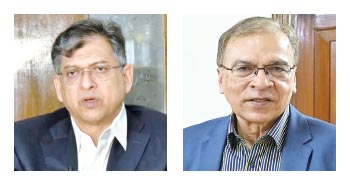 The latest findings from Transparency International Bangladesh (TIB) surely unsettles anyone who believes corruption merely changes its face with a change of government.
 According to the organisation's National Household Survey 2025, Bangladeshis paid an estimated Tk 12,633.2 crore in bribes during the tenure of Dr Mohammad Yunus- led Interim Government-15.9 per cent more than in 2023. That staggering sum amounts to 1.58 percent of the national budget for the 2024�"25 fiscal year. Behind those figures lie millions of ordinary citizens who were forced to pay for services they were already entitled to receive.
We consider the TIB report to be more than a statistical exercise, rather it is a stark reminder that corruption remains deeply embedded in the country's public services delivery. And once more the list contains all the safe havens of our state-run institutions�"Passport services, BRTA, the judiciary, law enforcement and land administration. The country’s Passport service is on top of the list - more than three-quarters of users reported paying bribes during the unelected regime while continues to symbolise a system where efficiency often comes at an illicit price.
However, the significance of the TIB survey lies not only in what it reveals but also in when it was conducted. Covering the period between November 2024 and October 2025, it reflects the experience of citizens during the unelected interim government's tenure. As TIB Executive Director Iftekharuzzaman observed, it provides a baseline against which future anti-corruption efforts can be measured. Least to say, that baseline is hardly flattering.
Interesting as it may seem, the report emerged almost simultaneously with a political challenge that deserves serious attention. Home Minister Salahuddin Ahmed urged the Prime Minister on Sunday to engage the Anti-Corruption Commission (ACC) to investigate all allegations of corruption during the interim government's 18-month tenure. His call at the parliament has naturally triggered a political debate. Yet, stripped of partisan rhetoric, it presents an opportunity combatting corruption that should not be squandered.
We believe the ACC should accept the responsibility without hesitation.
Those who are now demanding accountability over corruption and the use of foreign should have no objection to an impartial ACC investigation. Equally, those who defend the interim administration should also welcome an inquiry, if they are confident that the allegations are exaggerated or fabricated. On that note - accountability cannot be selective. It either applies to everyone or it loses its credibility altogether.
Needs be mentioned, the TIB survey does not identify individual perpetrators or prove criminal liability. It documents citizens' experiences of corruption in obtaining public services. This important benchmark matters. Surveys reveal patterns, not prosecutions. But when such patterns become as widespread and costly as the latest report suggested, they raise questions which only a professional and properly empowered investigative agency can answer.
Questions automatically arise - Where exactly did corruption occur? Which institutions failed? Were the irregularities isolated acts by individual officials, or did they reflect organised networks? Did weaknesses in oversight enable corrupt practices to flourish? Most importantly, who benefited?
We place these questions before the country’s powerful anti-corruption agency. The nation deserves answers.
An ACC investigation, if conducted professionally and without political interference, could either substantiate or refute the concerns highlighted by TIB. It could identify systemic failures that demand reforms, rather than simply assigning blame. Such an inquiry would also send a powerful signal that no administration�"elected or unelected�"is beyond scrutiny.
Bangladesh has witnessed far too many anti-corruption drives that appeared vigorous in their rhetoric but selective in their execution. Public confidence has frequently been eroded, since most investigations seemed to depend more on political convenience than on evidence. We expect this time to be different.
If we take the Home Minister's proposal to be a sincere one, then it should be accompanied by a clear commitment to protect the independence of the ACC. Investigators must be allowed to follow the evidence wherever it leads, irrespective of political sensitivities or institutional embarrassments.
Ultimately, the TIB report and the Home Minister's call point in the same direction. One identifies a disturbing pattern of corruption, while the other demands a professional investigation of alleged wrongdoing. The logical next step is obvious.
Let the ACC independently investigate into the report’s wrongdoings of an unelected government. Let it determine where corruption occurred, how it happened and who was responsible. In case if the allegations are unfounded, that finding should also be accepted. If they are supported by evidence, those responsible must face music the quickest.
Corruption thrives in darkness but weakens under scrutiny. Bangladesh under a new government today, does not need any more competing political narratives; it needs credible facts. The public has already paid Tk 12,633.2 crore for corruption. They should not now be asked to pay an additional price for uncertainty and impunity.
In conclusion, the TIB survey delivered an uncomfortable verdict on Dr Yunus’s Interim Government's poor and controversial record in public service delivery.While the survey does not determine criminal responsibility, but it surely demolishes any claim that the interim government presided over a meaningful improvement in integrity or accountability. These findings demand far more than mere political point-scoring in parliamentary debates, rather a determined commitment and political will needed to combat corruption.
Loading...
Loading...
Also read



Editor : Iqbal Sobhan Chowdhury
Published by the Editor on behalf of the Observer Ltd. from Globe Printers, 24/A, New Eskaton Road, Ramna, Dhaka.
Editorial, News and Commercial Offices : Aziz Bhaban (2nd floor), 93, Motijheel C/A, Dhaka-1000.
Phone: PABX- 41053001-06; Advertisement: 41053012; 01793317829, 01550707291, E-mail: [email protected], [email protected] Online: email: [email protected] 41053014; 01550707297 Advertisement: 01550707296
Published by the Editor on behalf of the Observer Ltd. from Globe Printers, 24/A, New Eskaton Road, Ramna, Dhaka.
Editorial, News and Commercial Offices : Aziz Bhaban (2nd floor), 93, Motijheel C/A, Dhaka-1000.
Phone: PABX- 41053001-06; Advertisement: 41053012; 01793317829, 01550707291, E-mail: [email protected], [email protected] Online: email: [email protected] 41053014; 01550707297 Advertisement: 01550707296


