



| HEADLINE |

|
How mobile networks stay running during floods


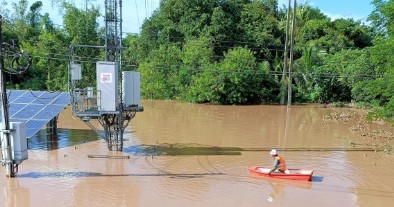
Despite widespread flooding, power outages and submerged roads, mobile calls, internet services and mobile financial platforms often continue to function. The reason is a combination of backup power systems, network redundancy and continuous monitoring.
When electricity goes out, mobile towers automatically switch to battery backup, which typically lasts two to six hours. If the outage continues, operators activate diesel generators at many key tower sites to keep services running.
Floods can make this difficult, as fuel, spare parts and maintenance crews may struggle to reach affected towers. Operators often use alternative routes or even boats to transport supplies.
Keeping towers powered alone is not enough. Mobile networks also depend on data centres, optical fibre and transmission links. Damage to any of these components can disrupt calls, internet access, OTPs and mobile financial services.
To minimise outages, operators maintain backup transmission systems and monitor networks around the clock, dispatching technical teams whenever problems arise.
Reliable mobile connectivity is critical during disasters, supporting rescue operations, emergency services, government alerts, financial transactions and communication with loved ones. That is why keeping mobile networks operational during floods is a key part of emergency response.
Loading...
Loading...
Also read








Editor : Iqbal Sobhan Chowdhury
Published by the Editor on behalf of the Observer Ltd. from Globe Printers, 24/A, New Eskaton Road, Ramna, Dhaka.
Editorial, News and Commercial Offices : Aziz Bhaban (2nd floor), 93, Motijheel C/A, Dhaka-1000.
Phone: PABX- 41053001-06; Online: 41053014; 01550707296 Advertisement: 41053012; 01550707291
E-mail: [email protected] [email protected]
Published by the Editor on behalf of the Observer Ltd. from Globe Printers, 24/A, New Eskaton Road, Ramna, Dhaka.
Editorial, News and Commercial Offices : Aziz Bhaban (2nd floor), 93, Motijheel C/A, Dhaka-1000.
Phone: PABX- 41053001-06; Online: 41053014; 01550707296 Advertisement: 41053012; 01550707291
E-mail: [email protected] [email protected]


