



| HEADLINE |

|
We need to focus on development of local lithium industry


 At a time when Bangladesh’s productive sectors are grappling with persistent power outages, rising fuel costs, and the heavy toll of environmental pollution, a quiet but crucial transition is taking shape in the energy storage industry. The country stands at a critical juncture, where moving away from traditional, inefficient energy systems toward a sustainable, high-tech future is no longer just an environmental ideal�"it is an economic imperative. Central to this shift is the rise of lithium-ion technology, a development that has the potential to redefine industrial productivity, transport, and domestic energy security across the nation.
For decades, Bangladesh has relied heavily on conventional lead-acid batteries for local transport and backup power. However, the economic and environmental costs of this reliance have become unsustainable. According to the Bangladesh Power Development Board (BPDB), summer power shortages regularly hit 2,000 to 3,000 MW. To mitigate this, businesses have historically turned to diesel generators, incurring massive operational costs while worsening air pollution.
This crisis is compounded by the structural inefficiencies of traditional energy storage. Conventional lead-acid batteries offer poor charging efficiency, hovering between 70% and 85%. Because they cannot be safely discharged below 50% of their capacity, their effective energy utilization is drastically limited. With approximately 5 million electric three-wheelers operating nationwide, this systemic inefficiency translates to an astounding daily energy wastage of roughly 25 million kilowatt-hours (25,000 MWh). To fill this massive deficit, the national exchequer is forced to expend valuable foreign currency to import LNG and diesel.
Furthermore, the unregulated recycling of these traditional batteries poses a severe threat to public health and ecology. Roughly 80% of used lead-acid batteries are recycled informally and unsafely. Unregulated acid and lead waste dump sites heavily pollute soil and adjacent water bodies, exposing urban and rural populations to toxic heavy metals. When these hazardous toxins leach into agricultural land and rivers, they devastate aquatic ecosystems, reduce crop yields, and enter the human food chain, leading to chronic and fatal illnesses.
Transitioning to advanced lithium-ion technology, particularly Lithium Iron Phosphate offers a definitive solution to these overlapping crises. With a charging efficiency of 92% to 98% and a usable capacity exceeding 90%, migrating the country’s backup systems and EV fleet to lithium would reduce energy wastage to below 5%, significantly relieving the national grid and saving millions in fuel imports.
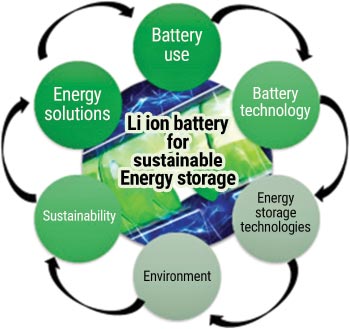 The environmental argument is equally compelling. While a standard lead-acid battery lasts barely a year, a quality lithium battery offers an operational lifespan of 8 to 10 years, or up to 6,000 charge cycles. This durability means it generates up to 15 times less physical waste over its lifecycle. Crucially, when its utility finally ends, it can be safely deactivated and recycled through automated, modern processes without leaving the long-lasting toxic footprint associated with lead.
The government's progressive decision to reduce the import tax on lithium battery components from 60% to 15% has opened a vital window for local industrialization. Establishing domestic production capacity is the next logical step. By moving toward local manufacturing utilizing advanced automation and international technology partnerships, Bangladesh can build a robust, self-reliant green technology sector.
Initial investments in localized assembly and technical simulation will lay the foundation. As local capacity matures, transitioning to full-scale joint-venture manufacturing plants will dramatically lower the cost of clean energy for ordinary citizens, making the switch from lead-acid to lithium financially viable. Moreover, localized manufacturing ensures higher standards of quality control and digitalization, countering the influx of substandard, low-quality imports that quickly end up in landfills.
The global lithium-ion battery market is projected to surpass $435 billion by 2030, and Bangladesh’s domestic market alone is estimated to reach $435 million by the same year, driven by a steady annual growth rate of 7% to 11%. As telecom towers, national grid backups, and electric vehicles rapidly migrate to clean energy, the country's annual demand has already crossed 1 GWh.
Developing a robust local lithium industry aligns seamlessly with the national target of sourcing 40% of energy from renewable sources by 2041. By mastering this technology domestically, Bangladesh can transition from a consumer of green tech to a regional manufacturer, opening up high-potential export pathways to neighbouring South Asian markets like India, Nepal, and Sri Lanka.
To secure our future, Bangladesh must foster this rising industry with consistent policy support, infrastructure development, and strict environmental standards. Embracing the lithium revolution is our pathway to safeguarding public health, conserving vital foreign reserves, and powering a truly sustainable, green economy.
The writer is an energy expert and Managing Director of Ecogen Solution Limited
Loading...
Loading...
Also read



Editor : Iqbal Sobhan Chowdhury
Published by the Editor on behalf of the Observer Ltd. from Globe Printers, 24/A, New Eskaton Road, Ramna, Dhaka.
Editorial, News and Commercial Offices : Aziz Bhaban (2nd floor), 93, Motijheel C/A, Dhaka-1000.
Phone: PABX- 41053001-06; Advertisement: 41053012; 01793317829, 01550707291, E-mail: [email protected], [email protected] Online: email: [email protected] 41053014; 01550707297 Advertisement: 01550707296
Published by the Editor on behalf of the Observer Ltd. from Globe Printers, 24/A, New Eskaton Road, Ramna, Dhaka.
Editorial, News and Commercial Offices : Aziz Bhaban (2nd floor), 93, Motijheel C/A, Dhaka-1000.
Phone: PABX- 41053001-06; Advertisement: 41053012; 01793317829, 01550707291, E-mail: [email protected], [email protected] Online: email: [email protected] 41053014; 01550707297 Advertisement: 01550707296


