



| HEADLINE |

|
Banned Chinese 'Duari' nets threaten fish biodiversity in Nalchity
Published : Wednesday, 22 July, 2026 at 1:17 PM
Observer Correspondence


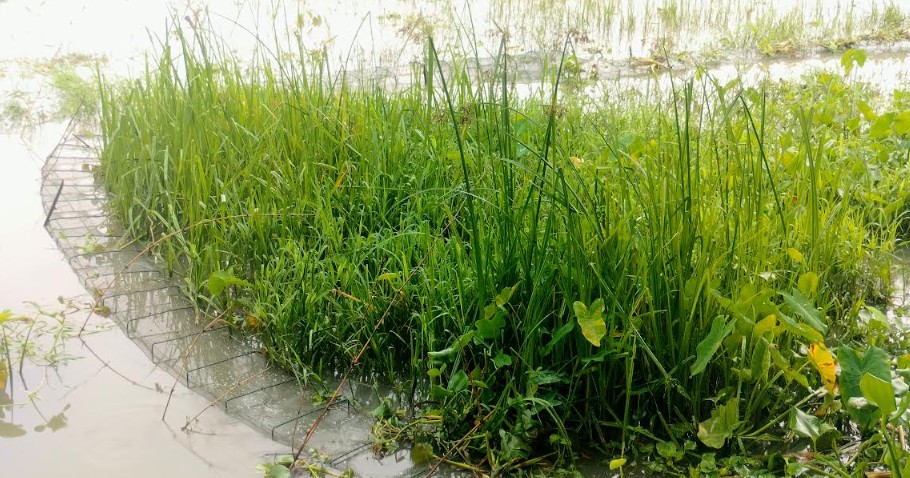
Despite a government ban, so-called Chinese 'Duari' fishing nets are being widely used in canals, wetlands and paddy fields across Nalchity, raising concerns over the destruction of indigenous fish species and aquatic biodiversity.
Locals alleged that the prohibited nets are also being sold discreetly at several fishing gear shops in the area, making them easily accessible to fishermen.
Helal Talukdar, a resident of Nalchity municipality, said the fine-mesh nets trap everything from fish fry to other aquatic organisms, severely disrupting natural breeding.
"Current nets have already damaged fish stocks, and now these Chinese Duari nets are destroying whatever remains. Once set in the water, they are often left for months, killing countless fish fry and other aquatic life," he said.
Schoolteacher Kamrul Islam said native fish have become increasingly scarce in local markets, while hybrid varieties are becoming more common.
"Many indigenous species have already disappeared, and those that remain are under threat. The authorities should strengthen monitoring at the production and distribution stages to stop these banned nets from entering the market," he added.
A local fisherman, requesting anonymity, said the nets remain popular because they are inexpensive, durable and do not rot easily.
"Traditional nets deteriorate quickly and need to be removed from the water regularly, but these nets can stay submerged for months, making fishing easier and cheaper," he said.
Nalchity Upazila Fisheries Officer Nazmul Hasan said drives against banned fishing nets, including Chinese Duari nets, are conducted throughout the year.
"With the monsoon season, the use of illegal nets has increased. We will launch a fresh upazila-wide enforcement drive soon," he said.
Upazila Nirbahi Officer (Acting) Rizbi Ahmed Sabuj said the use of Chinese Duari nets is prohibited under government regulations.
"We will work with the Fisheries Department to take legal action against those using these banned nets," he said.
PH/SKS
Loading...
Loading...
Also read







Editor : Iqbal Sobhan Chowdhury
Published by the Editor on behalf of the Observer Ltd. from Globe Printers, 24/A, New Eskaton Road, Ramna, Dhaka.
Editorial, News and Commercial Offices : Aziz Bhaban (2nd floor), 93, Motijheel C/A, Dhaka-1000.
Phone: PABX- 41053001-06; Advertisement: 41053012; 01793317829, 01550707291, E-mail: [email protected], [email protected] Online: email: [email protected] 41053014; 01550707297 Advertisement: 01550707296
Published by the Editor on behalf of the Observer Ltd. from Globe Printers, 24/A, New Eskaton Road, Ramna, Dhaka.
Editorial, News and Commercial Offices : Aziz Bhaban (2nd floor), 93, Motijheel C/A, Dhaka-1000.
Phone: PABX- 41053001-06; Advertisement: 41053012; 01793317829, 01550707291, E-mail: [email protected], [email protected] Online: email: [email protected] 41053014; 01550707297 Advertisement: 01550707296


