



| HEADLINE |

|
Genome sequencing to transform precision medicine in Bangladesh: Experts
Published : Saturday, 1 August, 2026 at 8:58 PM
Observer staff correspondent


File Photo
Genome sequencing is poised to revolutionize the diagnosis and treatment of complex diseases by enabling more accurate detection and personalized therapies, experts said at an international genomics seminar held in Dhaka on Saturday. They stressed the need for wider adoption of advanced genomic technologies to strengthen Bangladesh’s healthcare system.
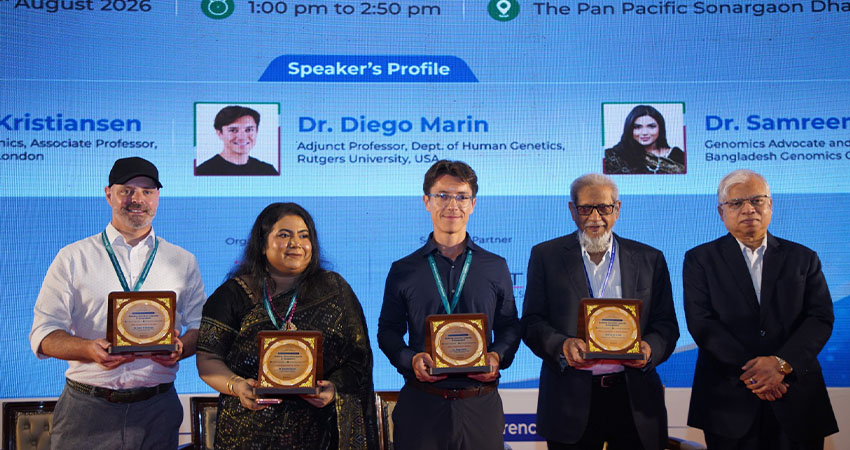
The International Genomics Seminar was organized by the Bangladesh Genome Consortium with support from Radiant Pharmaceuticals Limited, bringing together leading national and international experts to discuss the expanding role of genomics in modern medicine.
Opening the seminar, Dr. Samrin Islam, founder of the Bangladesh Genome Consortium and a specialist in genomics and stem cell research, highlighted the importance of genomic technologies in improving disease diagnosis and advancing precision medicine.
The seminar featured keynote presentations from renowned cancer specialist Professor M.A. Hai, Associate Professor Dr. Mark Christiansen, Head of Genomics at University College London (UCL), Professor Dr. Diego Marin of Rutgers University, USA, Naser Shahriar Zahedi, Chairman of Radiant Pharmaceuticals Limited, and Lt. Gen. Sinha Ibn Jamali (Retd.), Managing Director of the company. The session was moderated by Dr. Zeenat Ara.
Professor M.A. Hai said genome sequencing would become a crucial tool in diagnosing and treating cancer and other complex diseases. He stressed the importance of expanding access to advanced genomic technologies in Bangladesh.
Dr. Mark Christiansen explained that clinical genomics is reshaping healthcare by improving disease diagnosis, assessing health risks, selecting appropriate treatments and enhancing patient management.
Professor Diego Marin highlighted the growing significance of reproductive genomics, molecular diagnostics and precision medicine in ensuring more effective and targeted healthcare solutions.
Naser Shahriar Zahedi urged the Ministry of Health to take initiatives for large-scale adoption of genome sequencing, saying the technology could significantly improve the diagnosis of complex diseases in Bangladesh.
Lt. Gen. Sinha Ibn Jamali (Retd.) said Radiant Pharmaceuticals’ involvement reflects its commitment to supporting advanced diagnostic solutions and improving healthcare outcomes in the country.
Dr. Samrin Islam expressed optimism that the Bangladesh Genome Consortium would contribute to building national capacity in diagnosing and treating complex diseases. She called for greater collaboration among physicians, researchers, universities, hospitals, diagnostic laboratories, government agencies, pharmaceutical and biotechnology companies, technology partners and investors to establish a strong genomics ecosystem.
The seminar ended with an interactive panel discussion focusing on the future prospects of genomics and precision medicine in Bangladesh.
-HIS
Loading...
Loading...
Also read









Editor : Iqbal Sobhan Chowdhury
Published by the Editor on behalf of the Observer Ltd. from Globe Printers, 24/A, New Eskaton Road, Ramna, Dhaka.
Editorial, News and Commercial Offices : Aziz Bhaban (2nd floor), 93, Motijheel C/A, Dhaka-1000.
Phone: PABX- 41053001-06; Advertisement: 41053012; 01793317829, 01550707291, E-mail: [email protected], [email protected] Online: email: [email protected] 41053014; 01550707297 Advertisement: 01550707296
Published by the Editor on behalf of the Observer Ltd. from Globe Printers, 24/A, New Eskaton Road, Ramna, Dhaka.
Editorial, News and Commercial Offices : Aziz Bhaban (2nd floor), 93, Motijheel C/A, Dhaka-1000.
Phone: PABX- 41053001-06; Advertisement: 41053012; 01793317829, 01550707291, E-mail: [email protected], [email protected] Online: email: [email protected] 41053014; 01550707297 Advertisement: 01550707296


