



| HEADLINE |

|

From Garments To Silicon
Bangladesh Eyes a Share of Trillion-Dollar Chip Market
Published : Sunday, 2 August, 2026 at 12:00 AM
Faruk Ahmed


 After conquering the global apparel market, Bangladesh is preparing for its most ambitious economic transformation yet�"entering the trillion-dollar global semiconductor industry in a bid to become a player in the technology powering the world's digital future.
Industry experts believe that securing even a tiny fraction of the rapidly expanding global chip market could dramatically diversify Bangladesh's exports, generate billions in high-value foreign exchange earnings and reduce the country's long-standing dependence on the ready-made garments (RMG) sector.
The global semiconductor industry, valued at around US$700 billion in 2025, is projected to approach US$1 trillion by the end of the decade, fuelled by soaring demand for artificial intelligence (AI), cloud computing, electric vehicles, robotics, 5G communications and advanced defence technologies.
Against this backdrop, Bangladesh is positioning itself as an emerging destination for semiconductor design, testing, verification and packaging services rather than capital-intensive wafer fabrication, where entry costs remain prohibitively high.
The country's ambitions received a major policy boost at the National Semiconductor Symposium and BEAR (Bangladesh Electronics, AI and Robotics) Summit 2026, where Prime Minister Tarique Rahman unveiled a long-term strategy to transform semiconductors into Bangladesh's next major export engine after garments.
Describing semiconductors as the foundation of the Fourth and Fifth Industrial Revolutions, the Prime Minister said chips are indispensable to artificial intelligence, robotics, data centres, renewable energy, medical technology, smartphones, satellites and modern defence systems, adding that the government is committed to creating a business-friendly ecosystem for the industry.
The government's strategy is supported by a series of fiscal incentives aimed at reducing production costs and attracting investment. The FY2026-27 national budget reduced import duties on raw materials used for semiconductor design, testing and packaging to just 1 per cent, while exempting VAT, advance tax and regulatory duties until June 2031. It has also announced cash incentives for semiconductor design exports and established dedicated innovation funding to nurture technology start-ups.
Industry experts say Bangladesh already possesses one of the most important ingredients for success�"a growing pool of engineering talent.
More than 20,000 engineering and electrical graduates enter the workforce every year, while around 700 specialised chip designers are already employed in local firms serving international clients. Even more significant is the country's global talent network. More than 3,000 Bangladeshi semiconductor professionals are working with leading global technology companies, including Intel, Samsung Electronics and TSMC. Policymakers regard this overseas expertise as Bangladesh's strongest competitive advantage in building a world-class semiconductor ecosystem.
The government has set an ambitious target of increasing semiconductor exports from the current US$8-10 million annually to US$1 billion by 2030, primarily through integrated circuit (IC) design, verification, testing and packaging services.
Rapid expansion is expected to be centred around Kaliakoir Hi-Tech Park in Gazipur, where specialised laboratories, clean-room facilities and dedicated technology clusters are planned to support research, innovation and commercial production.
The opportunity, however, extends beyond Bangladesh.
Semiconductors have become the strategic backbone of the global economy and one of the world's most contested industries.
Every smartphone, computer, electric vehicle, medical device, satellite and AI application depends on increasingly sophisticated chips. They also power military drones, missile guidance systems, secure communications and advanced surveillance technologies, making semiconductor production a matter of national security.
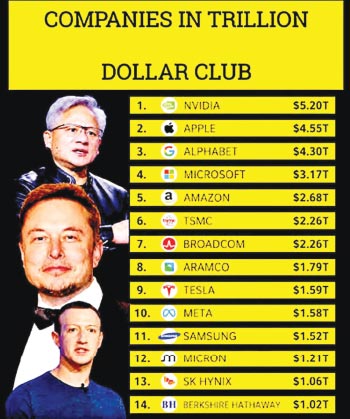
As a result, the United States, China, Taiwan, South Korea, Japan and the European Union are investing hundreds of billions of dollars to strengthen domestic chip manufacturing and secure resilient supply chains. Taiwan's TSMC remains the global leader in advanced chip fabrication, while Nvidia, Samsung Electronics, Intel and Broadcom dominate different segments of the semiconductor value chain.
Yet industry analysts caution that Bangladesh faces formidable challenges. Establishing a state-of-the-art semiconductor fabrication plant can require investments exceeding US$20-30 billion, alongside uninterrupted electricity, ultra-pure water, advanced research facilities, highly skilled engineers and long-term policy consistency. Geopolitical tensions, supply-chain disruptions and fierce global competition also continue to reshape the industry.
For Bangladesh, however, success does not depend on immediately manufacturing the world's most advanced chips. Rather, it lies in steadily building expertise in semiconductor design, engineering services and innovation-driven technologies, where barriers to entry are lower but value addition is substantial.
Few believed Bangladesh could become a global apparel powerhouse four decades ago. Today, the country is embarking on another high-stakes journey�"one that seeks to replace low-cost manufacturing with knowledge-intensive innovation. If executed with sustained policy support, investment in research and close collaboration between government, academia and industry, Bangladesh's next export revolution may no longer be stitched with fabric, but etched in silicon.

Loading...
Loading...
Also read



Editor : Iqbal Sobhan Chowdhury
Published by the Editor on behalf of the Observer Ltd. from Globe Printers, 24/A, New Eskaton Road, Ramna, Dhaka.
Editorial, News and Commercial Offices : Aziz Bhaban (2nd floor), 93, Motijheel C/A, Dhaka-1000.
Phone: PABX- 41053001-06; Advertisement: 41053012; 01793317829, 01550707291, E-mail: [email protected], [email protected] Online: email: [email protected] 41053014; 01550707297 Advertisement: 01550707296
Published by the Editor on behalf of the Observer Ltd. from Globe Printers, 24/A, New Eskaton Road, Ramna, Dhaka.
Editorial, News and Commercial Offices : Aziz Bhaban (2nd floor), 93, Motijheel C/A, Dhaka-1000.
Phone: PABX- 41053001-06; Advertisement: 41053012; 01793317829, 01550707291, E-mail: [email protected], [email protected] Online: email: [email protected] 41053014; 01550707297 Advertisement: 01550707296


