



| HEADLINE |

|

Govt plans to boost gas production to tackle crisis


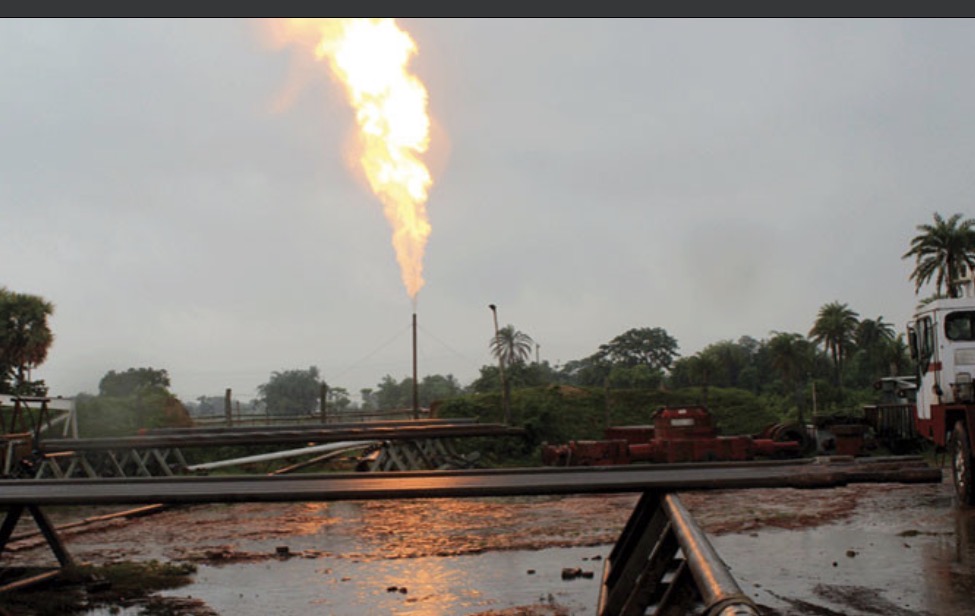
The government has stepped up efforts to increase domestic gas production to meet the country’s growing energy demand and reduce reliance on imported LNG.
Petrobangla is implementing a programme to drill and rework 150 wells. If fully implemented, the programme is expected to add around 1,401 million cubic feet per day (mmcfd) of gas by 2030.
Petrobangla data shows the country has an estimated 29.78 trillion cubic feet (tcf) of recoverable gas reserves, of which around 22.41 tcf had been extracted by June 30. About 7.37 tcf remains recoverable.
Domestic gas production has been declining, increasing pressure on supply. At present, around 2,687 mmcfd of gas is supplied daily, with about 64% coming from domestic sources and the rest from imported LNG.
Bangladesh spent around Tk 277,452 crore, or about $23 billion, on LNG imports between fiscal 2018-19 and 2025-26, while the government provided Tk 51,366 crore in subsidies.
Under the 150-well programme, drilling of 29 wells has already been completed, securing around 270.8 mmcfd of new gas. Of this, about 125.3 mmcfd is currently being supplied to the national grid. Work is underway on eight more wells, which could add another 90 mmcfd.
The remaining 113 wells will be explored, developed or reworked in phases.
Petrobangla is also conducting seismic surveys to identify new gas prospects. Three-dimensional seismic surveys are planned in Char Fasson, Jamalpur and several areas of Sylhet, while two-dimensional surveys are underway in the Habiganj and Bakhrabad areas.
Petrobangla Director (PSC and Operations and Mines) Engineer Md Shoaib said the government was combining seismic surveys, geological assessments and exploratory drilling to discover new domestic gas sources and increase production.
Energy expert and Independent University Bangladesh Vice-Chancellor Prof M Tamim said declining gas fields require advanced technology, expertise and investment. He suggested considering international companies with experience, technology and investment capacity instead of relying solely on Bapex.
He also stressed the need to prevent production declines from existing fields alongside drilling new wells.
According to Petrobangla data, domestic gas production has fallen from around 2,500 mmcfd six years ago to about 1,600 mmcfd. Meanwhile, demand from the power and industrial sectors has increased.
The country’s total gas demand is now around 4,000 mmcfd. On Sunday, national grid supply stood at 2,395 mmcfd, including 792 mmcfd from LNG, leaving a shortfall of around 1,600 mmcfd.
Stakeholders warn that without a significant increase in domestic production, Bangladesh’s dependence on LNG could rise to 60�"70% by 2030, making the cost of LNG increasingly difficult to bear.
SKS









Published by the Editor on behalf of the Observer Ltd. from Globe Printers, 24/A, New Eskaton Road, Ramna, Dhaka.
Editorial, News and Commercial Offices : Aziz Bhaban (2nd floor), 93, Motijheel C/A, Dhaka-1000.
Phone: PABX- 41053001-06; Advertisement: 41053012; 01793317829, 01550707291, E-mail: [email protected], [email protected] Online: email: [email protected] 41053014; 01550707297 Advertisement: 01550707296


