



| HEADLINE |

|

West Bengal demands water interests protected in Ganges Treaty renewal
Published : Monday, 31 August, 2026 at 10:54 AM
Observer Online Report


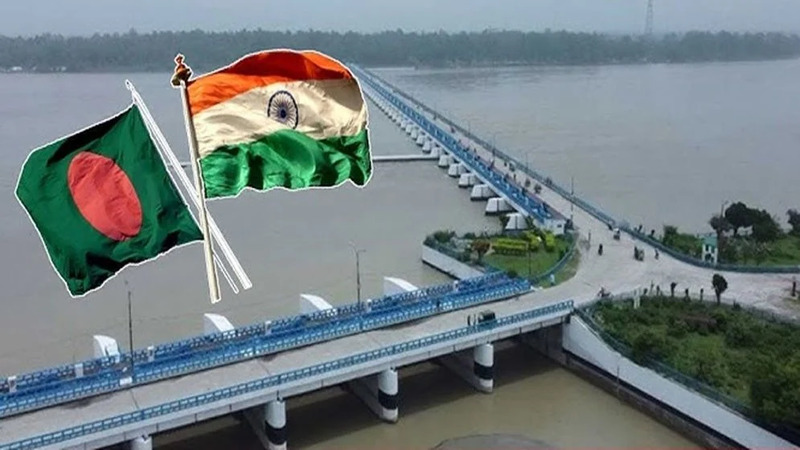
Collected Photo
The West Bengal state government urged the Indian central government to safeguard state interests in water resources, ports, and industry before renewing the 30-year Ganges Water Sharing Treaty with Bangladesh.
The validity of the 1996 treaty expires in December this year, reported Indian news agency PTI citing a senior state administrative official.
West Bengal representatives formally raised concerns during an internal committee meeting convened by the Indian Ministry of Jal Shakti. The state submitted a detailed report outlining water demands for industrial and domestic sectors.
"Our main concern is ensuring that the state's legitimate requirements are adequately protected under any renewed agreement," a senior official told PTI. "Maintaining adequate water flow in the Bhagirathi-Hooghly river system during the lean season is vital."
The official stated that West Bengal assigned top priority to preserving sufficient water flow through the Farakka Barrage into the Bhagirathi-Hooghly system.
Reduced water flow created severe navigation hazards in the Hooghly River. Furthermore, severe riverbank erosion continues to impact vast areas in Malda, Murshidabad, and Nadia districts both upstream and downstream of the Farakka Barrage annually.
"Decreased water flow and heavy siltation adversely affect not only the river ecosystem but also navigation and port operations," the official added. "These factors must be given due weight during future water-sharing negotiations."
Excessive silt buildup led to recurring floods while obstructing vessel movements at Kolkata's Syama Prasad Mookerjee Port.
Additionally, the state government highlighted alarming drops in groundwater levels and growing public health risks associated with arsenic contamination.
"Ganges water is increasingly essential for the state," the official noted. "Dependence on the river is growing for treated drinking water, irrigation, and industrial needs. Future agreements must account for these rising demands and environmental concerns."
Ganges water in India is currently utilized for agricultural irrigation, municipal drinking water supply, and industrial applications.
Consequently, West Bengal demanded that any new water-sharing accord between India and Bangladesh give due consideration to environmental risks, riverbank erosion, and downstream water supply.
-SA

Loading...
Loading...
Also read









Editor : Iqbal Sobhan Chowdhury
Published by the Editor on behalf of the Observer Ltd. from Globe Printers, 24/A, New Eskaton Road, Ramna, Dhaka.
Editorial, News and Commercial Offices : Aziz Bhaban (2nd floor), 93, Motijheel C/A, Dhaka-1000.
Phone: PABX- 41053001-06; Advertisement: 41053012; 01793317829, 01550707291, E-mail: [email protected], [email protected] Online: email: [email protected] 41053014; 01550707297 Advertisement: 01550707296
Published by the Editor on behalf of the Observer Ltd. from Globe Printers, 24/A, New Eskaton Road, Ramna, Dhaka.
Editorial, News and Commercial Offices : Aziz Bhaban (2nd floor), 93, Motijheel C/A, Dhaka-1000.
Phone: PABX- 41053001-06; Advertisement: 41053012; 01793317829, 01550707291, E-mail: [email protected], [email protected] Online: email: [email protected] 41053014; 01550707297 Advertisement: 01550707296


