



| HEADLINE |

|

Trump's letter: New geopolitical equation between B’desh and the US behind the scenes
Published : Friday, 4 September, 2026 at 10:09 AM
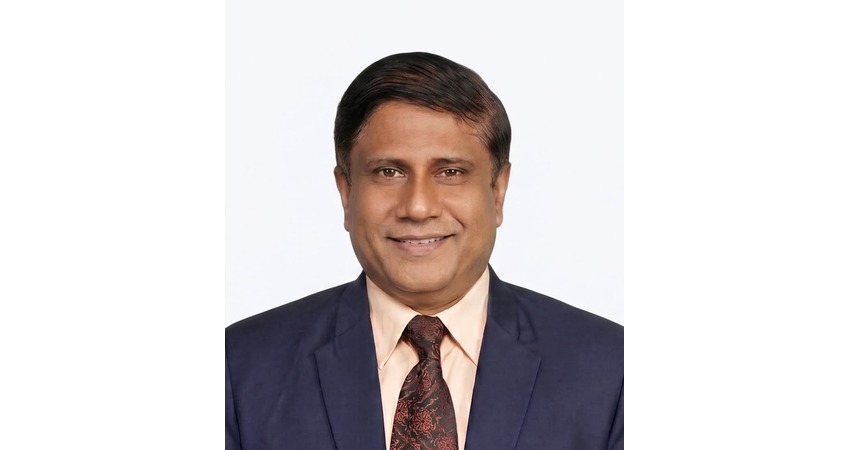
Brigadier General Dr. AKM Shamshul Islam, PSC, G (Retd.)


Donald Trump has thanked Mr. Tarique Rahman for the recent letter he sent to the President of Bangladesh, Donald Trump, regarding the purchase of Boeing aircraft, and said, "Boeing will not let you down, and I will not forget." He then wished the people of Bangladesh well and spoke about the bright future of Bangladesh under the leadership of Tarique Rahman.
The most significant thing is that the US President has expressed expectation of meeting with the Prime Minister of Bangladesh in the near future. Such a personal message from a world's important head of state is not just protocol; it contains political trust and indication of high-level communication.
Boeing is one of the most important US-based manufacturing companies. A major aircraft purchase is not limited to just buying aircraft; it can also be used as an opportunity for Bangladesh to engage in Aviation Maintenance, Repair and Overhaul (MRO), training, skill development, technology, and Aerospace-Related Supply Chain with Boeing. That is, the long-term value of the contract will depend on how much it takes Bangladesh's larger economic and technological partnership in the US-Bangladesh partnership.
However, it is essential to consider Bangladesh's current geopolitical position to understand the true significance of the letter.
Bangladesh is located in an area where the United States and China's increasingly sophisticated strategic competition can directly impact. Bangladesh's development infrastructure, trade, and investment relations have expanded over the long and recent periods. China's cooperation has played a significant role in Bangladesh's development infrastructure, industry, communication, and various projects. On the other hand, the United States is a potential major partner in Bangladesh's main trade, technology, investment, trade, and defense cooperation markets. As a result, the main challenge for Bangladesh is to manage its relations with these two major powers without opposing them on national interest.
While Prime Minister Tareq Rahman's visit to China and his efforts to deepen relations with the United States at the same time, Donald Trump's letter brings an important issue to the forefront - Bangladesh is likely to move towards a 'Multi-alignment' or multi-faceted strategic balance. On the other hand, Beijing is also interested in deepening economic and strategic ties with countries like Bangladesh, which have a significant geopolitical position. In between these two realities, the most sensible policy for Bangladesh could be to cooperate with both parties without competing with each other.
Here, the significance of Donald Trump's letter becomes even clearer. As Bangladesh's relations with China enter a new phase, the US President's personal thanks for buying Boeing, praise from Bangladesh's leadership, and interest in meeting Mr. Tarek Rahman in the near future - all together indicate Washington's desire to further strengthen ties with Dhaka. However, this is seen as a direct effort to put Bangladesh in opposition to China. Rather, it shows that the interest of two major powers in Bangladesh's relations is increasing.
The letter also contains commendable political significance under the leadership of Mr. Tarek Rahman. The international acceptability of Bangladesh's new government is an important issue. A direct meeting between Donald Trump and Tarek Rahman could elevate the relationship between the two countries to a higher level. It could also bring up issues such as Boeing, trade, investment, technology, defense, security in the Bay of Bengal, the Rohingya crisis, and regional stability. Bangladesh should not limit such a meeting to a courtesy call, but instead present a clear economic and strategic agenda.
There is an opportunity to further expand the scope of trade relations. By linking the US technology, investment, and market with Bangladesh's industrialization, skilled workforce, and high-value export sector, the relationship will not remain limited to goods imports and exports, but can take the form of a long-term Economic Partnership. Bangladesh also has a significant opportunity in terms of defense cooperation with countries like the US, China, and Europe. Collecting defense equipment competitively will increase Bangladesh's bargaining power and reduce the risk of excessive dependence on any one country. At the same time, technology, training, maintenance, and long-term supply-security will also play an important role in the decision-making process.
The biggest opportunity for Bangladesh is to use the competition among major powers for its own development. Infrastructure and industrial cooperation from China, technology, investment and market facilities from the United States, and advanced technology and investment from Europe and other partners - all of these can be brought under a coordinated national development strategy. However, a delicate diplomatic balance is needed to implement this policy. Excessive closeness with the United States may increase China's concerns, while excessive military or strategic closeness with China may raise suspicions in the United States. Therefore, Bangladesh's foreign policy should not be in favor of any power, but rather be a matter of strategic independence and national interest.
Another important aspect of this policy is to build institutional relationships rather than personal connections. Although the personal relationship between Donald Trump and Tarek Rahman is positive, it should not be the sole basis for deepening Bangladesh's relations at various levels, including the administration, the State Department, commercial establishments, defense, and the military. Similarly, it is necessary to transform relations with China into long-term institutional cooperation, not just at the political leadership level, but also in economics, industry, technology, education, and infrastructure. This will ensure that the foundation of bilateral relations remains stable even if the government changes or the international situation changes.
All in all, the letter from US President Donald Trump does not announce a fundamental change in Bangladesh's foreign policy. Buying Boeing is not a sign of Bangladesh's strategic shift towards the US, but rather a sign that Bangladesh's economic potential, geographical location, and regional importance are increasingly becoming important to US policymakers. At the same time, Bangladesh's close relationship with China is also increasing Washington's strategic value for Washington.
Successful diplomacy will be one where Bangladesh works with everyone, but keeps its own decisions under its own control. Just as it should not be in favor of China, it is also not necessary for China to cooperate with the United States against the United States. The ultimate criterion for every international relationship of Bangladesh should be the country's economic development, security, sovereignty and long-term strategic interests. Currently, Bangladesh's biggest strength in the multipolar world order is its balanced position - not a follower of any single power, but a sovereign state capable of cooperating with various powers in its own national interest.
Donald Trump's letter is not the final word, but rather the beginning of a potential new chapter. If the conversation that has started with Boeing can be expanded into trade, investment, technology, defense, and strategic cooperation, then this small letter could be considered an important milestone in the future Bangladesh-US relations.
Author: Honorable Prime Minister's Defense Advisor Brigadier General Dr. A.K.M. Shamshul Islam, PSC, G (Retd.)
Loading...
Loading...
Also read








Editor : Iqbal Sobhan Chowdhury
Published by the Editor on behalf of the Observer Ltd. from Globe Printers, 24/A, New Eskaton Road, Ramna, Dhaka.
Editorial, News and Commercial Offices : Aziz Bhaban (2nd floor), 93, Motijheel C/A, Dhaka-1000.
Phone: PABX- 41053001-06; Advertisement: 41053012; 01793317829, 01550707291, E-mail: [email protected], [email protected] Online: email: [email protected] 41053014; 01550707297 Advertisement: 01550707296
Published by the Editor on behalf of the Observer Ltd. from Globe Printers, 24/A, New Eskaton Road, Ramna, Dhaka.
Editorial, News and Commercial Offices : Aziz Bhaban (2nd floor), 93, Motijheel C/A, Dhaka-1000.
Phone: PABX- 41053001-06; Advertisement: 41053012; 01793317829, 01550707291, E-mail: [email protected], [email protected] Online: email: [email protected] 41053014; 01550707297 Advertisement: 01550707296


